How CONNEQT Pulse works
A familiar cuff.
A closer look at your heart.
See the pressure your heart pumps against, signals linked to artery stiffness and how your results change over time. Pulse gives you seven heart and artery results from one familiar cuff.
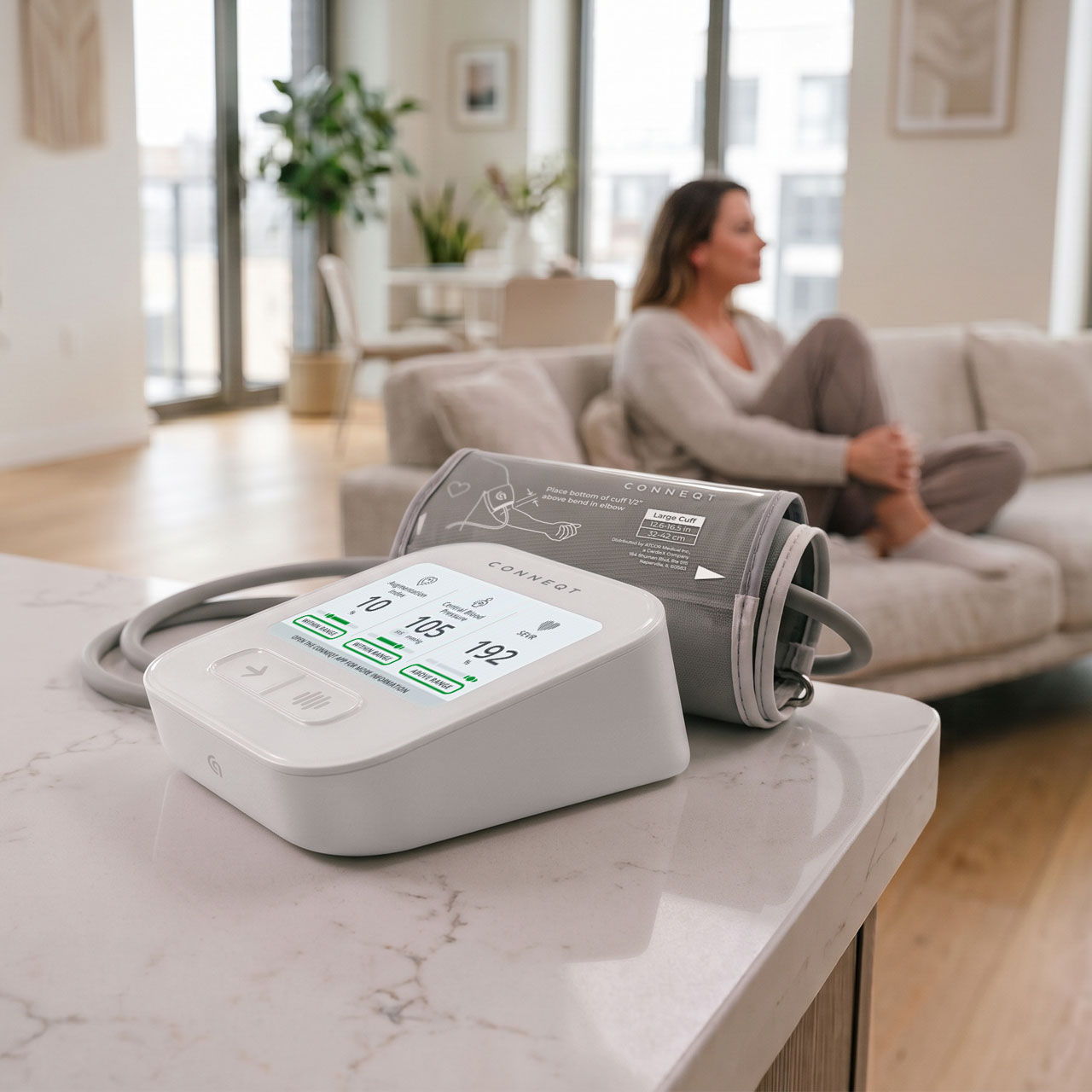
More than a standard check
Seven results.
No extra steps between readings.
Pulse takes your usual blood pressure reading, then automatically records your pulse wave. Keep the cuff on while it does both.
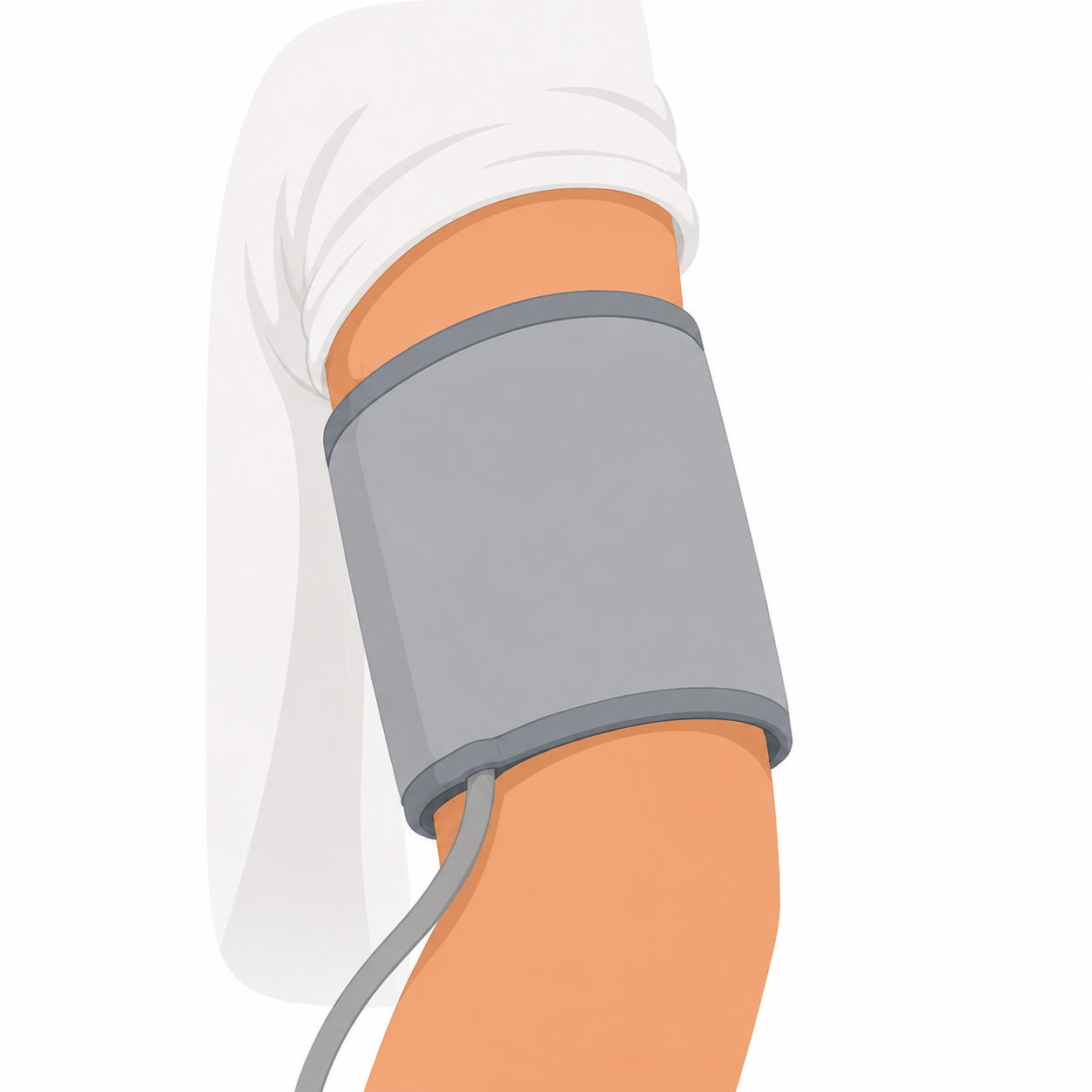
Your usual reading
Pulse measures your arm blood pressure and heart rate.
A closer look at your heartbeat
The cuff gently inflates again at a lower pressure to record the shape of your pulse wave. 1
Your additional results
SphygmoCor® analyzes that recording to estimate pressure near your heart and calculate related measurements. 2
From your heart to your arm
The signal starts at your heart.
You can feel your heartbeat at your wrist because each beat sends a pressure wave through your arteries. That same wave reaches the cuff on your arm.
Its shape changes along the way. SphygmoCor® accounts for those changes to estimate pressure near your heart from the wave recorded at your arm. 3
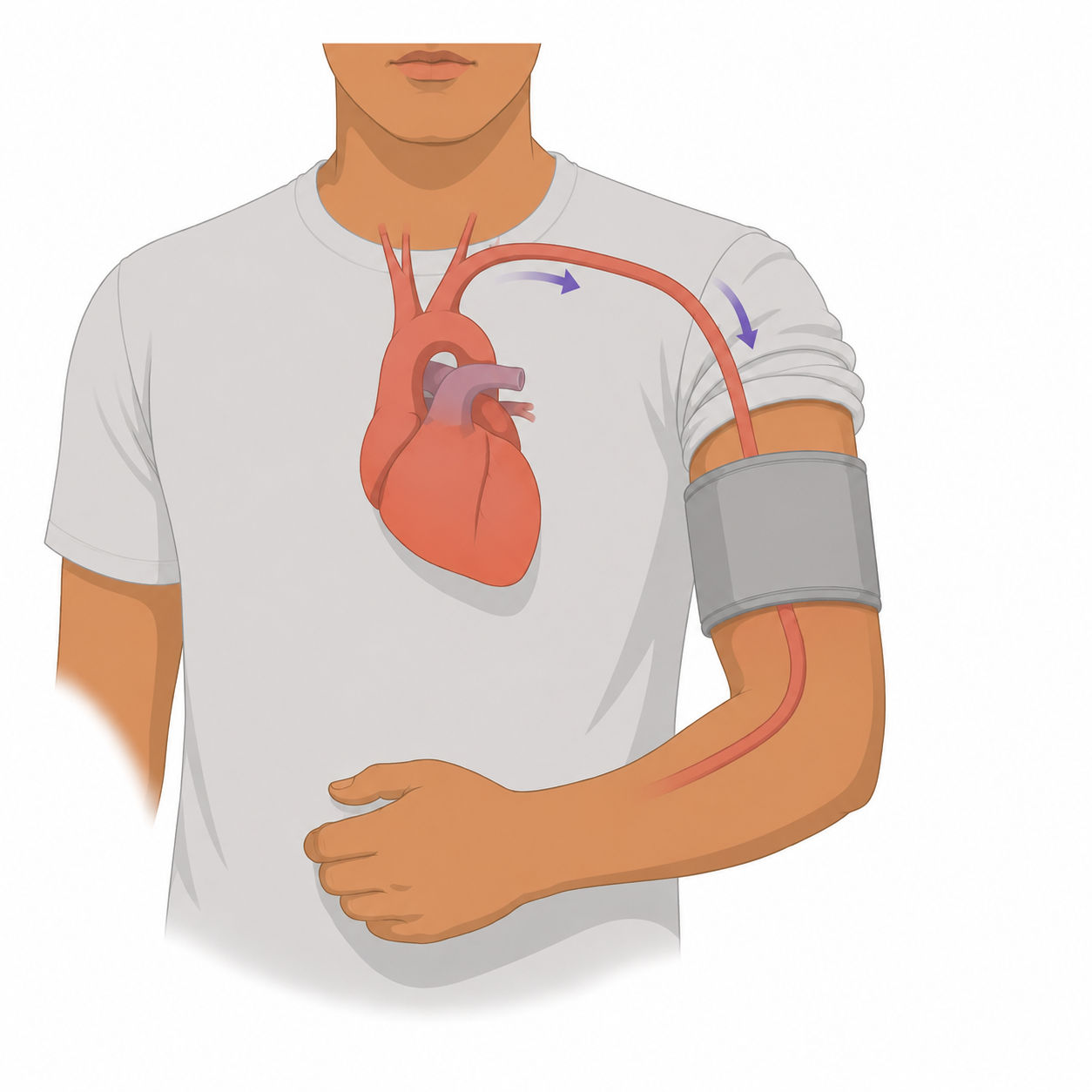
Recorded at your arm
Analyzed by SphygmoCor®
Estimated near your heart
The calculation also depends on the accuracy of your arm blood pressure reading. 12
Why it matters
See what arm blood pressure alone can miss.
Your arm reading may not show the full effect of blood pressure treatment. Pressure near your heart adds another view of the load your heart pumps against.
Similar arm readings.
Less pressure near the heart.
In the CAFÉ study, two treatment groups had similar arm blood pressure readings. Yet pressure near the heart averaged 4.3 mmHg lower in one group. Arm readings alone did not reveal that difference.
CAFÉ study · 2,199 participants
Read the research
See more of the pressure your heart works against.
Explore CONNEQT PulseThe seven results
See what your heart is working against.
Understand pressure near your heart, added pressure from returning waves and the estimated balance between oxygen supply and heart workload.
Your usual check
- Arm blood pressure
- Heart rate
Your top and bottom blood pressure numbers and how fast your heart beats.
Pressure near your heart
- Central blood pressure
- Central pulse pressure
The estimated pressure your heart pumps against and how much it rises and falls with each beat. 6
Added pressure on your heart
- Augmentation pressure
- Augmentation index
Pressure added by returning waves, which can be affected by artery stiffness, heart rate and other factors. 7
Supply compared with workload
- SEVR
An estimate of the balance between oxygen supply and the work your heart is doing. 8
Pulse provides measurements and trends, not a diagnosis. Do not self-treat or change treatment based on a Pulse reading without speaking with a healthcare professional.
The evidence behind Pulse
A closer look at home.
Backed by research.
SphygmoCor® has been used in heart and artery research for decades. Pulse brings this approach into a device made for home use.
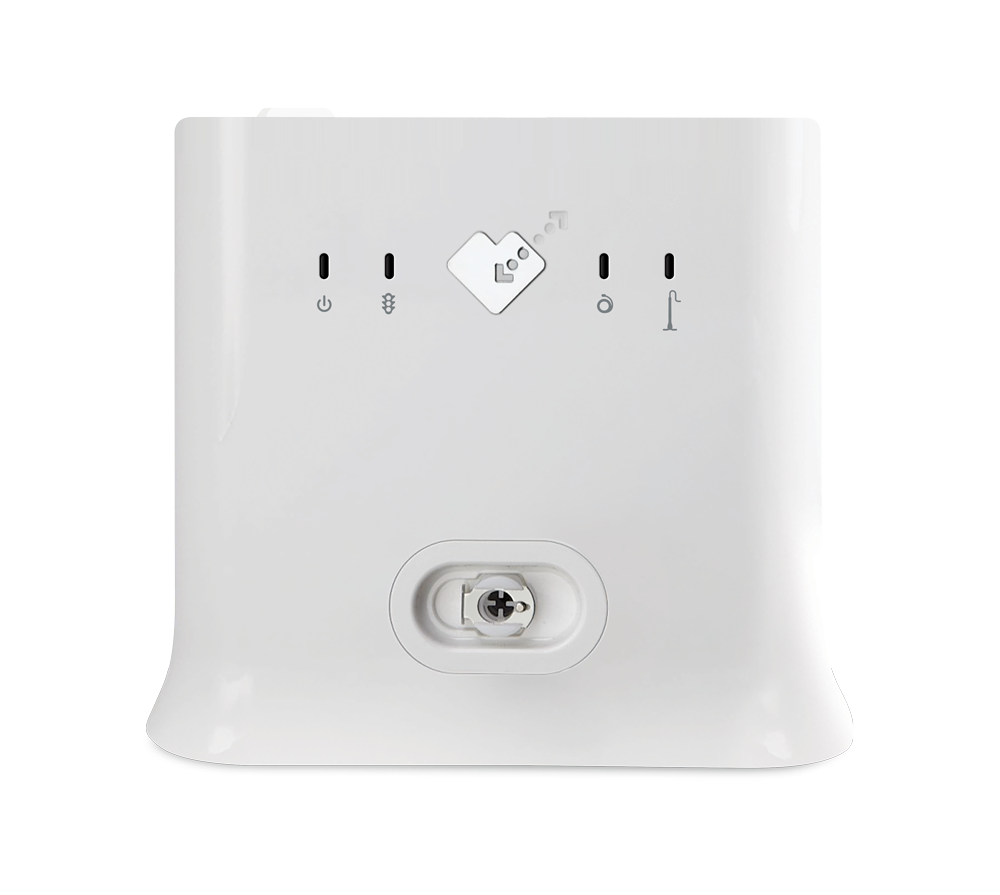
A clinical system used in research.
Shown for comparison. Not included with Pulse.
The calculation method.
Researchers tested the underlying SphygmoCor® method against pressure measured directly inside the main artery leaving the heart. 4
How the method was studied
Researchers compared waveforms recorded at the wrist with pressure measured directly inside the aorta. This early study evaluated the calculation method, not CONNEQT Pulse itself.
Testing Pulse.
Pulse passed international-standard testing for arm blood pressure. Separate testing compared its central pressure results with a clinical SphygmoCor® system and reported close agreement. 9
Pulse received FDA clearance in 2023.
How Pulse was tested
Arm blood pressure testing in 90 adults met the ISO 81060-2:2018 standard. Central pressure testing in 41 adults used a separate protocol comparing Pulse with SphygmoCor® CvMS.
The cleared functions include arm blood pressure, heart rate and the calculated central pressure waveform and related results.
Compared with XCEL.
A study of 367 adults found that CONNEQT Pulse provides similar central blood pressure measurements to SphygmoCor® XCEL. 10
“The CONNEQT PULSE is an easy-to-use, all-in-one device that provides detailed insights of our cardiovascular health”
Bring this technology into your routine.
Explore CONNEQT PulseYour results over time
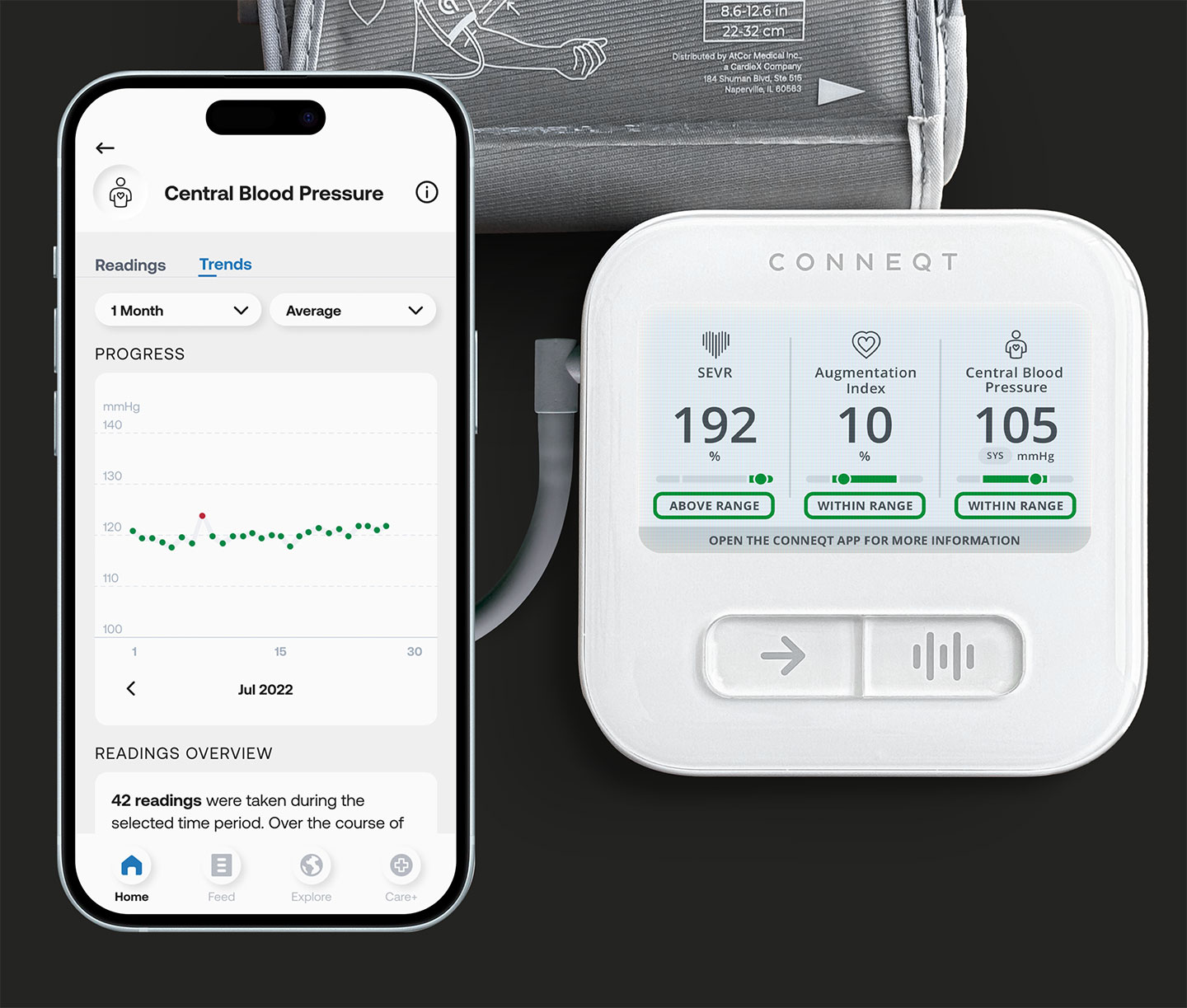
Know what’s usual for you.
Notice what changes.
Keep your readings together, follow your patterns and bring more than a single number to your next healthcare conversation.
Results, history and trends are included in the CONNEQT app.
Getting a good reading
Small habits.
More consistent readings.
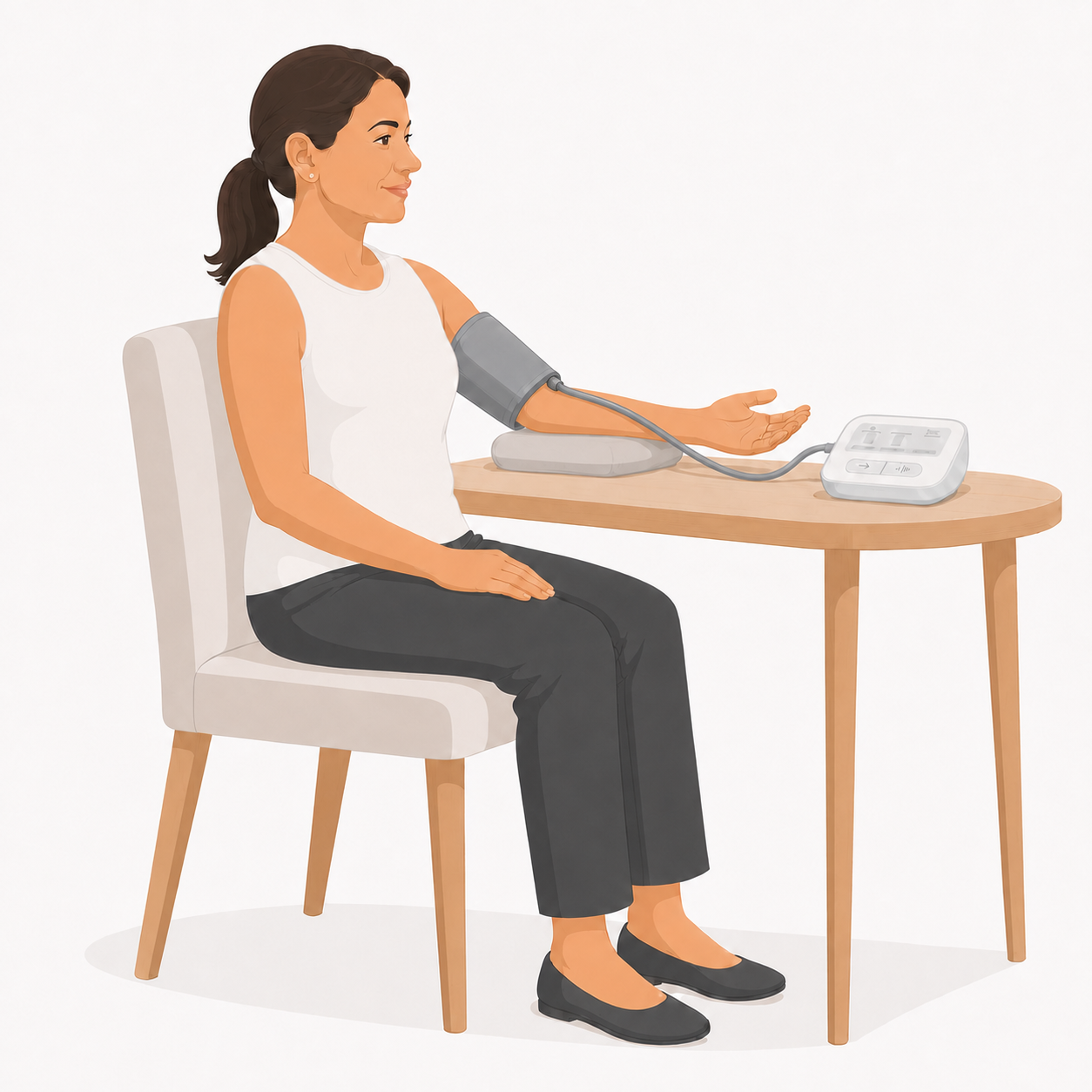
A few simple steps help make your readings easier to compare over time.
Rest for 5 minutes.
Use the correct cuff size on your bare upper arm.
Keep your back supported.
Support your arm at heart level.
Keep your feet flat.
Stay still and quiet through both stages.
Sources and further reading
- CONNEQT guide to taking an arterial health assessment
- Research on deriving central pressure from cuff recordings
- Research on the relationship between central and peripheral pressure waves
- Testing the central pressure transfer method against measurements inside the aorta
- The CAFÉ study of arm and central blood pressure
- Central pulse pressure and cardiovascular outcomes
- CONNEQT Pulse healthcare professional manual
- Understanding SEVR and its limitations
- FDA clearance summary for CONNEQT Pulse, K221742
- Published comparison of CONNEQT Pulse and SphygmoCor XCEL in 367 adults
- CONNEQT Pulse patient user manual
- Central pressure accuracy and the importance of calibration
One familiar cuff
Get more from every blood pressure check.
Seven heart and artery results. One familiar cuff. A clearer view of your results over time.