What Pulse measures
See what your heart is working against.
Extra pressure and stiffer arteries can make your heart work harder. Explore the seven Pulse results that help you understand your heart and arteries beyond arm blood pressure alone.
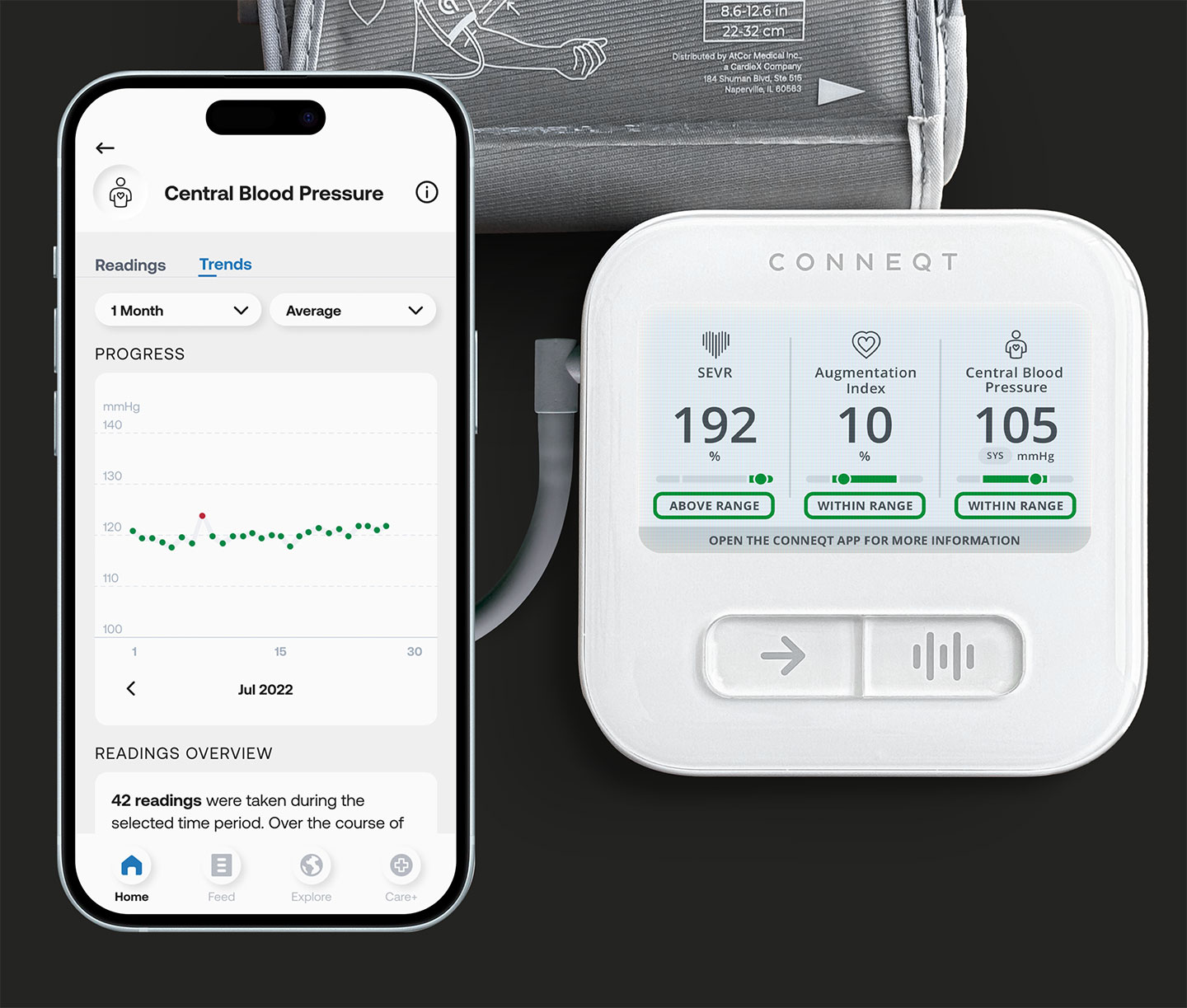
01 Central blood pressure
Understand the strain on your heart.
When pressure near your heart stays high, your heart has to work harder. Over time, that extra work can put strain on your heart.
Central blood pressure estimates the highest pressure in the main artery leaving your heart. It adds information beyond your arm reading.
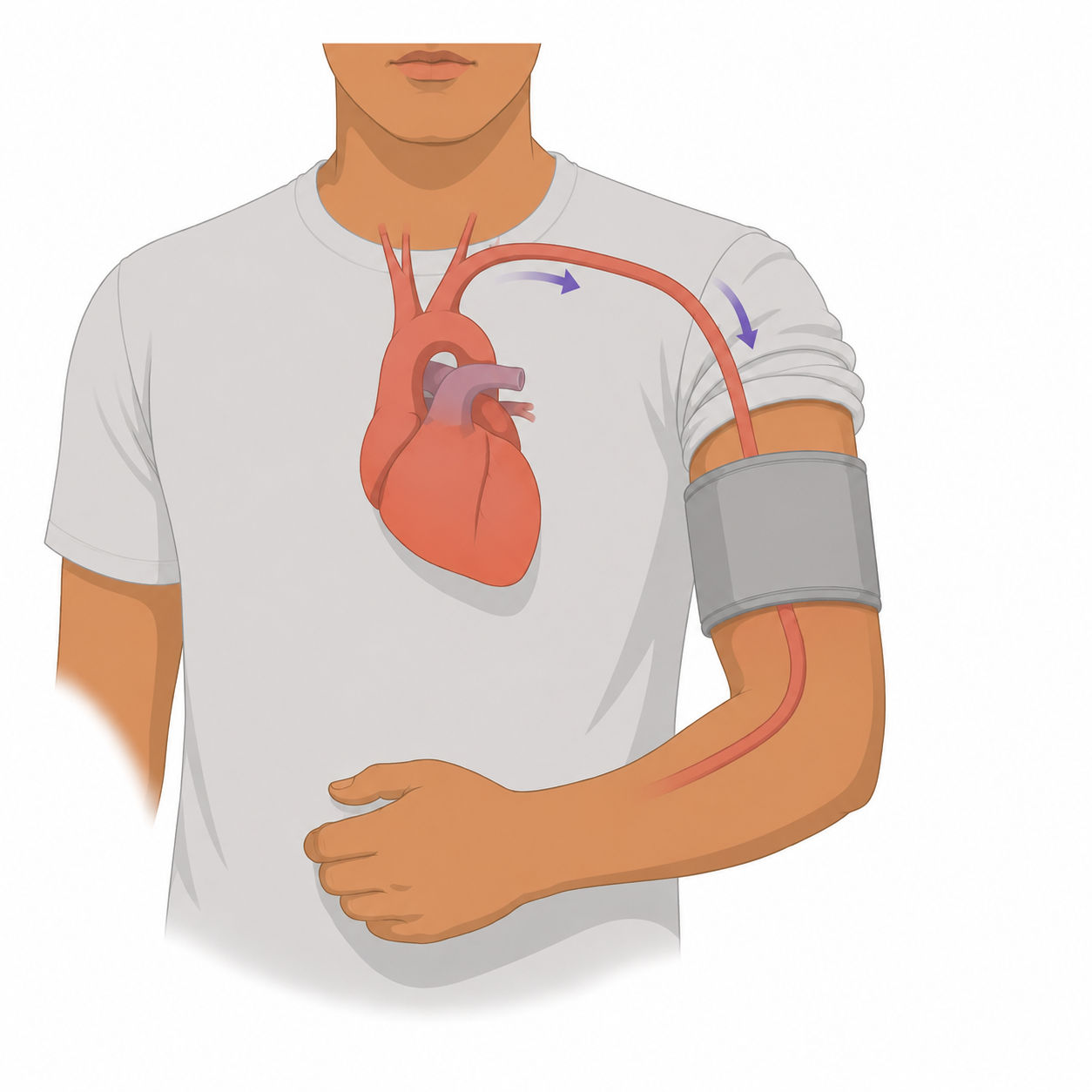
“Central blood pressures have been shown to correlate more strongly with vascular disease than do routine peripheral blood pressure measurements…”
How far pressure rises and falls.
02 Central pulse pressure
See the stress each beat puts on your arteries.
Flexible arteries cushion each heartbeat. When they become stiffer, the pressure swing can grow and put more stress on your heart and blood vessels.
Central pulse pressure is the difference between the highest and lowest pressure near your heart.
Added work for your heart
Pressure can come back and add to the work.
Each heartbeat sends a pressure wave through your arteries. Some naturally returns. When it adds pressure while your heart is pumping, your heart has to work harder.
03 Augmentation pressure
Know the extra pressure your heart faces.
More added pressure means more work for your heart with each beat.
Augmentation pressure estimates the amount of pressure added by returning waves while your heart is pumping.
04 Augmentation index
Understand how much that extra pressure adds.
A higher result means returning waves account for more of the pressure rise your heart works against.
Augmentation index shows the added pressure as a percentage of central pulse pressure.
Two ways to describe the added pressure.
The amount and the share.
Augmentation pressure
The amount of pressure added by returning waves.
Augmentation index
That added pressure as a share of the full pressure swing.
Artery stiffness, heart rate and body size can affect these results. Pulse measurement guide
05 SEVR
Your heart needs oxygen, too.
Your heart needs oxygen to keep you moving. When demand outpaces supply, the heart muscle can come under strain. SEVR estimates this balance, adding a view of your heart beyond blood pressure and heart rate.
A lower SEVR can suggest a less favorable balance.
Blood delivers the oxygen your heart muscle needs to keep pumping.
Your heart uses energy to push blood into your arteries.
Your everyday heart health
Keep the familiar readings in view.
Pulse also gives you your arm blood pressure and heart rate. Together with the additional results, they help you follow a fuller picture over time.
06 Arm blood pressure
Follow a risk you may not feel.
Blood pressure that stays high can damage blood vessels and raise your risk of heart attack, stroke and kidney disease, often without symptoms.
Arm blood pressure, also called brachial blood pressure, gives you the familiar top and bottom numbers.
heart pumps
heartbeats
What the evidence shows
Controlling high blood pressure helps prevent or delay serious health problems. Regular home measurements can help you and your healthcare professional understand how well your blood pressure is being managed.
07 Heart rate
Know when your resting pulse changes.
Knowing your usual resting heart rate helps you notice changes that last and bring them to your healthcare professional.
Heart rate is how many times your heart beats each minute. Activity, stress, sleep and illness can all affect it.
Each pressure pulse begins with a heartbeat.
Illustrative pressure waveform.
What research shows
The Framingham Heart Study followed more than 4,000 adults for about 20 years. Higher resting heart rate was associated with a greater long-term risk of cardiovascular disease, particularly heart failure.
Medicines and fitness can also affect heart rate. Lower is not always better, and one higher reading does not necessarily mean something is wrong.
Read the Framingham study
Guidance from the American Heart Association
From results to understanding
Know your usual. Notice what changes.
Your results are saved in the CONNEQT app. Seeing them together over time helps you bring a clearer picture to conversations about your care.
Make more of your next conversation.
In a clinical trial, central blood pressure readings helped doctors keep patients’ blood pressure controlled with less medication.
Study details
The BP GUIDE trial followed 286 people with high blood pressure for 12 months. Clinicians used central pressure alongside standard measurements to guide treatment.
- What is usual for me?
- Has anything changed over several readings?
- What should we discuss about my care?
Pulse provides measurements and trends, not a diagnosis. Do not self-treat or change treatment based on a Pulse reading without speaking with a healthcare professional.
About the research and your results
The linked studies explain the relevance of these measurements. They involve different devices and groups of people. Associations in research are not a personal risk forecast or proof that home monitoring prevents heart attacks or strokes.
SEVR and future heart problems. Research into its role in predicting future heart problems is still developing. A 2025 study linked lower SEVR with more adverse health events. A 2026 study of more than 5,000 people using SphygmoCor measurements did not find an association with future cardiovascular events.
SEVR should be considered alongside other results. It cannot confirm an oxygen shortage or a blocked artery. Read the 2025 study and the 2026 study.
Take readings under similar conditions and review patterns over time. Your healthcare professional can consider your results alongside your symptoms, medical history and other tests.
Measurement definitions are in the CONNEQT Pulse measurement guide. Research links appear beside each result.
One familiar cuff
More understanding starts with one check.
Seven heart and artery results. A clearer view of what is changing over time.