Brain Health
Determine Dementia Risk and Boost Brain Health
with Digital Vascular Biomarkers
Fast Facts

3s
A new case of dementia arises somewhere in the world every 3 seconds.1

62%
of healthcare practitioners incorrectly think that dementia is part of normal aging.2

80%
of the general public are concerned about developing dementia at some point in their life.3
Cognitive Decline & Arterial Stiffening Go Hand-in-Hand


Brain Health and Arterial Stiffness
Promote Cognitive Wellness

Utility of Vascular Biomarkers in Brain Health
Incorporate Vascular Biomarkers into Management of Brain Health

In-Clinic
- Implement routine screening to determine risk of cerebrovascular diseases.
- Develop targeted interventions, both lifestyle and pharmacological, based on the vascular biomarker results.
- Reimbursable with CPT 93050.
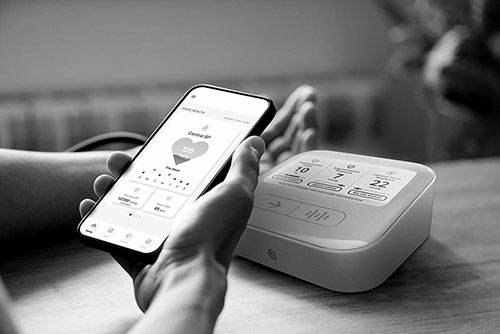
At Home
- Regular monitoring of vascular biomarkers enables early detection of potential risks for stroke, dementia, and cognitive decline.
- Integration with telemedicine enables ongoing patient-provider interaction and enhances personalized care.
- Reimbursable with CPT 9945x & 99091.
1, 2, 3 Alzheimer's Disease International (ADI)