

Every December, people review their budgets, revisit their goals, and plan for the year ahead. Cardiovascular health rarely makes the list.
Most people assume a yearly physical tells the whole story. But here’s what that appointment can’t show: whether the sleep you’re losing is affecting your arteries, whether your stress recovery is keeping pace with your workload, or whether the habits you changed six months ago are actually making a difference. You’re left guessing. And guessing doesn’t work when it comes to your heart.

Medical Grade, Accurate, FDA-Cleared Heart Insights.
Save 10% on checkout with code VITALITY
What Gets Missed Between Doctor Visits
Those routine checks are snapshots. They show how things looked on a single day, not how your cardiovascular system has adapted across months of real life. A reading taken during a calm week in March tells you nothing about how your arteries handled the stress of April, the disrupted sleep of summer travel, or the training cycle you started in fall.
The gap between appointments is where cardiovascular risk quietly builds. Arterial stiffness can rise before symptoms appear. Central blood pressure can drift upward even when brachial readings look normal. That’s the problem with annual snapshots. They can’t capture trends, and trends are what actually matter.
Why December Is the Perfect Time
By the end of the year, you finally have what matters most: perspective. Your cardiovascular system has responded to a full cycle of real life. Work deadlines, illness, travel, sleep disruption, and recovery periods have all left their mark. A baseline reading established now reflects how your arteries actually handled those demands, not how they performed on one arbitrary Tuesday morning.
This is the difference between data and insight. A single elevated reading during a stressful week might mean nothing. A gradual upward shift that persists across months deserves your attention. December gives you the distance to see which pattern you’re looking at. And once you can see the pattern, you stop guessing about what’s working.
Your Year-End Arterial Health Checklist
Establishing your baseline doesn’t require a doctor’s appointment or complex lab work. It starts with three simple steps you can take this week, whether you are using a standard blood pressure cuff or a more advanced arterial health monitor.
Step 1: Take Your Baseline Reading (This Weekend)
Sit comfortably in a quiet space. Rest for five minutes without distractions. Take three consecutive measurements following American Heart Association guidelines guidelines, then average them. This becomes your reference point.
Step 2: Review What You Can See
With a traditional cuff, you can track brachial blood pressure and watch how it behaves over several days. Stable readings suggest your system is handling everyday demands well. Gradual increases or greater variability may signal that stress, sleep, or lifestyle factors are starting to add strain.
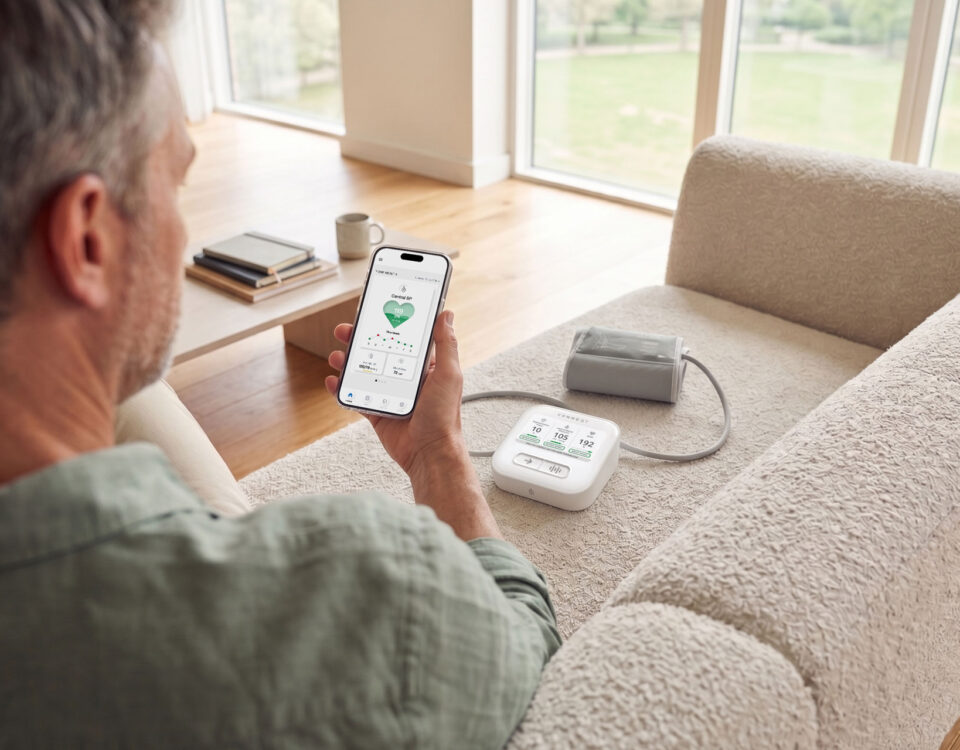
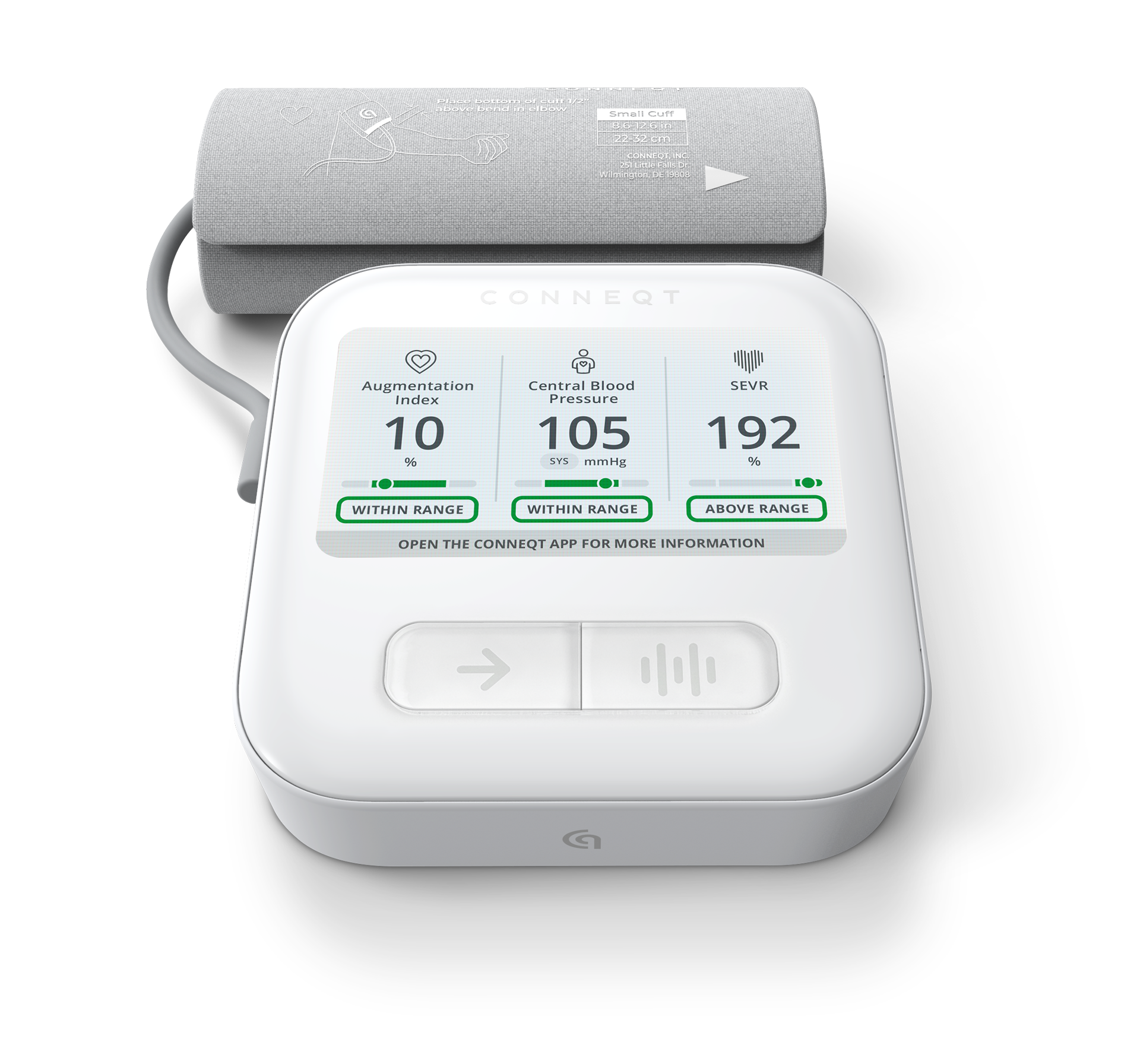
The CONNEQT Pulse allows you to see beyond traditional readings. In addition to brachial pressure, the Pulse measures central blood pressure, which reflects the pressure experienced by the heart and major organs, along with arterial stiffness signals such as augmentation pressure and augmentation index. It also captures central pulse pressure, which reflects strain on the heart, and SEVR, which helps assess whether oxygen supply to the heart muscle is keeping pace with demand. These signals often shift earlier than standard readings alone.
Step 3: Understand Your Pattern (Before January)
Continue taking your daily readings. If they remain consistent across several days and fall within expected ranges, your arteries are likely recovering well from everyday strain. The habits you built this year are working. Keep going.
If one or more signals show a gradual upward trend, your system may be under sustained load. This is not an emergency. It is information. In many cases, small adjustments can make a measurable difference:
- More consistent sleep and wake times
- Regular movement, especially after meals
- Lower sodium intake during the week
- Better hydration throughout the day
- Intentional downtime after high-stress periods
Because you are measuring the signals these habits actually influence, you can see within weeks whether your changes are working. No more guessing.
If readings vary widely day to day, repeat them over several days. Short-term fluctuations often reflect temporary stressors like travel or illness. Watch how quickly values return toward baseline. That recovery speed tells you what you need to know.
Enter January With Clarity
An arterial health check at year’s end gives you something most New Year’s resolutions lack: direction. You’re not diagnosing disease. You’re understanding where your cardiovascular system stands after twelve months of real life. You’reseeing whether your habits are supporting your arteries or slowly wearing them down. You’re replacing guesswork with evidence.
The CONNEQT Pulse makes this possible through year-round tracking and optional Care+ reporting that includes clear trend summaries and makes it easier to follow progress over time and share meaningful data with your clinician.
Your cardiovascular health is always changing. A year-end baseline allows you to shape that change instead of reacting to it later. This is the checkup you didn’t know you needed, and it may be one of the most valuable steps you take toward a healthier year ahead.