


A new analysis identifies age 35 as an early inflection point for men’s cardiovascular risk, years before most screening begins. The takeaway isn’t alarm. It’s earlier visibility.
Heart risk doesn’t usually announce itself early. And that’s exactly why heart risk in your 30s is easy to ignore until it isn’t. You feel fine. You’re busy. And “heart health” often lands in the “I’ll think about that later” category.
But the cardiovascular system has a long memory. Small changes in blood pressure, lipids, fitness, and vascular function add up quietly over years, and then show up later, when the stakes are higher.

Medical Grade, Accurate, FDA-Cleared Heart Insights.
Save 10% on checkout with code VITALITY
A new analysis of the long-running CARDIA study suggests there is an earlier turning point in cardiovascular risk than most people expect. In this cohort, men and women tracked similarly through the early 30s. Then, around age 35, the curves started to separate, with men’s risk rising faster from that point forward.
This is not a prediction that something will happen at 35. It is a signal about when the trajectory starts to shift. And it is a reminder that cardiovascular disease prevention is not a one-time screening. It is the habits, baselines, and course corrections we build while we still feel fine.
What the CARDIA data found
The study was led by Alexa Freedman, assistant professor of preventive medicine at Northwestern University Feinberg School of Medicine. Her team analyzed decades of follow-up data from the Coronary Artery Risk Development in Young Adults (CARDIA) study, which enrolled participants at ages 18 to 30 and tracked cardiovascular outcomes into midlife.
Key findings, in plain language:
- The curves split around 35. Men and women tracked similarly through the early 30s, then men’s risk began rising faster, making the mid-30s a meaningful inflection point.
- Men reached CVD incidence earlier. Men reached 5% cumulative incidence of cardiovascular disease about 7 years earlier than women (50.5 vs 57.5 years).
- Coronary heart disease drove most of the gap. Men reached 2% cumulative incidence of coronary heart disease about 10 years earlier than women. Stroke timing and heart failure timing were similar between sexes in this cohort.
- Traditional risk factors didn’t fully explain it. Even after accounting for common risk factors like blood pressure, cholesterol, smoking, and diabetes, men’s earlier rise in risk was only partly explained.
One finding in particular deserves a closer look. Over recent decades, traditional risk factors like smoking, blood pressure, and diabetes have become more similar between men and women. Based on that, researchers expected the gap in heart disease timing to narrow. It didn’t. The timing gap persisted, pointing to biological or social influences that standard screening doesn’t capture. For anyone focused on long-term cardiovascular health, that’s a reminder that knowing your standard numbers is important, but may not be the whole picture.
Why this matters for heart risk in your 30s and early 40s
For many people, cardiovascular prevention doesn’t feel urgent until their 40s or later, when labs start to drift, or symptoms show up. But this study suggests the biology can begin shifting earlier, which creates a blind spot in the exact decade when small changes are often easiest to reverse.
If your goal is long-term heart and arterial health, your 30s and early 40s are a smart window for two things: establishing a baseline and watching trends over time. Not obsessing. Not catastrophizing. Just paying attention early enough that the course corrections are smaller, simpler, and more effective.
In this study, men reached significant cardiovascular disease milestones 7 to 10 years earlier than women. That gap represents a long runway for prevention, but only if you start paying attention early enough to take advantage of it.
What it means for men
With that earlier shift in mind, here’s what the findings suggest for men, in practical terms.
First, it reframes the timeline. If men’s heart risk at age 35 marks an early inflection point, waiting until midlife to pay attention can mean you are reacting to a trend that has been building for years.
Second, it helps explain why coronary heart disease is the key driver in this analysis. Men reached 2% cumulative incidence of coronary heart disease about 10 years earlier than women, which points to an earlier runway for prevention and course correction.
Part of the reason is how preventive care is structured. Men ages 18 to 44 are more than four times less likely than women to attend routine preventive care visits. Women have gynecologic and obstetric care creating a consistent rhythm of checkups; most men don’t have an equivalent. The researchers specifically cited this as an opportunity, noting that encouraging preventive visits among young men could meaningfully reduce long-term cardiovascular risk.
“Earlier” does not mean “inevitable.” It means the window for staying ahead is open sooner, and for most men, that window isn’t being used. The practical move is to treat cardiovascular health like any other long-term performance category: get a baseline, track trends, and adjust early. Without that clinical rhythm driving it, building your own baseline at home becomes even more important.
What it means for women
Just as important: a later average timeline doesn’t mean lower stakes. It means the curve can look different, and the cultural narrative around heart disease can make it easier for women to miss early signals or delay prevention.
One reason is awareness. Many women are still more likely to associate cardiovascular disease with men, even though it remains a leading health risk for women. Another is that symptoms and risk conversations are not always framed in a way that prompts earlier action, especially when someone feels generally well. The result can be a quieter build-up of risk factors over time, followed by a later “surprise” moment when the numbers are harder to ignore.
The takeaway is the same: earlier visibility matters. For women in their 30s and 40s, establishing a baseline and watching trends can help make prevention more proactive and less reactive, particularly if you have family history or your blood pressure, cholesterol, or blood sugar is trending in the wrong direction.
If you’re interested in how “hidden” signals can reveal cardiovascular risk in women, see our article on breast arterial calcification and what it may indicate about heart health.
What to do now: a 30–45 checklist
The goal here is not to medicalize your 30s. It’s to make prevention practical. A few basics can tell you a lot, especially when you track them over time. Think of this as heart disease prevention in your 30s that’s practical and low-drama: baseline first, trends second.
Lifestyle baselines
- Blood pressure: Take readings at the same time of day for 5 to 7 days and record them. You’re looking for a pattern and your typical range, not reacting to any single high or low reading.
- Fitness + strength: Get consistent with movement most days, plus strength work twice a week, even short sessions. You’re looking for improving or stable stamina and strength over time, not an all-or-nothing plan.
- Weight and waist: Check occasionally, weekly or biweekly rather than daily. Direction over time is what matters. A slow upward creep is a signal to adjust earlier rather than later.
- Sleep, alcohol, nicotine: Treat these as dials you can tune rather than habits that are fixed. Better sleep consistency, fewer recovery days, and reduced habit-driven spikes in stress and blood pressure are all signs you’re moving in the right direction.
- Stress and recovery: Build in a recovery habit you can actually repeat, whether that’s walks, downtime, breathwork, or time outside. The goal is feeling more steady day to day, with sleep and other habits staying more consistent even under stress.
What to ask about at your next appointment
- Lipids and blood sugar: Cholesterol and glucose or A1c are foundational markers to know in adulthood and worth tracking over time, not just checking once.
- Family history and medication review: A short conversation with your doctor can surface risks you might not be thinking about, including genetic factors that standard screening doesn’t automatically flag.
- Risk estimates that start earlier: Tools like the American Heart Association’s PREVENT equations can estimate 10-year and 30-year cardiovascular risk starting at age 30, which can be useful for putting your numbers in context.
Keep in mind, this isn’t a substitute for medical care. It’s a prompt to take your baseline seriously while you still feel fine.
From snapshots to patterns
If the turning point is the mid-30s, the practical need is earlier visibility into what your cardiovascular system is doing over time, not just a one-off snapshot.
That’s where medical-grade measurement and trend tracking can help. The goal is simple: establish a baseline, watch how it changes, and make smaller course corrections earlier, before symptoms drive the conversation.
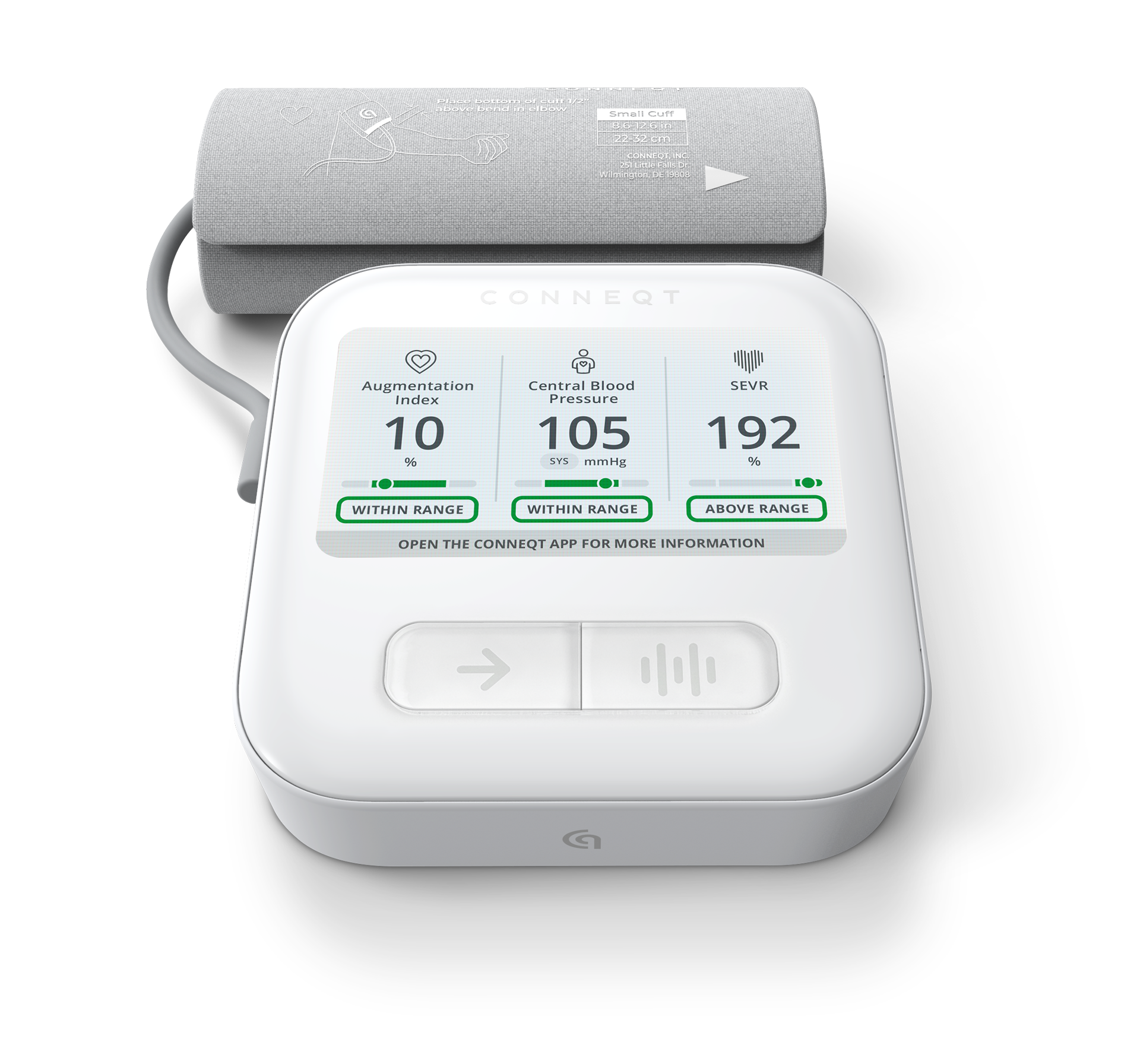
For people who want that kind of long-term clarity at home, CONNEQT Pulse is designed to help you monitor patterns and translate readings into usable insight over time. With Care+, it can be easier to keep a consistent rhythm and follow-through over time.
Notice earlier, act sooner
The most important takeaway from this study isn’t that everyone needs to start paying attention to their heart health earlier. It’s that cardiovascular disease develops over decades, and the window to influence long-term risk opens sooner than most of us were taught.
Whether you’re male or female, in your 30s or your 40s, prevention tends to look the same: know your baseline, watch the trend, and act early when changes are still small. The goal isn’t to obsess earlier. It’s to notice earlier, and take action.