
You can hit 10,000 steps and never once challenge your cardiovascular system. No stimulus, no adaptation. Here’s what I track instead, and why it matters more than any step count.
I’ve trained seven days a week for most of my adult life.
I track my resting heart rate, my HRV, my VO2 Max, my SEVR. I wear a Garmin Fenix 8 Solar that tells me, among other things, how many steps I’ve taken.
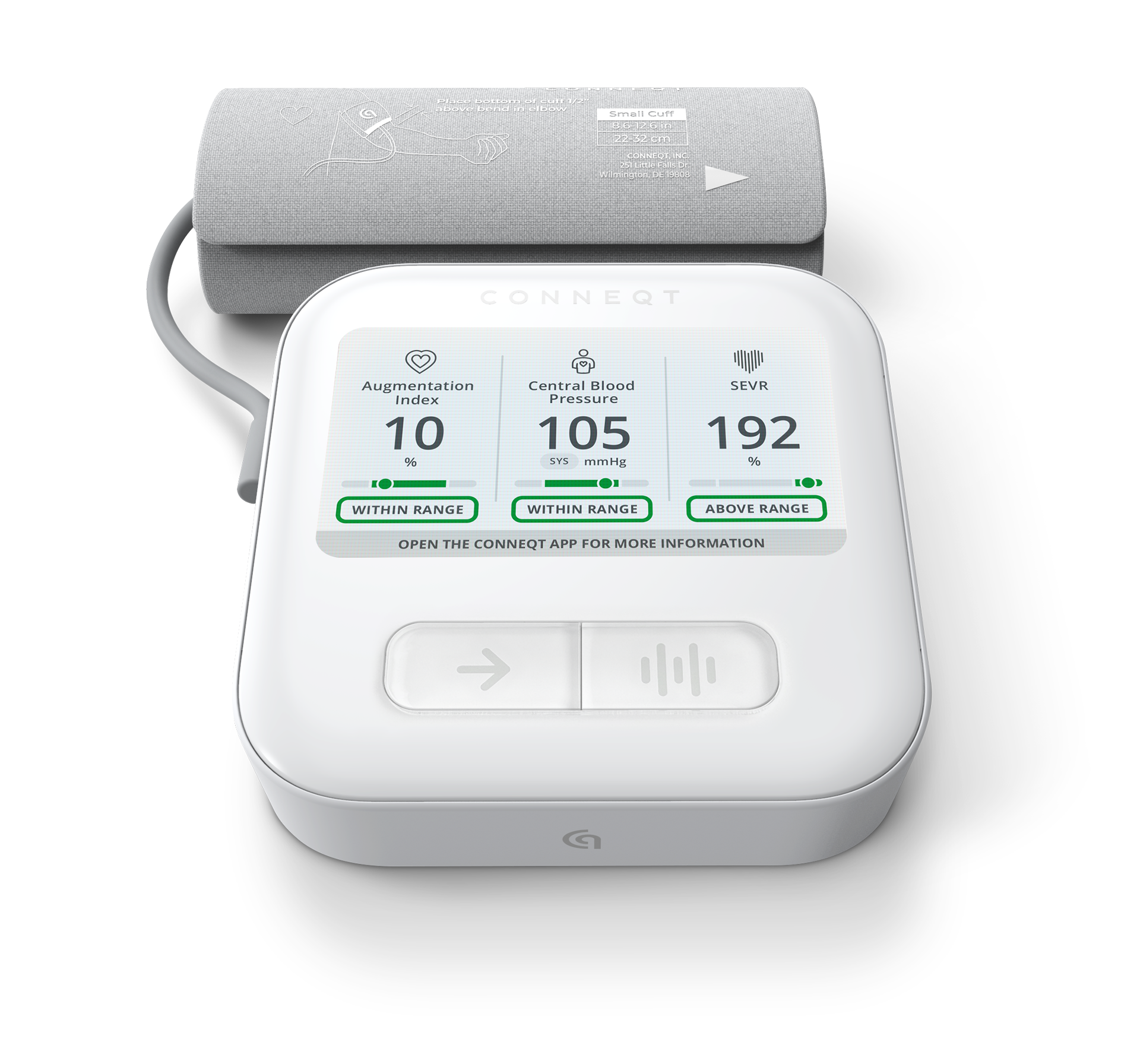

Medical Grade, Accurate, FDA-Cleared Heart Insights.
Save 10% on checkout with code VITALITY
But I’ve never once used 10,000 steps as a fitness target even though it’s become the default measure of daily movement for millions of people.
It has become the default measure of daily movement for millions of people. showing up on every wearable, in every health app, and in so many wellness articles. The specificity of something that sounds studied and validated makes it feel scientific.
It isn’t. And once you understand where it actually came from, the number looks very different.
Where the number came from
In 1965, a Japanese company released a pedometer called the Manpo-kei.
The name translates roughly to “10,000 steps meter.” That was the product. That was the marketing. The number wasn’t derived from physiology or clinical research. It was round, it was aspirational, and it sold a device.
That pedometer became the origin of a global health target.
I find that remarkable. A number invented to sell a Japanese pedometer in 1965 is now the default daily movement goal for hundreds of millions of people, baked into every wearable on the market.
Decades of repetition have given it the weight of established science. It doesn’t have that. No study determined that 10,000 was the threshold at which meaningful health benefits occurred. No clinical trial set out to find the optimal daily step count and landed on that number.
It was always a population-level target aimed at getting the general population moving. As a baseline for that purpose, there is some value in it. As a performance standard for anyone serious about cardiovascular fitness, it is the wrong metric entirely.
What the research actually shows
The science doesn’t support 10,000 either.
Benefits begin around 2,700 steps per day. Not 10,000. Meaningful reductions in mortality risk start well below the number on your wearable’s default goal setting.
A 2023 meta-analysis in JACC looked at more than 111,000 adults across 12 studies. The benefit curve flattens somewhere between 7,100 and 8,800 steps per day. After that, the returns diminish sharply.
Not 10,000. Not even close.
A separate analysis covering more than 226,000 adults found that each additional 1,000 steps is associated with a 15% lower risk of all-cause mortality. Each additional 500 steps with a 7% lower risk of cardiovascular mortality. Those are real numbers. But they describe the benefit of moving more from a low baseline. Not the benefit of hitting a specific target.
A third analysis, published in The Lancet, replicated the same pattern across 15 international cohorts. Different countries, different populations, same result: diminishing returns well below 10,000.
So the research is clear. If you are largely sedentary, more steps help. Genuinely. The returns are steep at the low end.
But the ceiling is arbitrary. And step count alone misses something far more important than volume.
The variable step count ignores
Step count measures volume.
It cannot tell you what those steps are doing for your cardiovascular system. And that is the only variable that actually matters.
A 2023 analysis in JACC found that cadence (steps per minute) independently predicts mortality and cardiovascular risk, even after adjusting for total daily steps.
Two people. Same step count. Completely different cardiovascular signals.
One is training. One is just moving.
The US Physical Activity Guidelines don’t use steps at all. The federal standard is 150 minutes per week of moderate-intensity activity. Or 75 minutes per week of vigorous-intensity activity. Time and intensity. Not steps.
There is a reason for that framing.
Intensity is what creates a stimulus. A stimulus is what drives adaptation.
I think about this in terms of heart rate zones. Zone 2 sits just below your first lactate threshold. Roughly 70 to 80 percent of your maximum heart rate. It is where aerobic adaptation happens. Where fat oxidation peaks. The minimum intensity at which your cardiovascular system is being meaningfully challenged.
Most people walking 10,000 steps never get there.
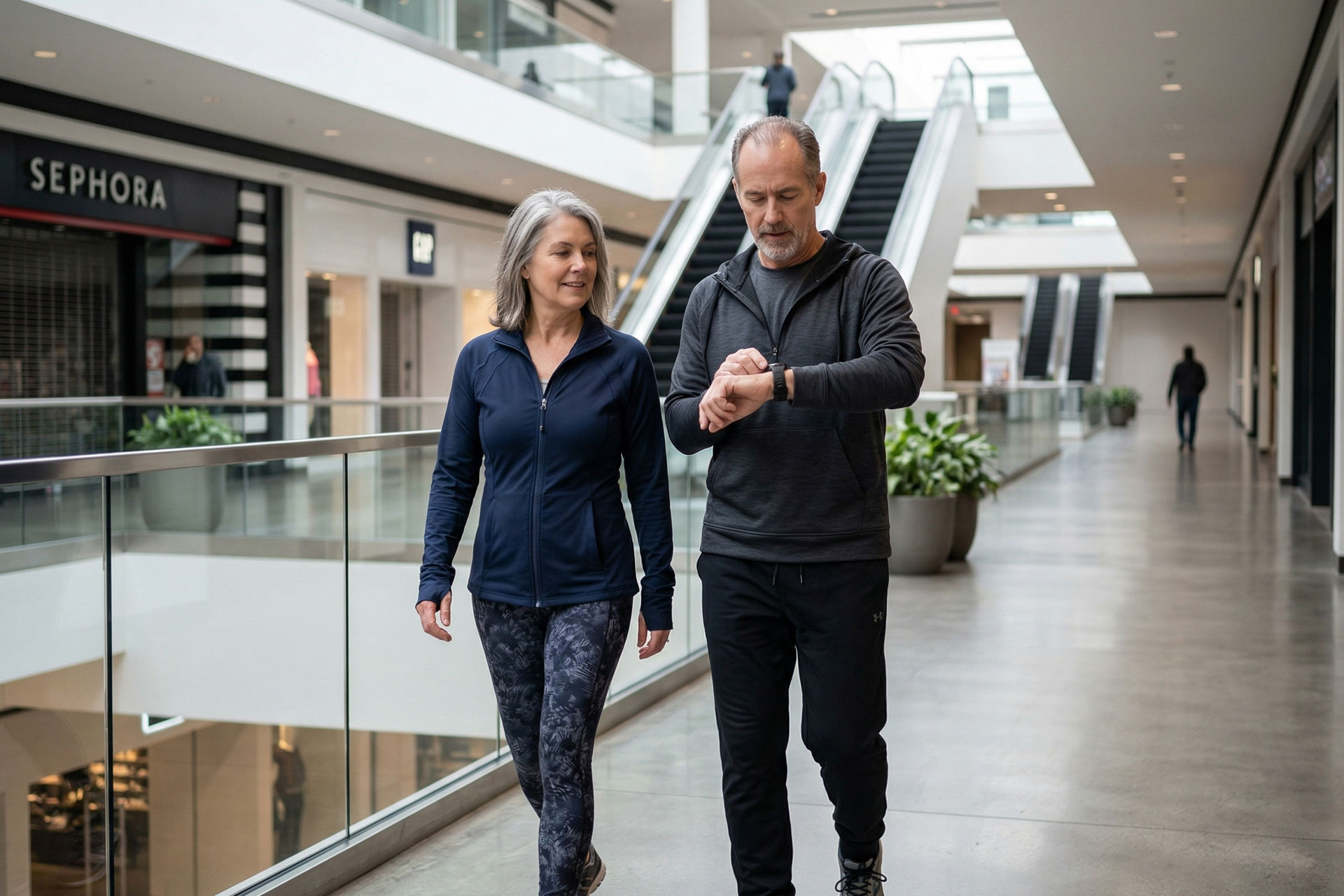
I’ve watched people log 10,000 steps at a shopping mall pace and call it a workout. Heart rate flat. Breathing easy. The cardiovascular system never asked to do anything it couldn’t do sitting in a chair.
That is movement. It is not a stimulus.
Walk with purpose. Walk like there is somewhere you need to be. That shift alone changes what the movement is asking of your body.
What Zone 2 actually feels like
Heart rate elevated. Breathing deeper than at rest. You could hold a conversation, but you would not choose to. You could sustain this pace for a long time, but you would not call it comfortable. No lab required.
No stimulus, no adaptation
This is the principle behind every training decision I make.
No stimulus. No adaptation.
If your cardiovascular system isn’t being challenged, it isn’t improving.
10,000 steps at a stroll doesn’t challenge it.
I could spend 30 minutes walking on the beach. Or I could spend those same 30 minutes doing five three-minute sprints with three minutes of rest between each one.
Same time. Completely different outcome.
The sprints burn more fat. They produce a greater cardiovascular stimulus. They drive more adaptation. A 2023 meta-analysis covering over 800 adults confirmed what most serious athletes already know: high-intensity interval training produces significantly greater improvements in cardiorespiratory fitness than moderate-intensity continuous training. In less time.
We have limited time. I think about that constantly. Every 30 minutes is a trade-off.
The question I ask is always the same: what is this actually doing for my cardiovascular system?
A walk that never elevates your heart rate has an answer to that question.
It’s not a good one.
What I actually pay attention to
I don’t track steps as a fitness metric. I never have.
Here is what I actually watch.
Resting heart rate
My number one signal is my 7-day resting heart rate.
Not a single reading. A rolling average over seven days. That window smooths out the noise from one bad night’s sleep or one hard training session and shows me the actual trend.
A downward trend means my cardiovascular fitness is improving and my body is recovering well. An upward trend means something is off, usually before I feel it.
That is the metric I care about most.
Heart rate variability (HRV)
HRV measures the variation in time between consecutive heartbeats. It is a window into how well my autonomic nervous system is recovering between sessions.
When my HRV drops, I back off. When it holds steady or climbs, I push.
Research in healthy adults confirms that exercise training significantly improves HRV parameters associated with autonomic function and cardiovascular fitness.
It is one of the most sensitive early signals I have for whether my body is absorbing training or accumulating stress it hasn’t processed yet.
Subendocardial viability ratio (SEVR)
SEVR measures how efficiently my heart is perfusing the coronary arteries. The ratio of diastolic filling time to systolic ejection time. In plain terms: how well the heart is supplying blood to itself relative to the work it is doing.
Most people have never heard of it. I watch it closely.
How I walk when I walk
Steps still happen. I just make them count.
I ruck with a weighted backpack. Adding load increases the cardiovascular and metabolic demand well beyond what an unloaded walk produces.
Same movement pattern. Completely different physiological ask.
I use Nordic walking poles. They engage the upper body, increase energy expenditure, and drive a greater cardiovascular output than conventional walking. Research in cardiac populations has found Nordic walking produces significantly greater improvements in exercise capacity than standard walking programs.
Both tools exist for the same reason.
To make the movement ask something of my cardiovascular system that it cannot already do comfortably at rest.
That is the standard I apply to everything. Not how many steps. Not how long. What is this asking of my body?
If the answer is nothing, it is not training.
The metrics that change everything
Step count tells you how much you moved.
It cannot tell you whether that movement meant anything to your cardiovascular system.
That is the gap. And it is the reason I have never used it as a target.
The question I keep coming back to is simple. What is this asking of my body that my body cannot already do comfortably?
Track what your cardiovascular system is actually doing. Your 7-day resting heart rate. Your HRV. The intensity of your movement, not just the volume of it.
Those are the signals that tell you whether your habits are building something or just logging distance.
My Garmin tracks recovery. It does not track what that training is doing to my arteries over time. Central blood pressure and arterial stiffness are different signals, and they require a different tool.
That is where the CONNEQT Pulse fits into my stack. It tracks central blood pressure and arterial stiffness, the markers that respond to intensity-focused movement. Not a diagnostic tool. A way to see whether what I am doing is actually moving the markers that matter.
That is a different question than how many steps I took today.
It is a better one.
What to read next
If this raised questions about what consistent training actually does to the heart over time, these articles go deeper:
- How Consistent Exercise Builds a More Adaptable Heart – The science behind cardiac adaptation and why consistent progressive training builds a heart that handles stress better over time.
- Early Signs of Arterial Stiffness: What Changes Before Symptoms Appear – What changes in the arterial wall before symptoms appear and what consistent measurement can reveal.
- How Long Does It Take to Improve Arterial Health? – What the research shows about timelines, which habits move the needle most, and why tracking over time matters.
Want to explore more? Browse the full library.