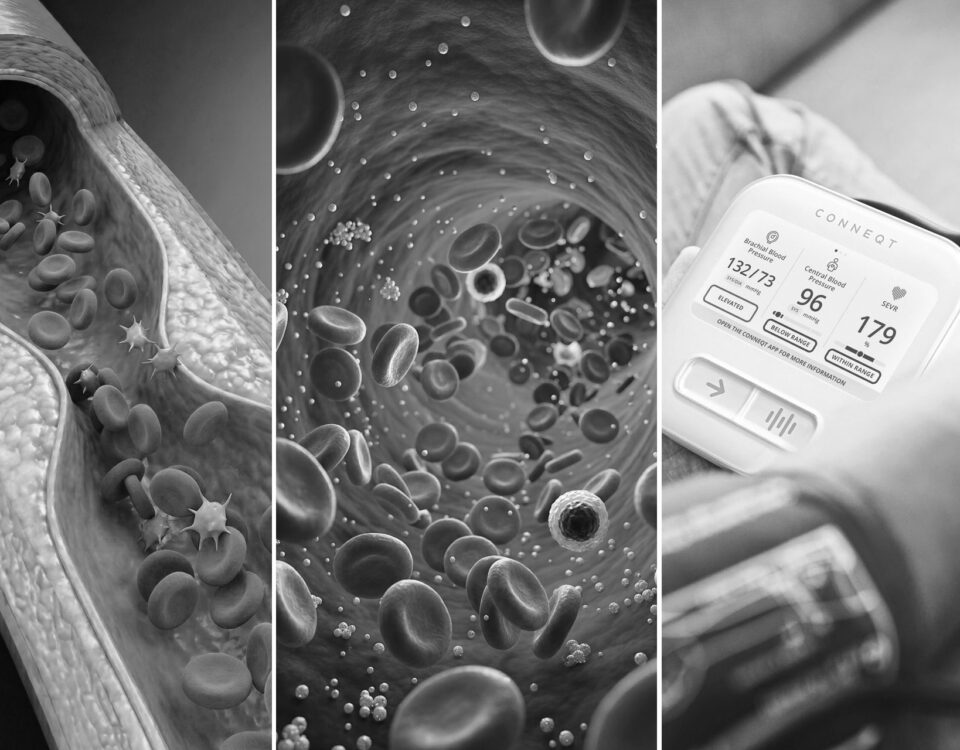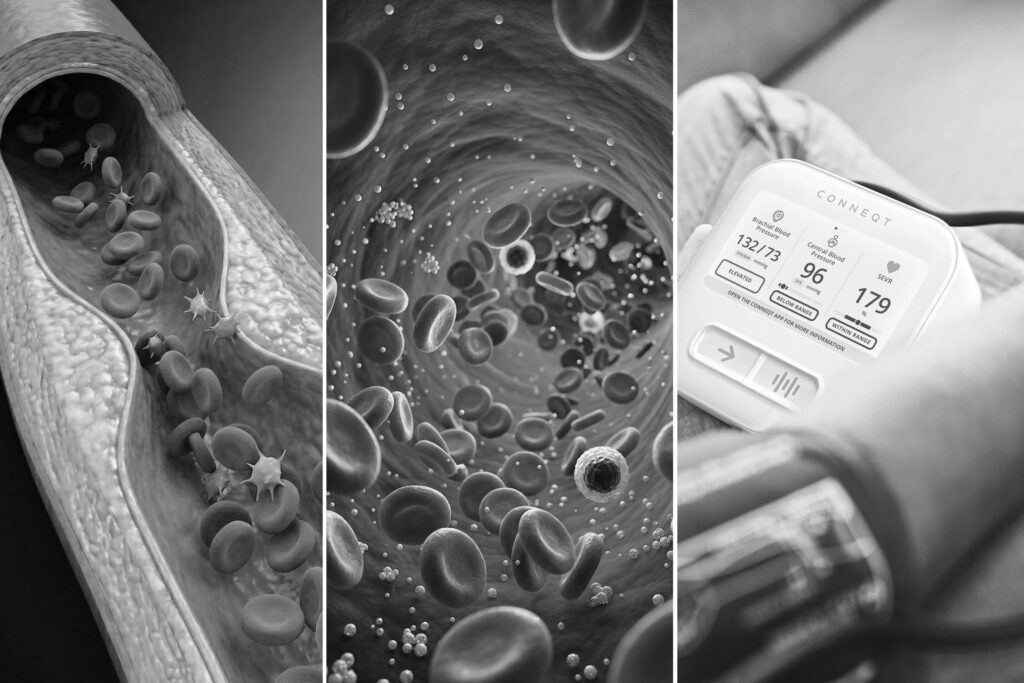


A coronary calcium score assigns a number to the plaque that has already hardened in your arteries. What it does not tell you matters just as much. Here is what the number means and what to do once you have it.
In a Heartbeat
What it measures: How much plaque has hardened in your arteries. A real signal, but a backward-looking one.
Why context matters: The same number means different things at different ages. Read it against your age and sex, not on its own.
What it can’t show: Soft plaque, arterial function, and the fact that even a zero reading doesn’t mean zero risk.
The goal: You can’t lower the number, but knowing it is a real first step. What you do from there is what counts.
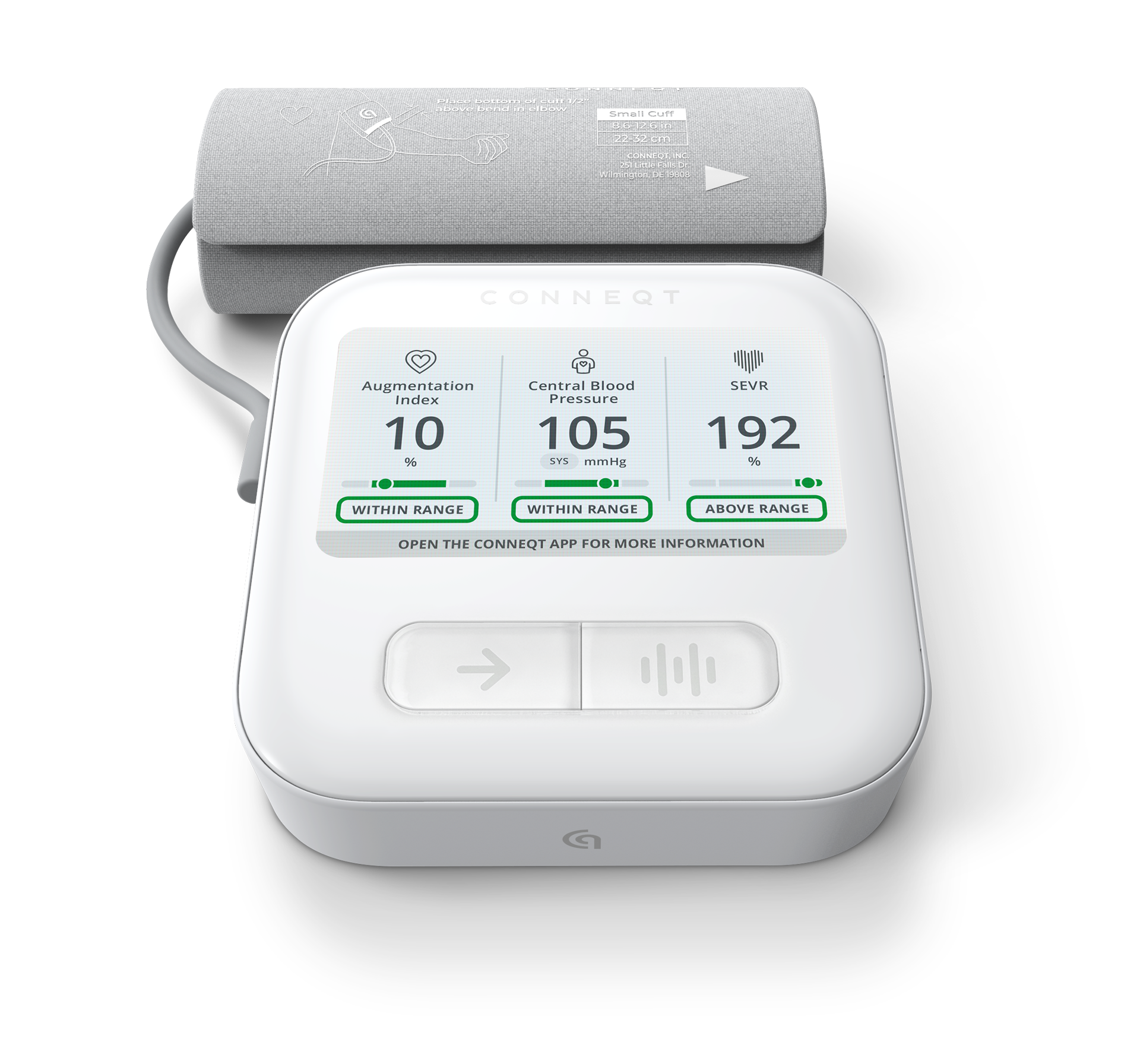

Medical Grade, Accurate, FDA-Cleared Heart Insights.
Save 10% on checkout with code VITALITY
You may already have a coronary calcium score in hand, a number you weren’t quite expecting, and you’re trying to work out what it says about your heart. It’s a precise result that arrives with very little to tell you how to read it.
Maybe your score came back at zero, and you want to know if you’re in the clear. Maybe it came back at 300, and the number rattled you. Both reactions make sense. Both can also miss the mark, for reasons the number alone doesn’t show.
Your calcium score measures the plaque that has already hardened inside your arteries. It’s a snapshot of what they’ve built up over the years, captured on the day of the scan. But it can only show what has already turned to calcium, not everything else happening in your arteries at the time.
That single fact shapes how to read the number. It’s why the same score means different things at different ages, why a zero is reassuring but not a guarantee, and why the number won’t simply drop, even when you do everything right.
In this article
- How the numbers are categorized
- What your score tells you, and what it does not
- What the guidance says to do at each level
- Questions to ask your clinician
- What to track alongside your score
What a coronary calcium score actually is
A coronary calcium score, or CAC score, comes from a quick CT scan of your heart. CT, or computed tomography, is an imaging test that layers X-ray images into a detailed cross-section, so it can see inside the artery walls. What it’s looking for is calcium in your coronary arteries, the vessels that carry blood to your heart muscle.
That calcium isn’t there by chance. It marks plaque that has hardened.
Plaque starts soft, a mix of cholesterol, fat, and other material that collects in the artery wall. As it ages, some of it calcifies, meaning it takes on calcium and turns rigid. The scan finds that hardened plaque and measures how much of it is there.
That measurement, written as a single number, is your calcium score.
How the score is calculated
The number comes from a method developed in 1990 that is still the standard today. It’s calculated from two things the scan measures: how much area the calcium covers in your arteries, and how dense that calcium is. Together they become a single figure, an Agatston score, named for the cardiologist who created the method.
You don’t need the math. What matters is what the score reflects: how much calcified plaque you have, and how dense it is.
What the test involves
The scan is quick and noninvasive. You lie still for a few minutes while it takes pictures of your heart.
There’s no dye and no needles, and nothing to recover from. Start to finish, the visit usually takes about 10 to 15 minutes, and you go straight back to your day.
The radiation dose is low. A calcium scan delivers roughly 1.7 millisieverts, about what you’d absorb from the natural environment over six months.
A calcium scan is not a CT angiogram
That quick, simple scan is easy to confuse with a more involved test that uses the same technology: the CT angiogram. A clinician turns to it when they need more detail than a calcium scan can give, often to investigate symptoms like chest pain or to check whether an artery is actually narrowed.
The difference comes down to what each one sees.
A calcium scan uses no dye and measures only hardened, calcified plaque. A CT angiogram uses a contrast dye to map the inside of the arteries, so it can show soft plaque and narrowing that a calcium scan cannot.
On its own, a calcium scan is one way to look at your arteries. Three Ways to Look at Your Arteries shows how it fits with the other two.
How the numbers are categorized
Once you have a number, the next question is usually whether it’s high, and whether you should be concerned.
Calcium scores fall into broad ranges, and knowing which one yours lands in is the place to start. It’s not the whole answer, but it’s the first piece.
What the ranges mean
Scores run from zero up through the high hundreds and beyond. Higher numbers mean more calcified plaque, and broadly, more plaque tracks with higher cardiovascular risk.
Here’s how the ranges generally break down.
| Score | What it means | What it generally suggests |
| 0 | No calcified plaque detected | The lowest category for your age. Low near-term risk, though not zero. |
| 1 to 99 | Mild plaque | Some calcified plaque. Generally linked to a moderate risk. |
| 100 to 299 | Moderate plaque | A meaningful amount of plaque. Linked to elevated risk. |
| 300 to 999 | Extensive plaque | A high plaque burden. Linked to high risk. |
| 1,000 or more | Very high plaque | On par with someone who has already had a cardiovascular event. |
These ranges are a starting frame, not a diagnosis. A score doesn’t lock in an outcome. It places you on a spectrum, and where you sit depends heavily on something the raw number doesn’t factor in: your age and sex.
How age and sex change what a score means
A score of 100 is not the same result for a 45-year-old as it is for a 70-year-old.
Plaque builds up gradually over a lifetime, so some calcium is expected as you get older. The number that would be unusual at 45 can be fairly ordinary at 70.
It’s common to want a simple benchmark, the average calcium score for your age. There isn’t one clean number, because calcium varies widely even among people of the same age. What clinicians use instead is a percentile: how your score compares with others of your age and sex.
A high percentile means most people your age and sex have less calcium than you do. A low one means most have more. As a rough marker, a score above the 75th percentile is generally considered high for your age.
That comparison can tell a very different story than the raw number.
You can see roughly where your number falls with the MESA calcium score calculator, a free tool built from a large, long-running heart study. It’s a useful reference for a conversation with your clinician, not something to interpret on your own.
What your score tells you, and what it does not
A calcium score is one of the better predictors of cardiovascular risk we have.
It’s also a narrow one. Knowing both halves keeps you from over-reading or under-reading your result.
What the score does tell you
The score is a direct measure of atherosclerosis, the slow buildup of plaque that hardens and narrows the arteries. Calcium is a marker of that process, so the more of it you have, the more disease has already taken hold.
That’s why the number carries weight. Across large, long-term studies, higher calcium scores line up with higher rates of heart attack and stroke, and the pattern holds across ages, sexes, and backgrounds.
It’s a population pattern, though, not a personal forecast. A high score doesn’t mean an event is coming, and a lower one doesn’t rule it out. But as a measure of how much disease has already built up, few numbers are as reliable.
What it doesn’t tell you
A calcium score counts only plaque that has already hardened.
It says nothing about soft plaque, the newer, non-calcified kind that hasn’t taken on calcium yet. That plaque is part of the same disease, and a calcium scan can’t see it. Your score reflects what has calcified, not the full extent of what’s there.
A zero score is reassuring, but not zero risk
A zero is good news. No calcified plaque showed up, and among people your age, that puts you in the lowest-risk group.
But reassuring isn’t the same as risk-free. In studies of people with a zero calcium score, about 1 in 10 still had soft plaque, the kind that only turns up on a more detailed scan.
And the usual risk factors still carry weight no matter what the scan found, from high blood pressure and cholesterol to diabetes, smoking, and family history.
A zero is a reason to keep doing what’s working, not a reason to stop paying attention. Why a Zero Score Doesn’t Mean Zero Risk goes deeper on what a clean scan does and doesn’t rule out.
What the guidance says to do at each level
A calcium score doesn’t tell you what to do. It does give your clinician a clearer starting point.
Here’s how the number tends to shape that conversation, and why the decisions rest with you and your clinician, not the score itself.
How clinicians use the score
For most people, a calcium score is a decision-support tool, not a routine screen. It’s used when your risk isn’t clearly high or low, and a preventive-treatment decision could go either way.
Guidelines suggest it mainly for adults roughly 40 to 75 at intermediate risk. In those cases, the score helps break the tie on whether to start a statin.
What the guidance suggests, by score
The higher your score, the more clinical guidelines suggest your clinician may consider active treatment.
If your score is zero, the guidelines generally support holding off on medication and rechecking in five to ten years, unless other risks are in play, like diabetes, smoking, or a strong family history.
From 1 to 99, clinical guidelines suggest your clinician may consider a statin, especially after about 55.
At 100 or higher, or a score that’s high for your age, clinical guidelines suggest your clinician may strongly consider starting treatment.
Above that, the score shifts from whether to treat to how aggressively to treat. The highest scores, 1,000 and up, can put someone in a range of risk on par with people who have already had a cardiovascular event.
None of this is automatic. Your clinician reads the score alongside everything else, your blood pressure, cholesterol, and history, and decides with you from there.
Reading your score: two common misconceptions
| The assumption | The evidence |
| A high score means a heart attack is coming. | A calcium score predicts risk across large groups, not for any one person. A high number raises the odds and is a reason to act early. It isn’t a diagnosis or a countdown. |
| I can bring my calcium score down. | Once plaque hardens, it doesn’t go away, so your score isn’t expected to drop. On a statin, it can even edge up as the plaque stabilizes. Whether treatment is working shows up in other numbers, like your cholesterol, not in a repeat scan. |
Questions to ask your clinician
A calcium score is most useful as the start of a conversation with your clinician. Here are a few to bring with you:
- What does my score mean for my age and sex, not just as a number?
- How does this fit into my overall risk picture?
- Are there other tests or risk factors we should be looking at?
- What can I do to help keep it from progressing?
- What should we track from here, and when should we look again?
What to track alongside your score
A calcium score tells you what has already hardened in your arteries, and that’s genuinely useful. It’s one of the clearest records you can get of how much plaque has built up over the years.
What it can’t show is what’s changing right now. Plaque takes years to calcify before it registers on a scan, so the score reflects the buildup so far, not the process still under way.
The number also reads differently for some people. Endurance athletes, for example, often have higher scores than their fitness would suggest. The Truth About Exercise and Calcium Scores explains why.
For most people, the more useful move is to treat the calcium score as one layer of your heart health, not the whole story. It captures the structure, the plaque that has physically formed in your artery walls. Two other layers round it out: flow and function.
The layers a calcium score can’t see
Flow is what’s moving through your bloodstream right now, the cholesterol and the particles that carry it, which drive new plaque. A calcium score says nothing about it.
Function is how your artery walls behave under the pressure of each heartbeat, whether they’re stiffening, whether pressure is building deep in the system. These shifts can show up years before calcium ever registers on a scan.
Structure, flow, and function together make the fuller picture. Three Ways to Look at Your Arteries walks through all three.
The layer you can track yourself
All three are worth following over time. Function, though, is the one you can track most easily on your own, between clinic visits.
It shows up in measures like arterial stiffness, central blood pressure, and the way your pulse reflects back through your arteries, all signals of how well your cardiovascular system is holding up. What is Arterial Stiffness covers why they matter.
The CONNEQT Pulse tracks that function layer at home. It doesn’t measure calcium, and it isn’t a replacement for a calcium scan. What it adds is an ongoing view a one-time scan can’t give, a way to follow how your arteries are doing between snapshots.
Where to go from here
A calcium score isn’t a verdict. It’s a starting point.
It tells you how much plaque has hardened in your arteries and, read against your age and sex, gives your clinician something concrete to plan around. What it can’t do is explain everything on its own, or simply drop because you do everything right from here.
So the most useful thing to do with a score, high or low, is treat it as information, not a sentence. Bring it to your clinician, ask what it means for your age and your overall risk, and keep an eye on the parts of your heart health the scan can’t see.
Whatever your number, it’s the start of a plan, not the last word on your heart.
What to read next
These four reads get into what else shapes your risk and what to do next.
- Fit, Healthy, and Still at Risk? What ApoB Reveals That LDL Misses — The flow layer this article names but doesn’t open: the cholesterol particles that drive new plaque, and why a standard cholesterol number can miss them.
- Early Signs of Arterial Stiffness: What Changes Before Symptoms Appear — The function layer up close, and what starts to change in your arteries before symptoms or calcium appear.
- What a Calcium Score Won’t Tell You: Why a Zero Score Doesn’t Mean Zero Risk — If your score came back at zero, what a clean scan does and doesn’t rule out.
- How Long Does It Take to Improve Arterial Health? — You can’t lower a calcium score, but you can improve your arterial health. The research on how long that takes and what drives it.
Want to explore more? Browse the full library.