


Cholesterol-carrying particles can accumulate quietly even when your usual labs look fine. ApoB is one test that can show what’s actually circulating. This guide explains what it measures, why it can diverge from LDL, and what to do next.
It sounds counterintuitive, but you can be fit, eat well, sleep consistently, and still get a lab result that doesn’t match the story you thought your body was telling.
That’s one reason ApoB has become a bigger part of the heart-risk conversation. It can reveal risk that doesn’t always show up clearly in more familiar markers like LDL cholesterol, especially in people who look metabolically strong on the surface.
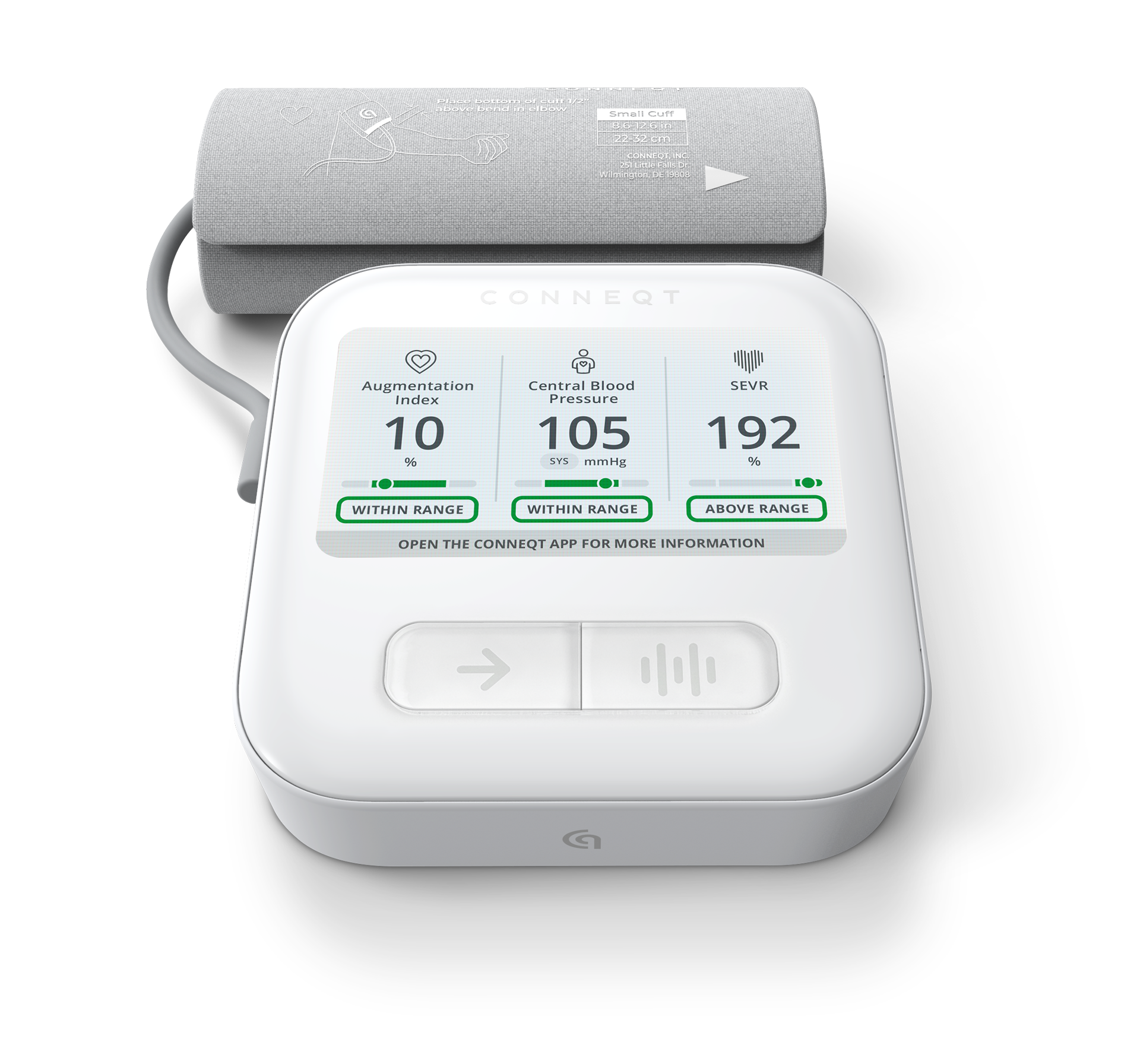

Medical Grade, Accurate, FDA-Cleared Heart Insights.
Save 20% on checkout with code VITALITY
In plain terms, ApoB estimates the number of cholesterol-carrying particles circulating in your blood, which is a signal your standard cholesterol test doesn’t capture.
This isn’t about overreacting to one test. It’s about understanding what the number actually represents, how it relates to LDL, and why cardiovascular risk can build quietly over time even when you feel great.
In this article
- ApoB, explained
- LDL vs ApoB
- Why risk is cumulative
- Why ApoB can run high
- Labs to ask for and how to use them
- What ApoB can’t tell you
- ApoB and calcium score
- What else to track over time
- What to do next
- Quick recap
- What to read next
ApoB, explained
Most cholesterol doesn’t float freely in your blood. It travels inside tiny particles that carry cholesterol and other fats through your bloodstream.
Here’s the simplest way to think about it: cholesterol is the cargo on delivery trucks.
LDL-C tells you how much cargo is being carried. ApoB estimates how many trucks are on the road.
That distinction matters because long-term risk is driven less by how full any one truck is and more by how many trucks are circulating day after day. More particles means more opportunities for particles to interact with the artery wall over time.
Biologically, many of the particles that can contribute to plaque formation carry one ApoB protein, which is why ApoB is commonly used as a practical estimate of atherogenic particle number. It helps answer a question LDL alone can’t always answer: is this a smaller number of particles carrying more cholesterol, or a larger number of particles carrying smaller amounts?
ApoB doesn’t replace the rest of the lipid panel. But it can make the picture sharper, especially when the usual numbers don’t seem to match how you feel or how you live.
LDL vs ApoB: how two “normal” results can tell different stories
If you’ve ever been told your LDL is “fine,” but your ApoB comes back higher than expected, it can feel confusing. It may even sound like the tests are contradicting each other.
In reality, they may be describing two different aspects of the same system.
LDL-C is a measure of cholesterol mass. ApoB is a proxy for particle number. When those two are aligned, interpretation is straightforward. But when they’re not, it can change what “normal” actually means for long-term risk.
Two people can have similar LDL-C, but one can have more particles circulating. That person may have higher ApoB, which suggests higher particle traffic over time even if the cholesterol amount looks acceptable.
That’s why ApoB can reveal risk that LDL alone can miss. It doesn’t mean something is broken. It means the system may be running with more particle traffic than you’d want for the long term.
Once you understand why LDL and ApoB can disagree, the next question becomes more important: what does that difference mean over years, not weeks?
Why risk is cumulative
One reason ApoB can feel so clarifying is that it shifts the focus from a single lab value to a longer view.
Cardiovascular risk doesn’t usually come from one “bad” result or a few weeks off track. It builds quietly through repeated exposure over years. The more cholesterol-carrying particles circulating in your bloodstream, the more opportunities there are for those particles to interact with the artery wall over time.
That’s what people mean when they say risk is cumulative. It isn’t just the number you see today. It’s how long you’ve been exposed to that level of particle traffic.
The good news is that this framing is also empowering. If risk builds over time, then earlier awareness creates more room for calm, targeted course correction. You’re not trying to chase a perfect lab panel. You’re trying to move the trend in a better direction and reduce long-term exposure.
This is especially relevant for people who feel strong and healthy. When you feel great, it’s easy to assume everything underneath the surface is fine. ApoB is one way of checking whether the long-term story matches how you feel in the short term.
Why ApoB can run high in people who are otherwise “metabolically strong”
If high ApoB only showed up in people who were sedentary or clearly unwell, it would be easier to interpret. The confusion comes when ApoB is elevated in people who feel great and have a lot of other markers working in their favor.
There isn’t one universal reason. But a few patterns show up often.
Genetics matters. Some people simply run higher on ApoB and LDL-related markers because of inherited lipid traits, even with strong habits.
Fat quality and individual sensitivity matter. Two people can follow similar “clean” diets and get very different lipid responses depending on how much saturated fat they tolerate and how their body packages and exports cholesterol.
Endurance and low-insulin patterns can change the lipid picture. When your metabolism is efficient and you spend a lot of time in a lower-insulin, fat-adapted state, your liver can become very effective at exporting cholesterol on LDL particles. For some people, that means ApoB stays higher than expected even when other metabolic markers look strong.
The important point is not to assume something is broken. It’s to recognize that “feeling healthy” and “low cardiovascular particle exposure” are not always the same thing. ApoB can help surface that difference early, while you still have a wide range of options to respond calmly and effectively.
Labs to ask for and how to use them
ApoB is most useful when you treat it as part of a broader picture, not a standalone verdict. The goal isn’t to chase a perfect panel. It’s to understand whether your risk markers are moving in a better direction over time.
Here are the core labs that help make ApoB easier to interpret:
ApoB
This is your particle number proxy, a way to estimate how many cholesterol-carrying particles are circulating. More particles generally means more chances for particles to interact with artery walls over time.
LDL-C
This reflects how much cholesterol is being carried. It tells you the “amount,” but not how many particles are doing the carrying.
Non-HDL cholesterol
A simple way to capture most of the cholesterol carried by atherogenic particles (basically total cholesterol minus HDL). It’s a helpful cross-check when you want a quick sense of “cholesterol that can contribute to plaque.”
Triglycerides
A fat-related marker that often reflects how your body is handling energy and carbohydrates. Higher triglycerides can be a clue that your lipid profile is being shaped by diet pattern, insulin dynamics, or alcohol.
HDL-C
Often described as “good cholesterol,” but it’s best used as context, not a scorecard. Very high or very low values can matter, but HDL alone doesn’t cancel out higher ApoB exposure.
What matters most is directionality. If ApoB and related markers are trending down over time, that generally points to lower long-term exposure. If they’re trending up, it’s a sign to slow down and look more closely at diet patterns, training load, recovery, and genetics with your clinician.
Add-on to consider: Lp(a)
Lp(a) is a genetically influenced lipoprotein that can add risk independent of ApoB and LDL-C. It’s largely inherited, which is why lifestyle changes don’t always move it much.
Many people have never had it tested, and you may only need to check it once to understand whether it’s part of your baseline risk picture. If ApoB is elevated despite strong habits, or if cardiovascular risk seems higher than expected based on your standard panel, Lp(a) can be a useful piece of additional context to discuss with your clinician.
What to ask your doctor for
A simple way to request these labs:
“Can we review my lipid panel, and can you also add ApoB? And if I’ve never had it tested, can we check Lp(a) at least once?”
Why this helps:
It gives you a clearer view of cholesterol-carrying particles (ApoB) and flags inherited risk that may not show up in standard numbers (Lp(a)).
What ApoB does not tell you
ApoB can be a powerful clarity tool, but it helps to be clear about its limits.
First, ApoB is not a diagnosis. It doesn’t tell you that you have heart disease. It tells you something about long-term exposure to cholesterol-carrying particles, which is one important input in cardiovascular risk.
Second, ApoB isn’t meant to be read in isolation. A single result can be influenced by recent diet changes, training load, weight changes, illness, and normal biological variation. That’s why trends and context matter, and why it’s best interpreted alongside the rest of your lipid picture and your overall risk profile.
Finally, ApoB doesn’t replace clinical judgment. Age, family history, blood pressure, smoking history, and other factors still matter. ApoB helps sharpen the picture, but it’s still one part of the story.
The goal of including ApoB is not to create anxiety. It’s to avoid false reassurance. When you have a clearer view of risk, you have more room to respond early and calmly, with your clinician guiding the plan.
ApoB and calcium score: upstream vs downstream signals
ApoB is an “upstream” risk signal. It tells you about the level of cholesterol-carrying particle exposure your arteries have been seeing over time.
A calcium score is different. It’s a “downstream” signal. It can help quantify calcified plaque in the coronary arteries, which is one way longer-term risk can become visible later in life.
In simple terms, a calcium score is a CT scan-based measurement that looks for calcified plaque in the arteries that supply the heart. It doesn’t capture everything about cardiovascular risk, but it can be a useful way to understand whether plaque has started to accumulate, especially as people get older or have risk factors that don’t fully show up on standard labs.
This is where some people get surprised. You can feel great for decades, keep your weight and glucose in check, and still accumulate plaque quietly if particle exposure stays higher than ideal year after year. A calcium score doesn’t replace ApoB, and ApoB doesn’t replace a calcium score. They answer different questions.
If you want a clearer explainer on how calcium score fits into heart risk and prevention, start here: what a calcium score tells you.
What else to track over time
Labs are important, but they’re also occasional. Most people check lipids once or twice a year. Meanwhile, the habits that shape cardiovascular risk happen every day.
That’s why it can help to track a few practical signals over time, especially ones that reflect how your cardiovascular system is responding in real life.
Blood pressure patterns are one of the most useful. Not because a single reading is destiny, but because trends can reveal whether your baseline is drifting in the wrong direction or staying stable. For many people, blood pressure is also one of the first places lifestyle changes show up.
Tools like the CONNEQT Pulse are designed to support this kind of long-term tracking by measuring blood pressure patterns alongside deeper arterial signals like central blood pressure and arterial stiffness.
While ApoB reflects particle-level risk in the bloodstream, central blood pressure and arterial stiffness reflect how that cumulative exposure is showing up in the arteries themselves. Tracking both gives you a more complete picture of where your cardiovascular system stands.
If you want a deeper guide to interpreting readings and focusing on patterns instead of single numbers, see: why blood pressure readings fluctuate.
What to do next
If ApoB is higher than you expected, or your ApoB and LDL don’t seem to match, the goal isn’t to spiral. It’s to get clear on what you’re seeing and decide what’s worth adjusting.
Start by confirming the full picture. Review ApoB alongside LDL-C, non-HDL cholesterol, triglycerides, and HDL-C. If you haven’t checked Lp(a), ask whether it makes sense to test it once for baseline context.
Think in trends, not one lab day. One result is information, not a verdict. If you’re making changes, the most useful question is whether ApoB and related markers move in a better direction at your next check-in.
Focus on the levers that tend to matter most. For many people that means improving fat quality, increasing fiber-rich whole foods, being consistent with alcohol, and balancing training intensity with recovery. You don’t need a perfect plan. You need a pattern you can repeat.
Bring your clinician into the decision. ApoB is most helpful when it supports a good conversation about your overall risk profile, family history, and whether lifestyle changes alone are the right approach or if additional steps should be considered.
The goal is calm course correction. The earlier you have clarity, the more options you have to respond in a way that fits your body and your life.
Quick recap
- ApoB helps estimate how many cholesterol-carrying particles are circulating.
- LDL-C tells you how much cholesterol is being carried, not how many carriers are on the road.
- ApoB is most useful when you read it alongside your lipid panel and, when appropriate, Lp(a).
- When ApoB is higher than expected, risk may be more about long-term exposure than how you feel today.
- This is about clarity, not alarm. Use better information to guide calm, targeted next steps with your clinician.
What to read next
If you want to go deeper, these articles can help you apply the ideas in this guide and understand how they connect to other heart-risk signals over time:
- My Cardiovascular Risk is High, Even Though I’m Fit. Here’s What I’m Doing About It – A real-world look at elevated ApoB in someone who looks healthy on paper, and what he’s doing about it.
- The Truth About Exercise and Calcium Scores: What the Latest Research Says – What the latest research shows about exercise, calcium scoring, and what it means for long-term heart health.
- Why Your Blood Pressure Readings Fluctuate, and What to Do About It – How to measure consistently and make sense of patterns over time.
Want to explore more heart-health articles? Browse the full library.