

Your resting heart rate is low. Your blood pressure looks fine. Your standard labs came back clean. None of that tells you what is happening inside your arteries. Here is what does.
In a Heartbeat
The gap: The fitness metrics most people track, resting heart rate, blood pressure, and VO2 max, measure how well your heart and lungs perform under demand. They do not measure what is happening inside your arteries.
The distinction: Vascular health tells you what your arteries are doing and whether they can sustain the demands being placed on them. Cardiovascular fitness tells you what your body can do. Both matter, but only vascular health tells you what is happening on the inside.
What to measure: Arterial stiffness, central blood pressure, and ApoB, important vascular health signals, which are not captured by any fitness metric. Knowing where you stand on all of them gives you and your clinician a more complete picture of your cardiovascular risk.

Medical Grade, Accurate, FDA-Cleared Heart Insights.
Save 10% on checkout with code VITALITY
You train consistently. Your resting heart rate is low. You recover well after a hard effort, and your blood pressure readings look fine.
On paper, you are doing everything right.
But those signals are telling you about your fitness. They are not telling you about the condition of your arteries. That is a different question, and it requires different tools to answer.
Fitness and cardiovascular health are related. But they are not the same thing. Understanding the difference matters whether you train every day or are just beginning to think about it.
What fitness actually measures
The metrics most active people track are genuinely useful. A low resting heart rate reflects efficient cardiac function. A normal blood pressure reading tells you something real about how your heart is performing. Strong recovery suggests your cardiovascular system is adapting well to training.
But each of these measures one thing: how well your heart and lungs perform under demand. That is cardiorespiratory fitness. It is not a signal about what is happening in the walls of your arteries. Recovery time and arterial health are separate systems that do not inform each other.
Resting heart rate
A low resting heart rate is a sign that your heart is pumping efficiently. Endurance training lowers it over time as the heart adapts and strengthens. It tells you your cardiac output is strong.
What it does not tell you is whether deeper changes are happening in your vascular system. Resting heart rate is a measure of cardiac efficiency. It is not a measure of arterial health.
Blood pressure
A standard blood pressure reading taken at the arm tells you something useful about the pressure your heart is generating to push blood through your body. What it does not capture is central blood pressure, the pressure load your heart and major organs are working against.
Research from the Strong Heart Study found that central blood pressure was more strongly related to cardiovascular outcomes than the reading taken at the arm. The two can diverge meaningfully, even in people who appear healthy and whose arm readings look fine.
Recovery time
How quickly you feel recovered after a hard effort, whether you can hold a conversation, whether your legs come back on the next set: these all reflect how well your cardiovascular system is adapting to training. It is a useful signal about fitness.
VO2 max
VO2 max measures the maximum rate at which your body can consume oxygen during intense exercise. It is one of the strongest predictors of overall health and longevity, and it is often treated as the gold standard of cardiovascular fitness.
But a high VO2 max tells you your body is excellent at delivering and using oxygen under peak demand. It does not tell you what condition your arteries are in to do that work.
Research using Framingham Heart Study data found that arterial stiffness independently impairs VO2 max, meaning the two are connected but measure different things. You can have an impressive VO2 max and still have arterial stiffness developing quietly in the background.
What is happening in your arteries
The signals that tell you about vascular health are different from the ones that tell you about fitness. They are the cardiovascular health markers that fitness metrics cannot capture, and they carry different information about your risk. Three of them are particularly worth understanding.
Arterial stiffness
Arterial stiffness measures how rigid or compliant the walls of your arteries have become. Think of the difference between a flexible garden hose and a rigid pipe: a flexible hose absorbs pressure and moves with it, while a rigid pipe transmits every pressure spike directly. Healthy arteries work like the hose. As they stiffen, that elasticity is lost and the heart has to work harder to push blood through.
This is not a condition that announces itself. Arterial stiffness develops gradually, often without symptoms, and does not show up on a standard fitness test or a routine lipid panel.
A meta-analysis of 17 longitudinal studies following nearly 16,000 people found that pulse wave velocity, or PWV, the standard measure of arterial stiffness, independently predicted heart attacks, strokes, and early death. That predictive power held after accounting for blood pressure, cholesterol, and other conventional risk factors.
You can have a low resting heart rate, strong recovery, and a high VO2 max while arterial stiffness is developing in the background. Fitness and arterial stiffness are related but they do not move in lockstep. For more on what changes before symptoms appear, this article covers the early signs in detail.
Central blood pressure
The reading taken at your arm reflects pressure in the smaller arteries closer to the surface of your body. Central blood pressure reflects the pressure load at the aorta, the body’s main artery, which is what the heart and major organs including the brain and kidneys are actually working against.
The two readings are related but not identical. In some people, particularly those who appear fit and healthy, they can diverge meaningfully.
Research from the Strong Heart Study found that central blood pressure was a better predictor of vascular damage and cardiovascular outcomes than the standard arm reading. A normal reading at the arm does not guarantee a normal central blood pressure.
Standard fitness tests do not measure central blood pressure. Neither does a routine physical.
ApoB
Most standard lipid panels report LDL-C, the amount of cholesterol carried by low-density lipoproteins. What they do not report is apolipoprotein B, known as ApoB. ApoB counts the actual number of cholesterol-carrying particles circulating in your blood that contribute to plaque buildup.
The distinction matters because particle number and cholesterol content do not always track together. Someone can have well-controlled LDL-C and still have a high number of those particles.
A systematic review of 15 discordance studies covering more than 593,000 participants found that ApoB outperformed LDL-C as a predictor of cardiovascular risk in every head-to-head comparison.
Fitness does not lower ApoB the way it lowers resting heart rate or blood pressure. It is a separate signal, and it requires a separate test to reveal it.
Why looking fit is not the same as being cardiovascularly protected
If you exercise regularly, maintain a healthy weight, and have numbers that look right on paper, the gap between fitness and cardiovascular health is easy to overlook. Not because it is not there. Because everything visible suggests otherwise.
Consistent training suppresses many of the signals that would otherwise flag cardiovascular risk: blood pressure tends to be normal, inflammation markers tend to be better, body weight tends to be lower. Those are real benefits. They can also make it harder to see what is still happening in the arteries underneath.
Research on people who exercise regularly found that even among those with above-average fitness, hidden plaque buildup was present in a significant portion of the group. Fitness lowered the risk. It did not eliminate it.
The finding holds even at the highest levels of training. A study comparing elite athletes to non-athlete controls found no significant difference in central blood pressure or arterial stiffness between the two groups. The athletes were measurably fitter. Their vascular metrics were not measurably better.
If the gap shows up there, it shows up everywhere.
That is not an argument against exercising. It is an argument for measuring what no fitness metric can show you. For a deeper look at how this plays out in people who train at a high level, this article covers the athlete-specific side of this question.
Train for performance. Monitor for protection.
Exercise is still one of the most powerful things you can do for your cardiovascular health. The point of this article is not to change how you train. It is to change what you measure alongside it.
The vascular health signals discussed here, arterial stiffness, central blood pressure, and ApoB, do not show up on a fitness watch, a recovery score, or a standard lipid panel. Knowing where you stand on these markers gives you and your clinician a more complete picture of your cardiovascular risk, not just your cardiovascular capacity.
That distinction is worth holding onto. Vascular health tells you what your arteries are doing and whether they can sustain the demands being placed on them. Cardiovascular fitness tells you what your body can do. Both matter. But only vascular health tells you what is happening on the inside.
A coronary artery calcium scan completes that cardiovascular picture, showing where calcified plaque has already developed. For more on what a CAC scan can and cannot tell you, this article covers it in detail.
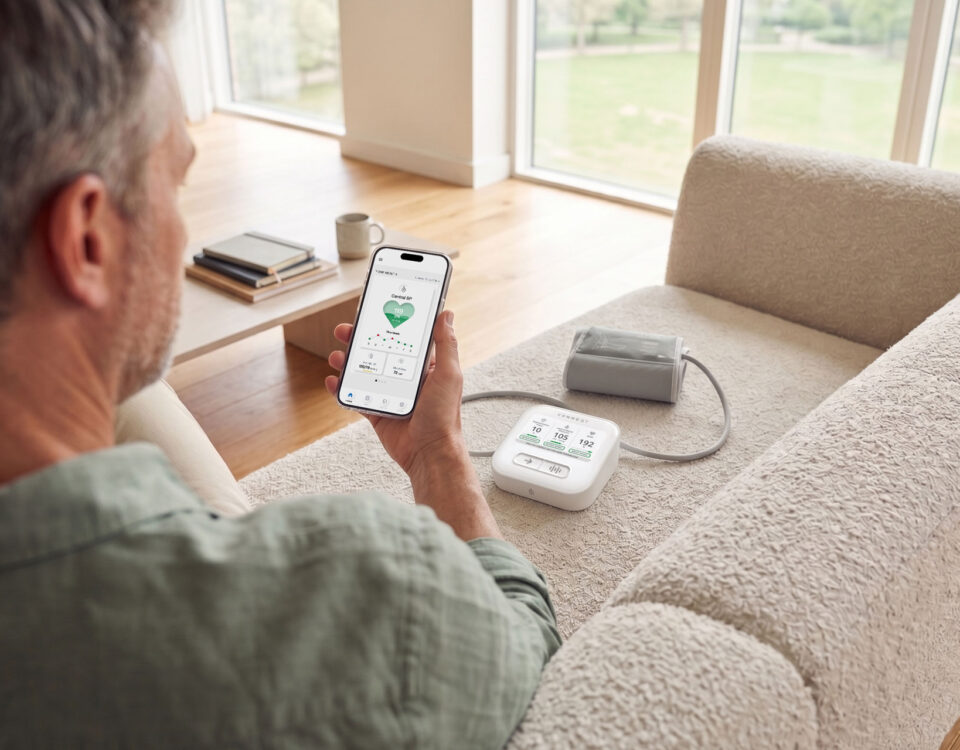
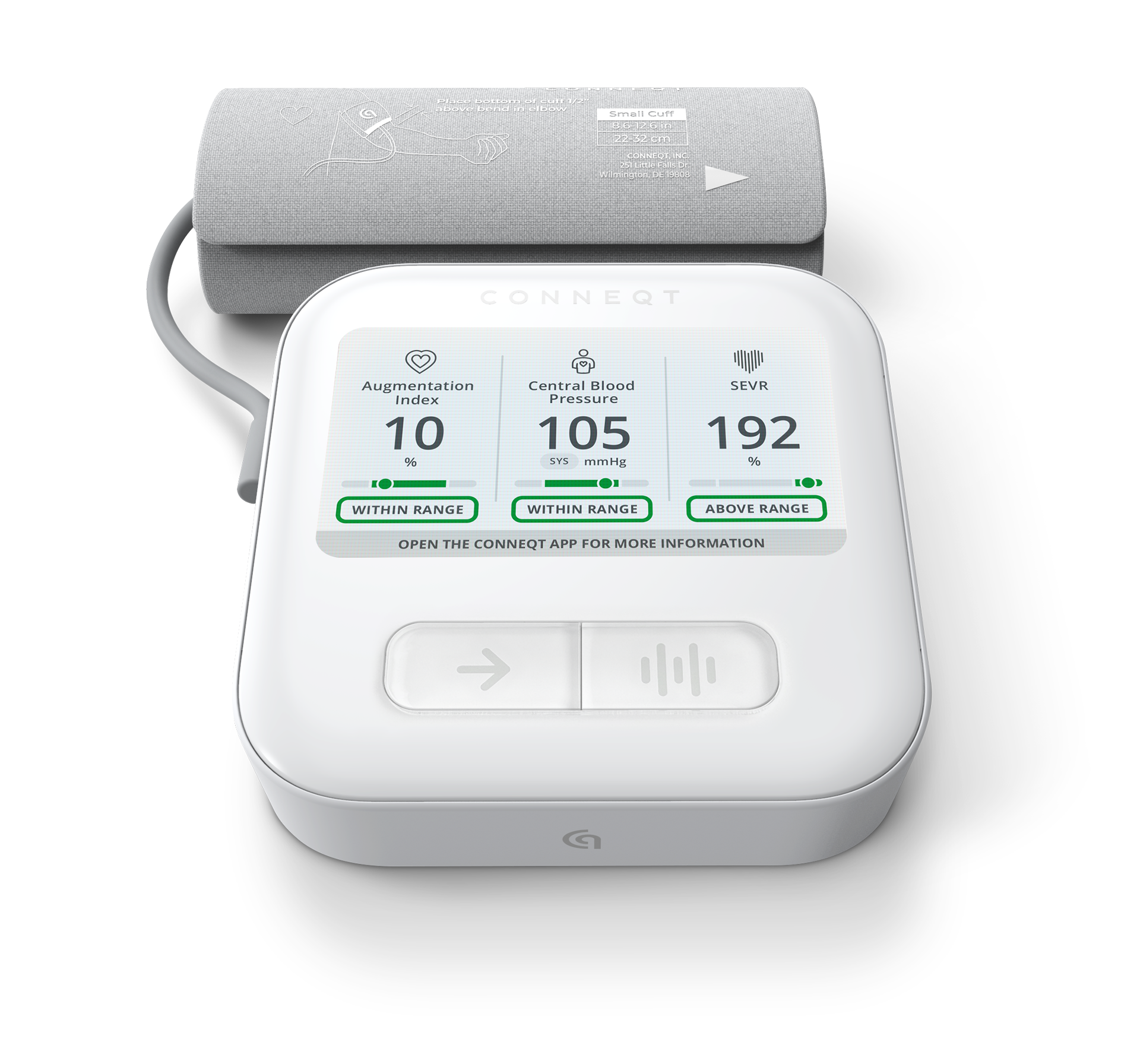
Unlike a CAC scan, arterial stiffness and central blood pressure are measurable at home between clinical appointments. The CONNEQT Pulse tracks these consistently, adding signals that no fitness metric can provide.
Training builds the engine. Monitoring tells you what the engine is doing to the road. Together, they give you something neither can provide alone.
What to read next
Each of these picks up where this article leaves off.
- Why Athletes Need to Think About Cardiovascular Risk Differently — The athlete-specific version of this question, with personal data and a deeper look at how cardiovascular risk shows up in people who train at a high level.
- What Does ApoB Measure vs. LDL — A deeper explanation of why ApoB and LDL-C measure different things and what to do if your ApoB is elevated.
- Early Signs of Arterial Stiffness — What changes in your arteries before symptoms appear and what the research shows about early detection.
- How Much Exercise Is Too Much For Your Heart — The research on optimal exercise dose and where the cardiovascular benefits of training start to level off.
- How Exercise Strengthens Your Heart — What consistent training does for your cardiovascular system and why it remains one of the most powerful tools available.
More is available in the full library.