

Most women entering menopause hear about bone density. Fewer hear that the same hormonal changes are also affecting how their arteries age.
When women approach menopause, conversations often focus on one health concern: bone density.
For good reason.
As estrogen levels decline, the risk of osteoporosis and fractures increases. Bone density screening, calcium intake, and strength training become standard topics in clinical conversations.
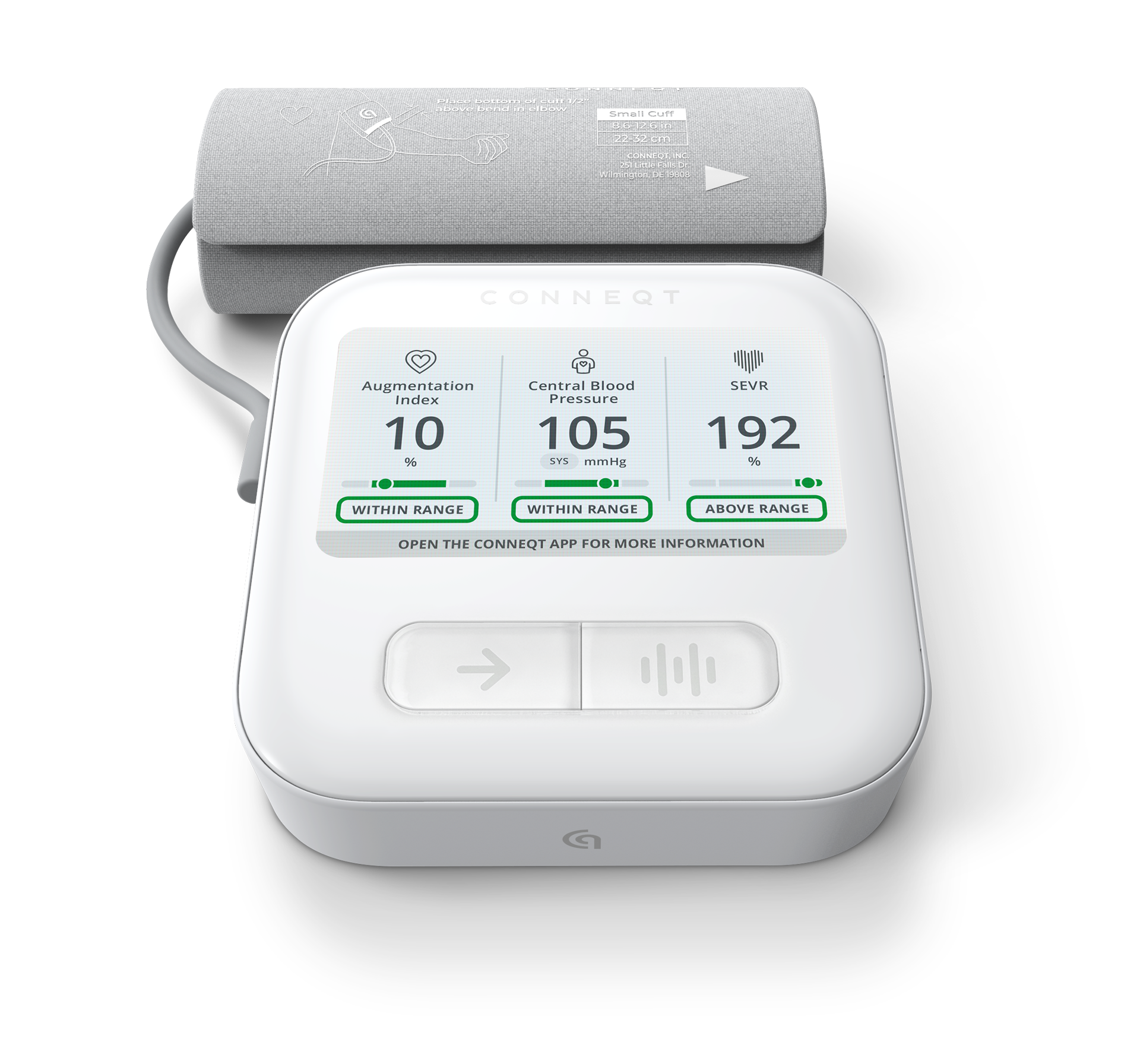

Medical Grade, Accurate, FDA-Cleared Heart Insights.
Save 10% on checkout with code VITALITY
What receives considerably less attention is that the same hormonal changes affecting bone health are also reshaping the cardiovascular system.
Women have hearts too.
And for many women, the years surrounding menopause represent one of the most consequential turning points in heart health, one that rarely gets the same clinical airtime as bone health.
The protective role of estrogen
Throughout the reproductive years, estrogen influences far more than the menstrual cycle.
Research has shown that estrogen supports vascular function, promotes healthy blood vessel dilation, helps regulate inflammation, and contributes to maintaining arterial elasticity. Researchers believe these effects explain why premenopausal women generally experience lower rates of cardiovascular disease than men of similar age, a pattern documented across multiple studies.
As estrogen levels decline during menopause, those protective effects begin to diminish.
Those consequences extend beyond vascular function. Women often experience changes in body composition, cholesterol levels, insulin sensitivity, and blood pressure during this transition, all factors research links to cardiovascular risk.
The bone-heart connection
Many women understand that menopause can accelerate bone loss. The biology underlying that loss is also reshaping the cardiovascular system, though this connection receives far less attention.
This is not a coincidence. It is a consequence of the same hormonal decline.
A 2022 review of perimenopausal and postmenopausal women highlighted that estrogen deficiency is associated not only with declining bone mineral density but also with vascular changes research has linked to cardiovascular disease risk. The authors emphasized that many of the physiologic processes affecting bone and cardiovascular health occur simultaneously during the menopausal transition.
The clinical implication is significant. Bone loss and arterial stiffening are not competing priorities during menopause. They are parallel processes, associated with the same estrogen decline, unfolding on the same timeline.
A woman who is told her bone density is declining is receiving information about her hormonal environment. That same hormonal environment is shaping her arterial health. The two conversations belong together.
The same hormonal changes research links to increased osteoporosis risk are also tied to changes in arterial health. Treating them as separate clinical concerns may mean missing the fuller picture.
Why cardiovascular risk often goes unnoticed
For too long, heart disease has carried the reputation of a men’s condition. The left anterior descending artery is even called the widow maker, a name that reveals how deeply that assumption runs.
The reality is very different.
Cardiovascular disease remains the leading cause of death among women worldwide. Yet women receive later diagnoses, experience different symptoms, and many underestimate their own risk. Increasingly, that risk is arriving earlier, with heart disease rising among younger women well before menopause.
What is worth emphasizing here is a specific pattern that makes the menopausal transition particularly consequential. Cardiovascular changes can develop silently.
Long before symptoms appear, arteries may become stiffer, blood pressure patterns may change, and vascular function may begin to decline. These changes often occur gradually over years, and they do not always register on standard screening measures.
Looking beyond traditional risk factors
Traditional cardiovascular screening remains essential.
But it was designed to identify risk factors, not to assess how the cardiovascular system is functioning in real time. That distinction matters particularly during the menopausal transition.
Blood pressure, cholesterol, glucose levels, family history, and lifestyle habits all provide valuable information.
Growing research suggests that measures of arterial function may provide important additional context. Central blood pressure, arterial stiffness, and pulse wave velocity reflect how the vascular system is actually performing, not simply whether risk factors are present.
Research using pulse wave analysis technology has demonstrated that arterial stiffness and central blood pressure can reveal vascular changes that may not be fully captured by brachial blood pressure measurements alone. Clinicians increasingly recognize these measures as meaningful markers of vascular health, particularly during and after the menopausal transition, when functional changes may precede measurable shifts in traditional risk markers.
The concept of vascular aging, how the arteries age relative to chronological age, is an active area of research in this context. For women moving through menopause, understanding how arterial function is changing may offer a more complete picture of cardiovascular health than traditional risk factor assessment alone.
The evidence on arterial health monitoring during the menopausal transition is covered in depth here.
Menopause as an opportunity, not just a transition
Menopause is often viewed as the end of one stage of life. It is also, clinically speaking, a window.
Many women schedule bone density evaluations as they enter menopause because they understand the importance of preserving skeletal health. That instinct reflects something important: the recognition that this transition is a moment to assess, not simply to manage.
The same instinct applies to cardiovascular health, and the research supports acting on it.
Arterial changes associated with the menopausal transition do not announce themselves. Understanding how arterial function is changing, monitoring vascular health, and identifying areas of concern early creates opportunities to support long-term cardiovascular health before clinical symptoms appear. The menopausal transition is one of the clearest windows for that kind of proactive assessment.
Women who approach bone health proactively during menopause are already thinking in the right direction. Extending that thinking to cardiovascular health is a natural and well-supported next step.
A broader conversation about women’s health
Women’s health is not just about reproductive health.
It is not just about bone health.
And it is not just about navigating symptoms.
The menopausal transition affects multiple systems throughout the body, including the cardiovascular system. The hormonal changes that drive conversations about bone density are the same changes influencing arterial health, cholesterol metabolism, blood pressure, and vascular function.
The same decline in estrogen that prompts conversations about osteoporosis should also prompt conversations about heart health.
Because women have bones.
But women have hearts too.
This article is intended for educational purposes only and should not be interpreted as medical advice, diagnosis, or treatment recommendations.