


You can have normal blood pressure and still have arteries that are aging faster than they should. Pulse pressure amplification is one of the clearest ways to see that difference.
A 25-year-old marathon runner and a 25-year-old sedentary office worker may both have a blood pressure of 118/72 mmHg.
Their resting heart rates may fall within the same “normal” range.
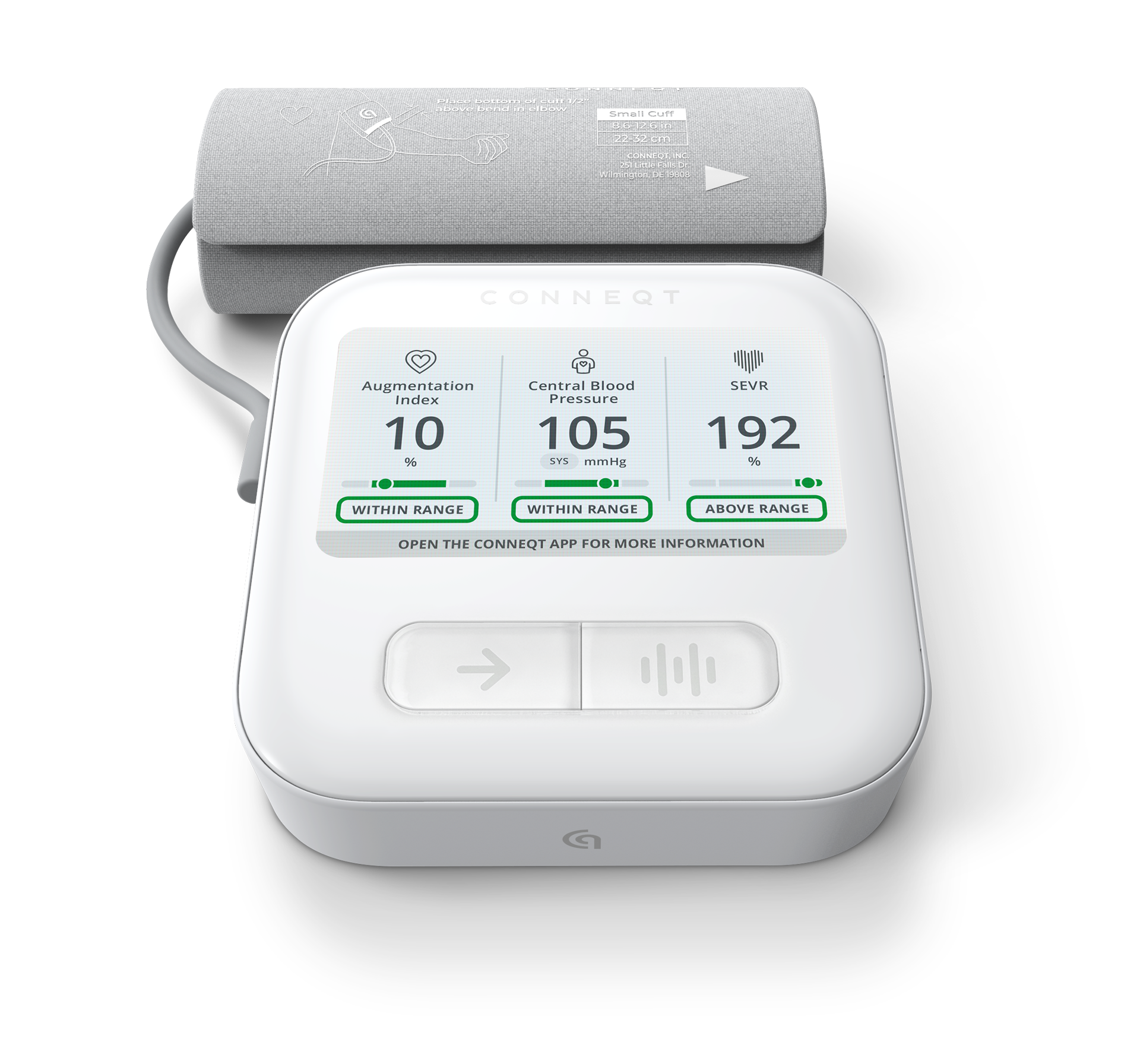

Medical Grade, Accurate, FDA-Cleared Heart Insights.
Save 10% on checkout with code VITALITY
Their cholesterol levels may appear similar.
Yet their cardiovascular systems may be functioning very differently.
A 25-year-old’s arteries aren’t always 25 years old.
This raises an important question:
What does “normal” really mean?
In medicine, many cardiovascular parameters are categorized using broad reference ranges that span decades of life. Blood pressure classifications often apply to adults ranging from their late teens through advanced age. Resting heart rate reference ranges frequently encompass individuals whose physiology, fitness levels, body composition, and cardiovascular risk profiles differ dramatically.
These reference ranges are valuable clinical tools.
But they are not individualized assessments.
The conversation is shifting. The 2026 ACC/AHA cholesterol guidelines expanded cardiovascular screening to include earlier markers and pushed for earlier intervention.
That momentum reflects a broader recognition in cardiovascular medicine: understanding how the vascular system functions may matter just as much as whether a number falls inside a predefined range.
One measure that has attracted growing research attention in this context is pulse pressure amplification (PPA), one of several vascular biomarkers used to assess arterial function beyond a standard reading. PPA shows how arteries are actually functioning. The signal reads differently depending on where you are in life, which is exactly what the research in younger adults reveals.
Why brachial blood pressure doesn’t always tell the whole story
A standard arm cuff captures something important. But it captures it peripherally.
The pressure experienced by the heart, brain, and major organs, known as central blood pressure, can tell a different story. In healthy, elastic arteries, pressure waves generated by each heartbeat amplify as they travel outward. When arteries lose elasticity, that amplification diminishes, and the gap between what the arm registers and what the heart is actually experiencing begins to close.
PPA measures that gap: the ratio of pulse pressure at the arm to pulse pressure closer to the heart.
Two people can have identical brachial blood pressure readings and very different vascular profiles. That difference is not always visible from a standard brachial cuff.
Rather than representing a disease state by itself, PPA is shaped by the interaction between arterial elasticity, vascular structure, wave reflection, heart rate, stroke volume, body size, body composition, and age.
Young adults are not all the same
Even among young, apparently healthy adults, meaningful differences in arterial function already exist.
The African-PREDICT study evaluated 875 healthy adults between the ages of 20 and 30 using SphygmoCor XCEL, a clinical arterial assessment device built on the SphygmoCor technology that underlies CONNEQT’s platform. Researchers found average pulse pressure amplification values of 1.43 among Black participants and 1.46 among White participants, both above the evidence-based threshold of 1.3, after adjusting for sex, socioeconomic status, height, heart rate, and mean arterial pressure.
These findings are notable because all participants were considered healthy and free from major cardiovascular disease.
Despite sharing similar ages and health status, measurable differences in vascular function were already present.
A follow-up African-PREDICT analysis involving more than 1,200 healthy adults aged 20 to 30 further demonstrated that pulse pressure amplification decreased as body fat increased.
Research has also shown that reduced PPA in young adults is associated with markers of low-grade systemic inflammation, and that this relationship varies depending on body composition. In other words, two people of the same age and blood pressure may have meaningfully different vascular profiles based on how their bodies are composed and how their inflammatory systems are responding.
This observation highlights an important reality:
Chronological age alone does not determine vascular health.
Lifestyle, body composition, physical activity, metabolic health, and other factors all contribute to how arteries function.
What the Anglo-Cardiff data revealed
The Anglo-Cardiff Collaborative Trial, a landmark study in vascular physiology, reinforced this picture from a different angle. Evaluating more than 4,000 healthy individuals between the ages of 18 and 90, researchers observed a progressive decline in pulse pressure amplification throughout life, with the steepest drop occurring before age 50.
That finding challenged a common assumption: that vascular aging is primarily a concern of later life. The data suggested otherwise. Measurable changes in arterial function begin decades before cardiovascular events occur.
Vascular age and chronological age don’t always align
When most people think about aging, they think about chronological age, the number of years since birth.
Cardiovascular health doesn’t always follow the same timeline.
Researchers increasingly use the concept of vascular age to describe how an individual’s arteries compare to what would typically be expected for someone of the same age.
Two 25-year-olds may share the same birthday year, yet their vascular systems may be functioning very differently.
One may have arteries that function similarly to what would be expected in a healthy young adult. Another may demonstrate characteristics more commonly observed in someone significantly older.
The difference often reflects the cumulative effects of lifestyle, exercise habits, body composition, blood pressure, metabolic health, sleep quality, stress, genetics, and environmental exposures.
The African-PREDICT findings bear this out. Even among healthy adults in that same age range, measurable differences in pulse pressure amplification and vascular function were observed.
These participants were similar in age.
Their arteries were not necessarily aging at the same rate.
What this looks like in practice
The same principle applies in everyday clinical practice.
A patient may have a blood pressure that falls within a normal range yet demonstrate vascular characteristics suggesting accelerated arterial aging.
Conversely, another individual may have a vascular profile that appears younger than their chronological age because of favorable lifestyle habits and cardiovascular fitness.
This is why modern cardiovascular prevention increasingly focuses on understanding how the cardiovascular system is functioning, not simply whether a patient falls within a population-based reference range.
Chronological age tells us how long we’ve lived.
Vascular age is a concept researchers use to describe how arteries are aging relative to what would be expected in someone of the same age and sex. The underlying signals that capture that aging, including PPA, arterial stiffness, and central blood pressure, can together offer a meaningful picture of where someone’s vascular health stands relative to their chronological age.
Precision prevention starts with context
The question is not whether blood pressure and standard cardiovascular screening remain important. They absolutely do. The question is whether we can learn more by understanding the physiology behind those numbers.
Cardiovascular health is more nuanced than any single reference range. As research continues to advance, the conversation is shifting from “Is this value normal?” to “What does this value mean for this individual?” That distinction may seem subtle, but it represents an important evolution in cardiovascular prevention.
The most meaningful cardiovascular assessment is one that considers the whole person: their age, fitness level, body composition, lifestyle, family history, vascular function, and overall cardiovascular profile.
Normal ranges are useful.
But people are not averages.
Understanding how an individual’s arteries are aging provides insights that no single number can capture alone.
Because when it comes to cardiovascular health, context matters just as much as the number itself.
This article is intended for educational purposes only and should not be interpreted as medical advice, diagnosis, or treatment recommendations.