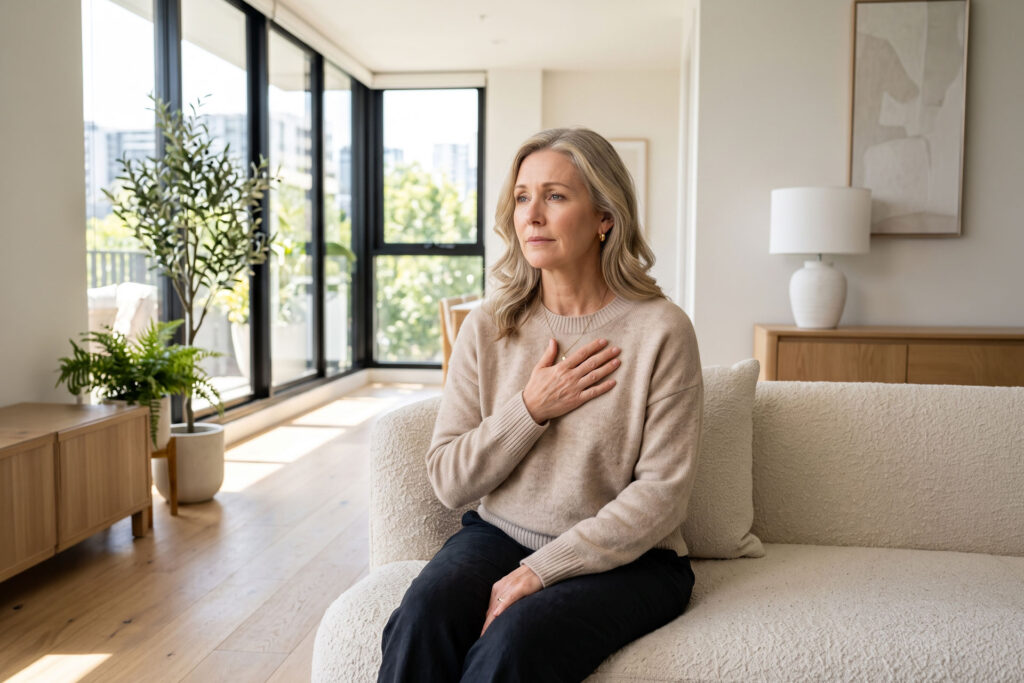

For women, high blood pressure is common and often silent, so it can slip by between yearly checkups. Here is why it gets missed, and how to take an active role in watching your own numbers.
In a Heartbeat
It’s common. High blood pressure in women is not rare, and it climbs with age: more than 4 in 10 women have it.
It’s quiet. It usually has no symptoms, and it’s under-recognized in women, so it often goes unnoticed.
Feeling fine isn’t knowing. About 1 in 3 women who have high blood pressure don’t know they do.
What helps. Watch the trend with a validated upper-arm cuff, and talk it through with your clinician.
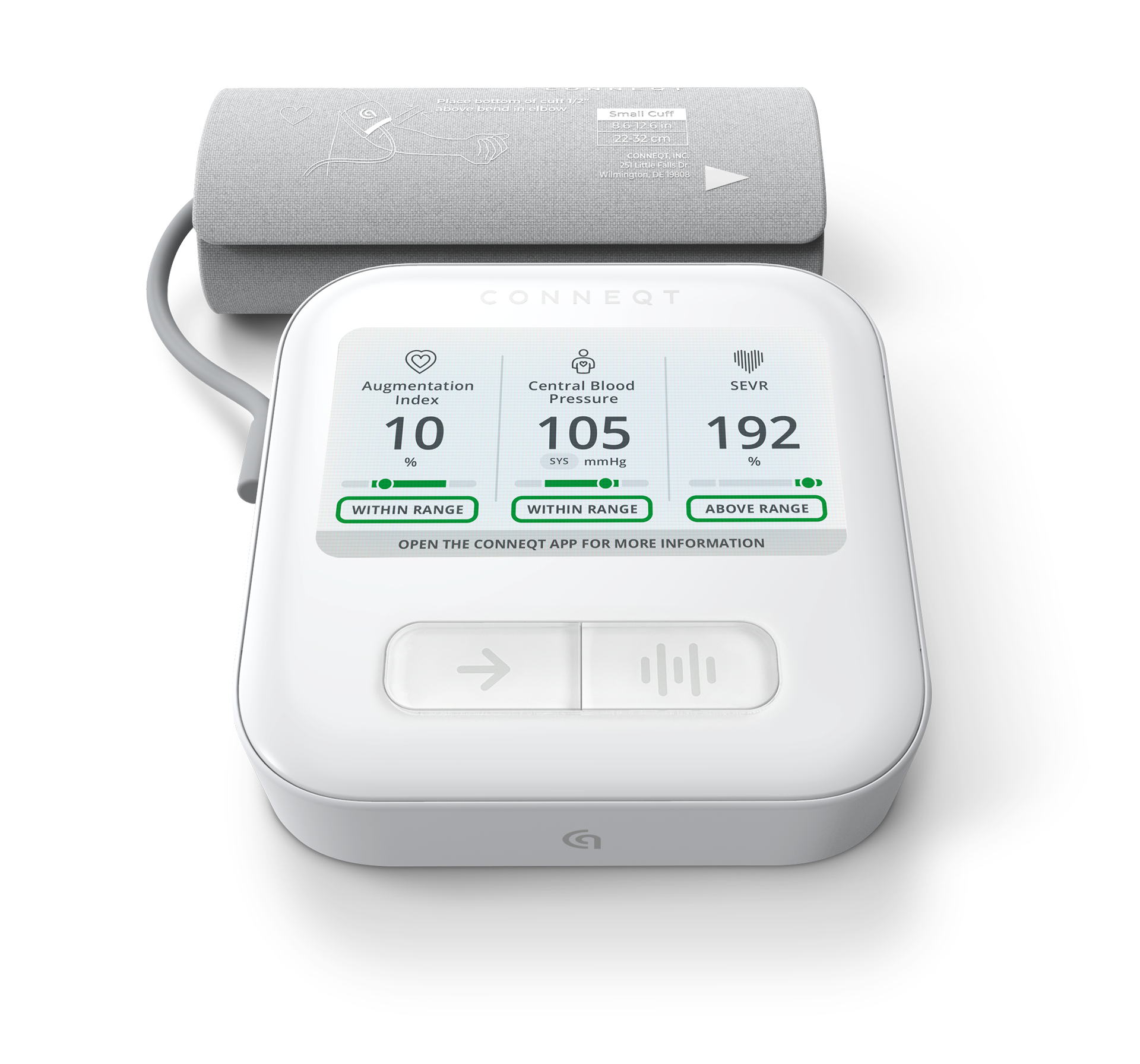

Medical Grade, Accurate, FDA-Cleared Heart Insights.
Get $130 off at checkout with code BFCM26
For most women, blood pressure is a once-or-twice-a-year ritual. A nurse wraps a cuff around your arm at a checkup or an OB-GYN visit, reads off two numbers, and unless one or both of them set off alarms, that is the last you think about it until the next appointment.
Jessie Katz, MD, would like to change that. As a clinical educator at CONNEQT, Katz spends much of her time on one question: how cardiovascular risk shows up earlier than people expect, and how often it slips past women in particular. Blood pressure, she says, is the clearest example.
“Blood pressure is one of the most important numbers you have, and for a lot of women it is also the most overlooked. Not because they aren’t paying attention, but because we check it once or twice a year and move on.”
So I sat down with her to walk through what watching your own blood pressure actually means, and why it is worth doing.
How common is high blood pressure in women?
More common than most women expect, and more common than the way we screen for it would suggest.
High blood pressure in women is not rare, and it is not only an older woman’s problem. More than 4 in 10 women have it.
It climbs with age. By your 40s and 50s, it is roughly half. Past 60, it is more than 7 in 10. High blood pressure, or hypertension, starts showing up in midlife, right when a lot of women are paying attention to everything except their own numbers.
What I want women to take from that is perspective, not alarm.
When a condition is this common, the useful question is not whether it could be you. It is whether you would know if it were. Women and high blood pressure are far more connected than the usual story about heart disease lets on, and knowing that is where paying attention starts.
Why is women’s blood pressure risk different, and why does it get missed?
Two reasons, and they feed each other.
The first is biology. In women, cardiovascular risk appears to start climbing at lower blood pressure levels than it does in men.
The thresholds we use to call blood pressure “high” were built largely on studies of men. So a number that looks unremarkable on the chart can carry more weight for a woman than it seems to.
I want to be careful with that, though. It is a population pattern, not a personal cutoff. It doesn’t mean a single reading means one thing in a woman and something else in a man. It means the risk curve for women may begin earlier than the old numbers assumed.
The second reason is cultural. Heart disease has been treated as a men’s problem for a long time, even though it is the leading cause of death for women.
That assumption shapes care. High blood pressure in women is more likely to go under-recognized and undertreated.
And younger women are the least likely to know they have it; about two in three don’t. Many aren’t thought of as being at cardiovascular risk at all, so it slips by on both sides, the clinician’s and their own.
Put those two together, and you get a gap. The risk can start earlier than the standard numbers suggest, and the system is slower to catch it in women.
That gap is the whole reason women should be watching their own numbers.
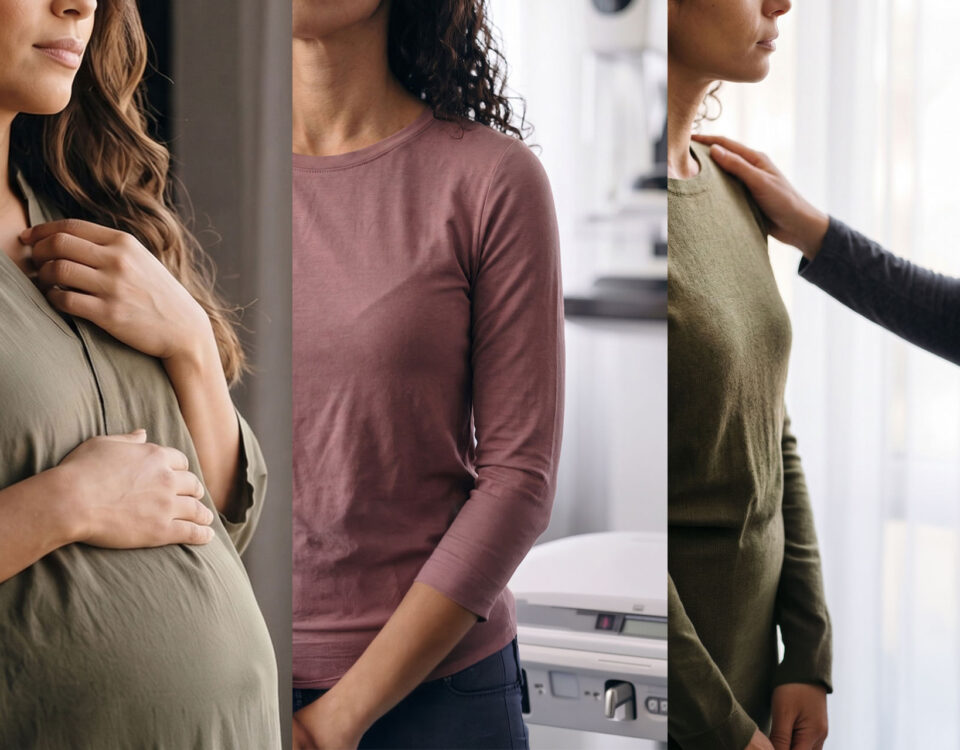
Does a history of preeclampsia or gestational diabetes change things?
Yes, and this is one of the places I most want women to pay attention.
If you had preeclampsia, which is a form of high blood pressure that develops during pregnancy, your long-term cardiovascular risk runs roughly double that of women who didn’t.
A history of gestational diabetes, high blood sugar that first shows up in pregnancy, is linked to about a 45% higher risk of cardiovascular and cerebrovascular disease.
I know how those numbers can sound. So let me be clear about what they are, and what they aren’t.
They are not a verdict. A complication in pregnancy is a signal, not a sentence. What it tells you is that your body handed you useful information, often years before routine screening would think to look for it.
That is exactly why it is worth watching your numbers if either is part of your history. A signal only helps if someone acts on it, and you are the one best placed to start.
For the fuller picture of how pregnancy history connects to heart health, Women’s Heart Health: The Moments That Get Missed is a good start.
What about perimenopause and menopause?
That is another window worth watching, and maybe the one women hear the least about.
Through the menopause transition, cardiovascular risk accelerates. For a long time the explanation was mostly estrogen. It helps keep arteries flexible, so as levels fall, the thinking went, some of that protection fades. That’s still part of the picture.
But newer research is starting to question how much of the story is really estrogen, because cholesterol, body composition, and blood pressure all shift in these years too, and some of the arterial changes seem to begin even before menopause does.
That word matters: accelerates. It isn’t that women suddenly catch up to men. It’s that a woman’s own risk starts moving faster than it did before.
Timing plays a part too. Women who reach menopause earlier, whether naturally or after surgery, carry higher long-term cardiovascular risk than women who reach it later.
None of this is a reason to dread menopause. It is a reason to pay closer attention through a stretch of years when your numbers can drift quietly, so that if they do, you notice.
The connection between menopause and heart health runs deeper than blood pressure alone. If that is where you are right now, Women Have Hearts Too: The Menopause Conversation We’re Not Having is worth a read.
I feel fine. Do I still need to watch it?
Yes. And I understand why the question comes up. Feeling fine is the most natural reason in the world to stop thinking about it.
But here is the hard part: feeling fine tells you very little about your blood pressure. High blood pressure usually has no symptoms at all, which is why it is often called the silent killer.
If you go looking for high blood pressure symptoms in women, you will mostly come up empty. There usually isn’t a sign to catch. You cannot feel your blood pressure, high or low, so the only way to know it is to measure it.
The numbers make the point better than I can. About 1 in 3 women who have high blood pressure don’t know they have it.
That isn’t a failure of attention. It is the nature of the condition. And it is the whole reason watching matters, because watching catches what your body won’t tell you.
Isn’t keeping track of this my clinician’s job?
Your clinician is essential. But think about what one or two readings a year actually are: a thin sample of a number that never holds still.
Blood pressure moves around all day. It shifts with the time of day, the season, how stressed you are, how well you’ve slept. And a reading taken in the exam room can come in high just from the nerves of being there, the anxiety of the appointment itself. There’s even a name for that: white coat hypertension. One reading in that moment can miss the pattern a little watching at home would show you.
Here’s how I think about it instead. It isn’t you versus your clinician. It’s a partnership.
You gather the readings over time. Your clinician interprets them and decides what, if anything, to do. That division is the whole point, and it is why watching at home is valuable: it feeds that conversation.
And to be clear, the American Heart Association is explicit that home monitoring does not replace your regular visits. This is not you managing high blood pressure on your own. It is you making the time with your clinician far better informed.
So what should you actually do?
Less than you might think. Watching your own blood pressure is simpler than it sounds, and a few habits make it worth doing.
Watch the trend, not a single reading. One number is a snapshot, and snapshots can fool you. What matters is the pattern over days and weeks. A reading that’s high once might be nothing. A reading that keeps climbing is telling you something.
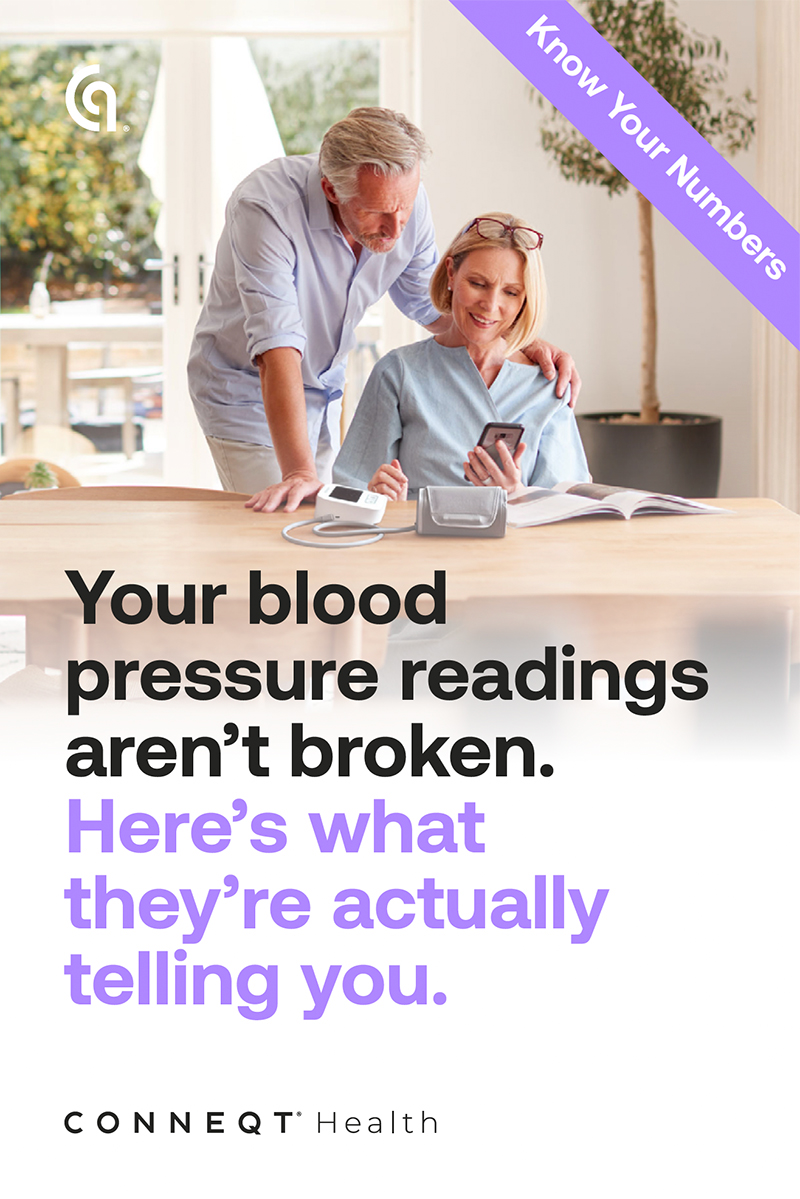
Use the right tool. For home, the recommended standard is a validated, automatic monitor with a cuff that goes around your upper arm. Wrist and finger monitors are easier to use, but they give less reliable readings, so they aren’t recommended for this. If you’re choosing one, What to Look for in a Home Blood Pressure Monitor walks you through it.
Bring your numbers to your clinician. This is the part that actually pays off. Measuring on its own doesn’t do much. Where it makes a real difference is when you and your clinician use the pattern together to decide what, if anything, to change. Keep a simple log and bring it in.
Know the one reading that’s an emergency. Most of the time, a high number means keep watching, not panic. But a reading higher than 180/120 is different. If it comes with symptoms like chest pain, shortness of breath, trouble speaking, weakness, or changes in your vision, call 911. If there are no symptoms, wait about a minute, take it again, and if it’s still that high, call your clinician right away.
And if you want the mechanics, how to sit, when to measure, how to get a reading you can trust, How to Take Your Blood Pressure at Home covers it.
The number is yours to watch
If there’s one thing I want you to take from all of this, it’s this. High blood pressure is common, it’s quiet, and in women it is easy to miss. None of that makes it hard to watch. It makes it worth watching.
The number matters. And no one is better placed to keep an eye on it than the person living with it every day. That’s you. It’s yours to know.
What to read next
If you want the fuller picture behind watching your own numbers, these are the places to go next.
- Women’s Heart Health: The Moments That Get Missed – The full map of where a woman’s cardiovascular risk hides across a lifetime, and how the moments connect.
- When Is Blood Pressure Actually High? – What the two numbers on your monitor actually mean, and the readings worth paying attention to.
- How to Tell If a Home Blood Pressure Monitor Is Actually Accurate – How to know your home readings are trustworthy, so the trend you’re watching is real.
- Strength Beyond the Scale – One of the most effective things women can do for their hearts, and it isn’t a number.
Want to go deeper? Browse the full library.