

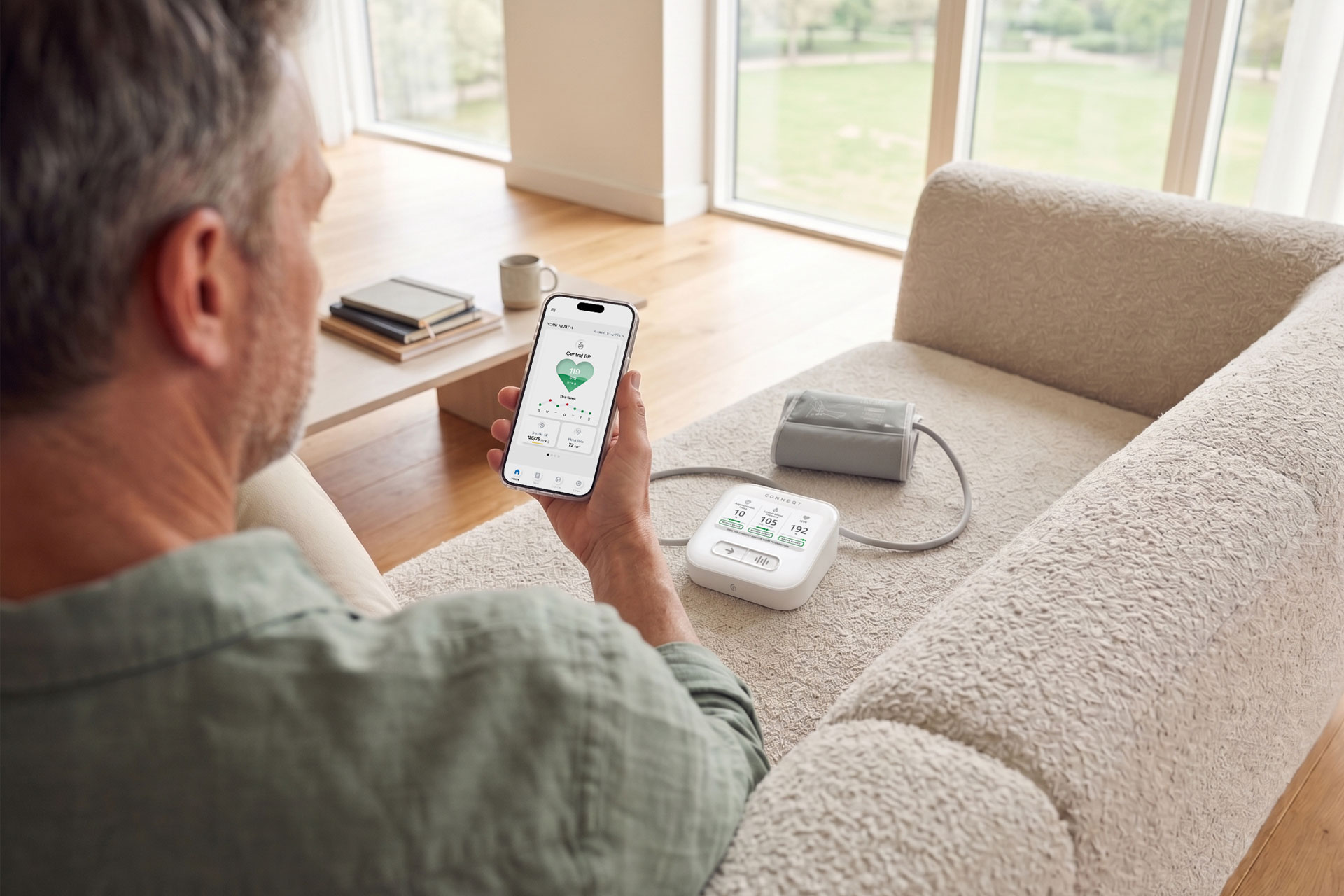
A home blood pressure monitor gives you a number. But how do you know it’s right when most monitors have never been validated? Here’s how to check whether yours holds up, and why it matters.
In a Heartbeat
The fastest check: Look your monitor up on a validated-device list like validatebp.org. If your exact model is listed, its accuracy has been independently tested, which most monitors sold can’t claim.
The catch: FDA clearance and validation are both important, but different checks. A monitor can be FDA-cleared and still not independently validated, and only the validated-device list confirms accuracy.
The fine print: Validation covers the device itself, not how you use it, and not a smartwatch’s estimate.
Why it matters: Every blood pressure decision rests on the number being right. Checking whether yours is accurate takes only a few minutes.
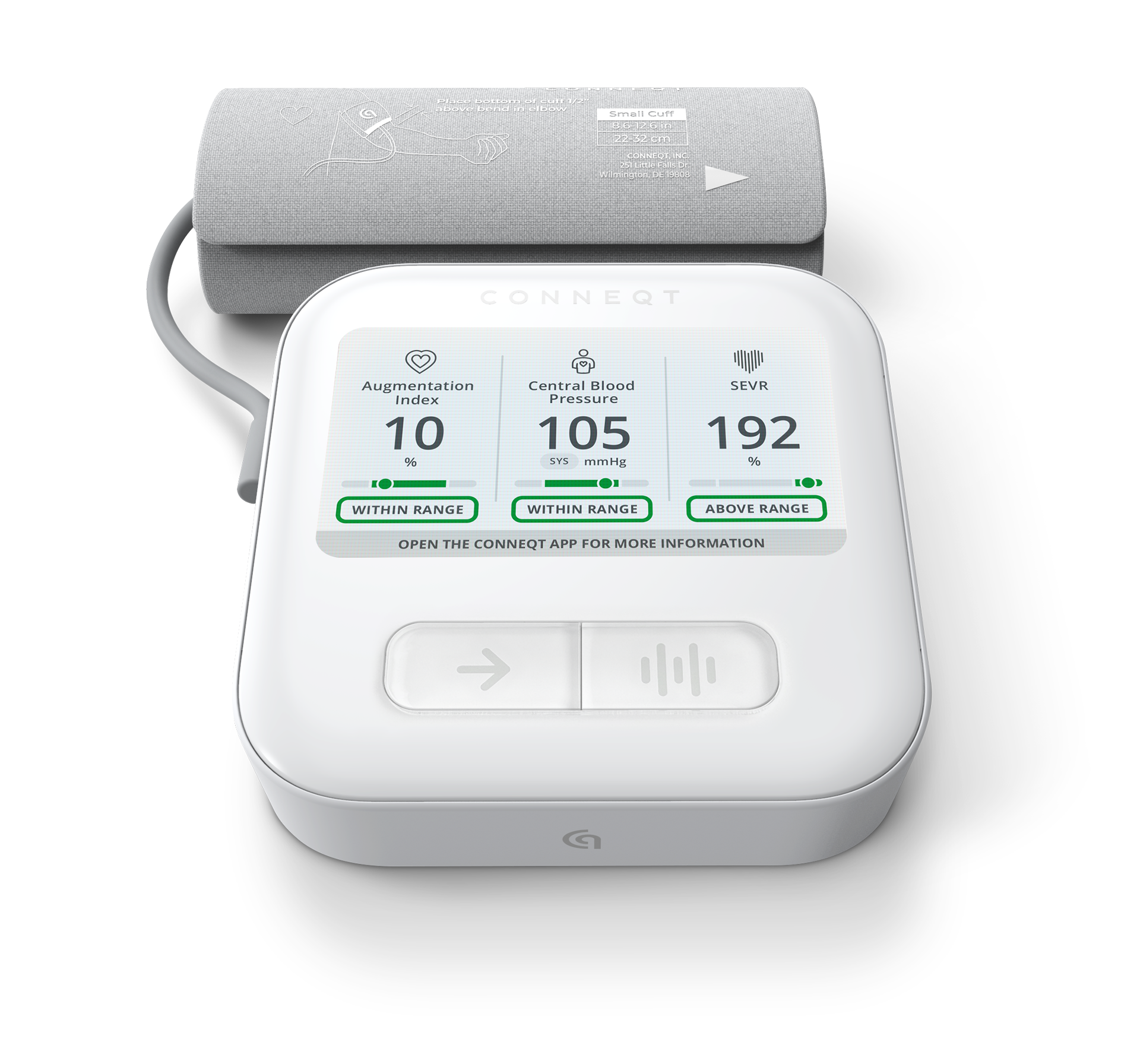

Medical Grade, Accurate, FDA-Cleared Heart Insights.
Save 10% on checkout with code VITALITY
You can feel stressed. You can feel your heart racing after the stairs. What you can’t feel is your blood pressure itself, whether it reads 118 or 158.
So whatever your monitor shows becomes your reality. When you check it yourself, there’s no second opinion in the room, nothing to sense-check it against.
That puts real weight on the device being right, and most home blood pressure monitors sold have never passed formal accuracy testing.
When researchers checked the monitors people already owned, a meaningful share were off by enough to matter.
Your monitor may be perfectly accurate. But the readings alone can’t tell you that, and everything you do with those numbers assumes they’re right.
You don’t have to assume. There’s a straightforward way to check whether yours is one you can trust.
In this article
- FDA clearance isn’t the same as accuracy
- A validated monitor still needs to be used properly
- Wearables and wrist devices are a different case
- Trusting your numbers
The fastest way to check is a validated-device list
Start here, because nothing answers the question faster.
There are public lists of blood pressure monitors that have passed independent accuracy testing. If your model is on one, its readings have been checked against a recognized standard. If it’s not there, that testing never happened.
In the US, the list to use is validatebp.org, maintained by the American Medical Association and the American Heart Association.
Internationally, STRIDE BP and the British and Irish Hypertension Society maintain equivalent lists. You look up your model, and either it’s there or it isn’t.
What “validated” means here is specific. The device was checked against a trusted reference measurement, under a set testing protocol, across enough people to show its readings stay within an accepted margin. That’s a real bar, and most monitors never clear it. Clinical Validation, Explained covers what that testing involves.
Two things trip people up here:
- Match the exact model. A brand with one validated device doesn’t mean the one in your cabinet qualifies. Validation is tied to the specific model number.
- Ignore popularity and price. How common, expensive, or well-reviewed a monitor is tells you nothing about validation. Only the list does.
If your monitor isn’t on it, that doesn’t make it inaccurate. It makes it unproven, which isn’t the same thing, but it’s reason enough to treat its numbers with some caution.
If your monitor is on the list, you’ve cleared the biggest hurdle. But it raises a fair question. Shouldn’t a device sold as a medical product, or marked FDA-cleared, already be on it? Not necessarily, and that gap trips up almost everyone.
FDA clearance isn’t the same as accuracy
The assumption is reasonable. If a monitor is FDA-cleared, or sold as a medical device, surely someone confirmed it measures accurately.
But those are two different checks, and a device can pass one without facing the other.
FDA clearance, the kind most home monitors carry, means the device is allowed to be sold. Regulators judged it safe and close enough to products already on the market. That’s a meaningful step.
It’s also not a rung below approved, which is where people get confused. FDA approval is a separate, heavier track for high-risk devices like pacemakers and implants. A blood pressure monitor is cleared rather than approved because that’s the category it belongs to, not because it fell short of something better.
What clearance doesn’t do is confirm accuracy. It isn’t the same as passing independent validation, and many cleared monitors never do.
Validation asks the narrower question, the one that matters to you. Does this exact model measure blood pressure correctly, tested against a reference standard in real people? Clearance gets a monitor onto the shelf. It doesn’t answer that.
How does that gap open? A monitor can be cleared by leaning on its resemblance to devices already sold, and reach the shelf without a published, independent study confirming that exact model is accurate. That study is what the validated-device lists check for, and plenty of monitors never have one.
The label language can muddy it further. “Medical grade” and “clinically designed” aren’t regulated terms, so they promise even less. None of it tells you the number is right.
That’s the whole reason a separate validated-device list exists. Clearance decides whether a monitor can be sold. Validation decides whether you can trust what it says.
A validated monitor still needs to be used properly
Finding your model on the list settles the device. It doesn’t settle the reading.
A monitor earns validation under specific conditions. At home, you’re the one supplying those conditions, and they change the number more than most people realize.
Cuff size is the clearest example.
In a controlled trial, using the wrong-sized cuff shifted the same person’s readings substantially, high when the cuff was too small, low when it was too big. The device wasn’t faulty. The fit was.
Technique does the rest, and the details add up: back and feet supported, arm at heart height, no talking, a few quiet minutes before you start. Any one of them can move a reading by several points. How to Take Your Blood Pressure at Home covers the full routine.
So accuracy has two halves.
The device has to be capable of it, which the list confirms, and you have to give it the conditions to deliver it. A validated monitor used carelessly can still mislead you, and careful technique can’t rescue a monitor that was never accurate to begin with.
Wearables and wrist devices are a different case
Everything so far has been about cuff monitors, the kind that wrap around your upper arm. That’s what the validated-device lists cover, and it’s what most people picture.
But plenty of people now check their blood pressure on a watch or a wrist device, and those change the accuracy question.
Cuffless watches and rings
A smartwatch or ring skips the cuff entirely.
Instead of measuring blood pressure the way a cuff does, it estimates it from optical signals and patterns, then turns that into a number. Confirming an estimate like that is accurate is difficult, and there’s no agreed standard for doing it yet.So the accuracy of cuffless devices hasn’t been established the way a cuff monitor’s has.
That doesn’t make them worthless.
For nudging you toward a proper check, or flagging a trend worth following up on, they have a role. The Apple Watch’s hypertension notifications are a good example of this. But an estimate and a validated reading aren’t the same thing, and knowing which one you’re holding matters, which is where the line between wellness tracking and medical devices comes in.
Where wrist monitors fit
Wrist cuff monitors are a middle case. They do use a cuff, so many are validated, and you check the list for them the same way.
The catch is position when you take a reading. Your wrist has to sit at heart level, and small shifts move the number, so they’re easier to get wrong than an upper-arm device. If accuracy is the priority, an upper-arm monitor is the safer choice.
So when people ask whether home blood pressure monitors are accurate, the honest answer depends on the type.
A validated upper-arm cuff, used well, is the one to trust. A wrist monitor can match it with care. A wearable’s estimate is something else, useful, but not a measurement to bank on yet.
Trusting your numbers
Home blood pressure monitor accuracy comes down to a few checks anyone can run.
You look the model up on a validated device list. You know that FDA clearance and validation answer different questions. Using the right cuff, you take a reliable reading. And you can tell a validated measurement from a wearable’s estimate. That’s the whole method.
Why go to the trouble?
Because the number feeds every decision that follows. A medication started or adjusted. A change in your routine that’s working, or isn’t. A reading worth acting on, or one that isn’t. Each of those rests on the number being right. Get it wrong, and everything built on it is wrong too.
The CONNEQT Pulse meets that standard. It’s FDA-cleared and on the validated-device list. But the point was never the particular device you land on. It’s that you can now check whether any monitor is accurate, instead of just hoping it is.
Your blood pressure is one of the few numbers you’ll follow for the rest of your life. It’s worth knowing you can trust it.
What to read next
Now you know how to vet a blood pressure monitor. The next questions are which one to get, and what the number means once you trust it.
- What to Look for in a Home Blood Pressure Monitor — How to choose a monitor once you know what accuracy actually requires.
- Why Does Blood Pressure Fluctuate? — Why readings that differ aren’t always a sign the device is wrong.
- When Is Blood Pressure Actually High? — What your number means once you can trust it.
Want to explore more? Browse the full library.