
Accurate readings start with the right technique. Here’s how to use CONNEQT Pulse correctly, understand what it measures, and get the most from your results over time.
There is more to managing your cardiovascular health than a simple blood pressure reading during your annual checkup. The CONNEQT Pulse provides deeper insight by measuring brachial and central blood pressure alongside other key vascular biomarkers, offering a more complete understanding of how your heart and arteries are functioning.
What happens during your Pulse reading
The CONNEQT Pulse redefines how you monitor your cardiovascular health through its unique two-inflation process. Unlike traditional monitors that use a single inflation, the Pulse takes two distinct measurements to provide a complete picture of your cardiovascular health:

Medical Grade, Accurate, FDA-Cleared Heart Insights.
Save 20% on checkout with code VITALITY
- First inflation: The cuff inflates to measure brachial blood pressure, providing systolic and diastolic readings in about 1 to 3 minutes. This step mirrors the process you might experience at a doctor’s office, where the cuff briefly tightens before deflating.
- Second inflation: Using a gentler pressure, the cuff inflates again for a short 10-second interval to record central blood pressure waveforms and other vascular biomarkers. This advanced measurement captures data near your heart and aorta, as well as arterial pressures, providing information that standard blood pressure monitors do not measure.
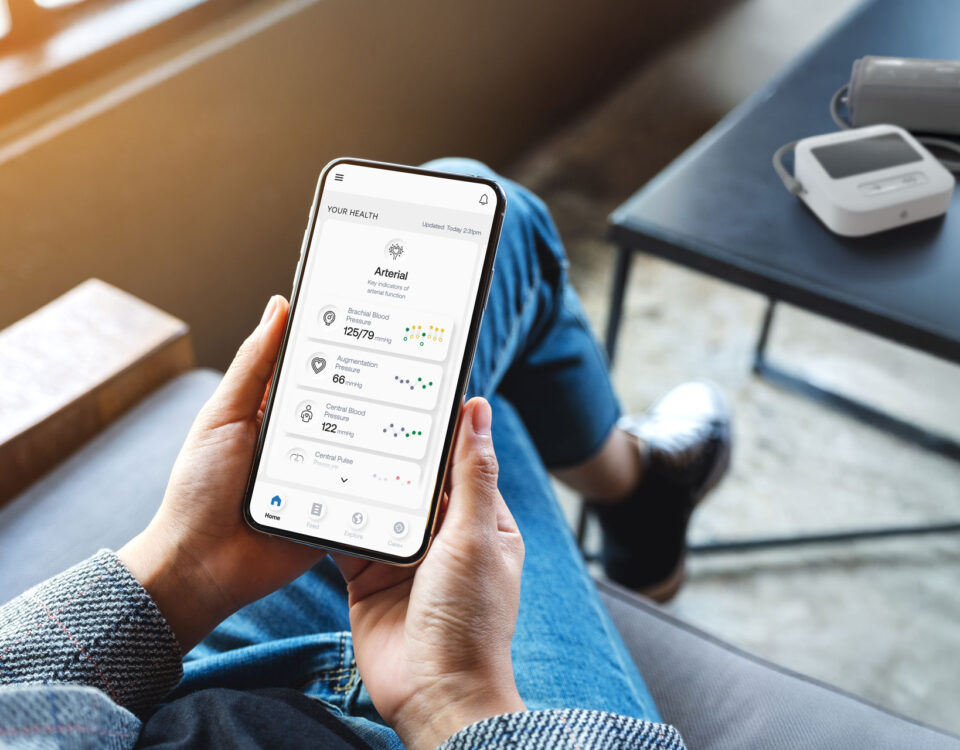
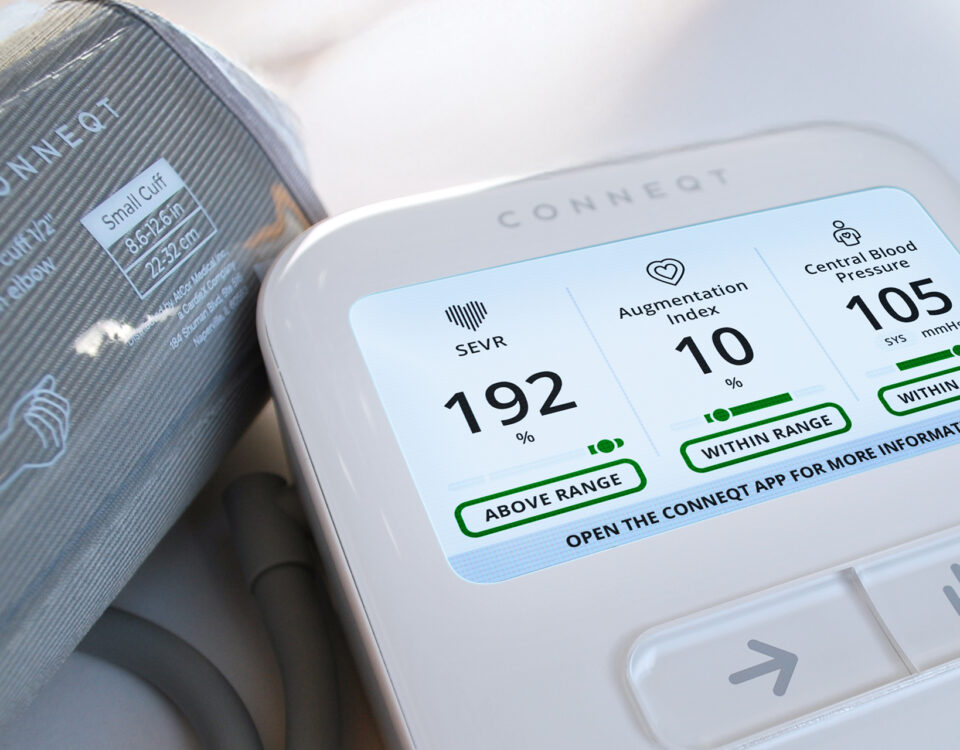
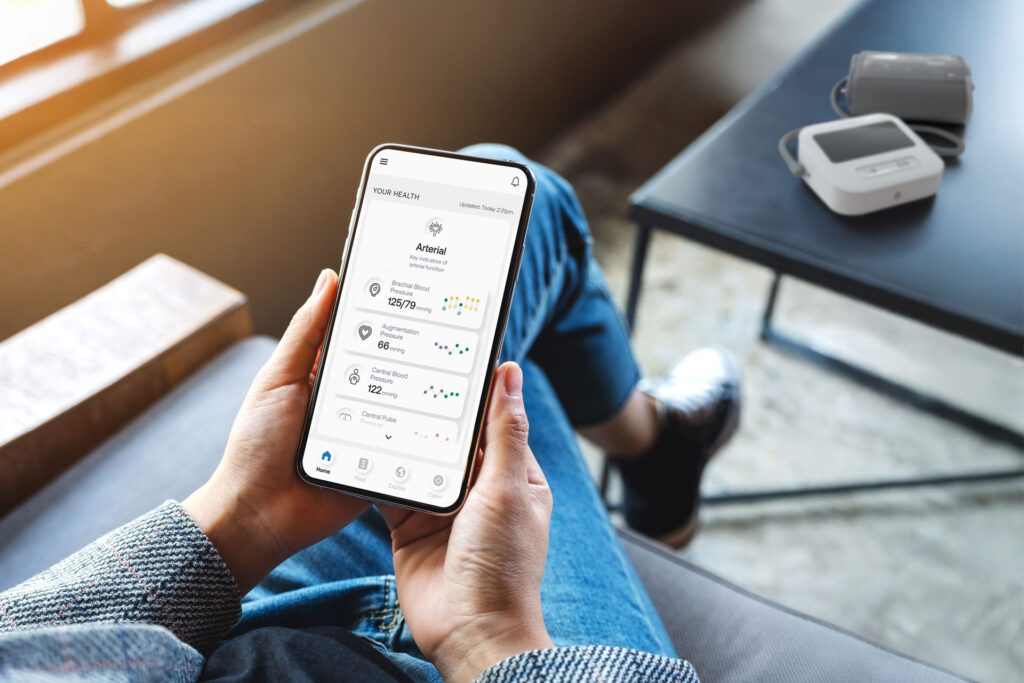
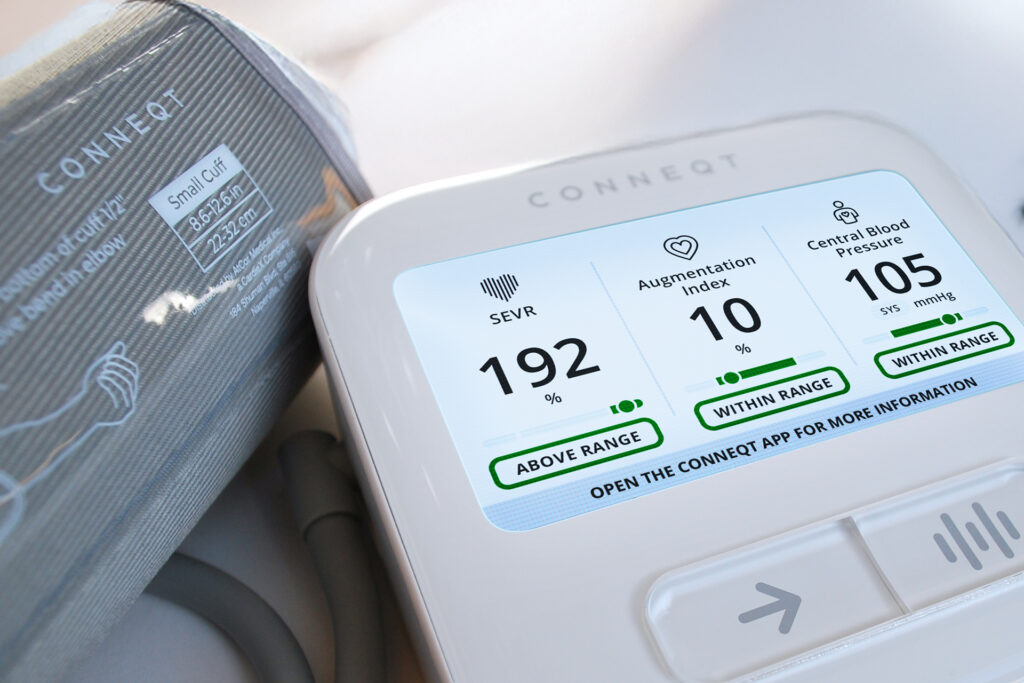
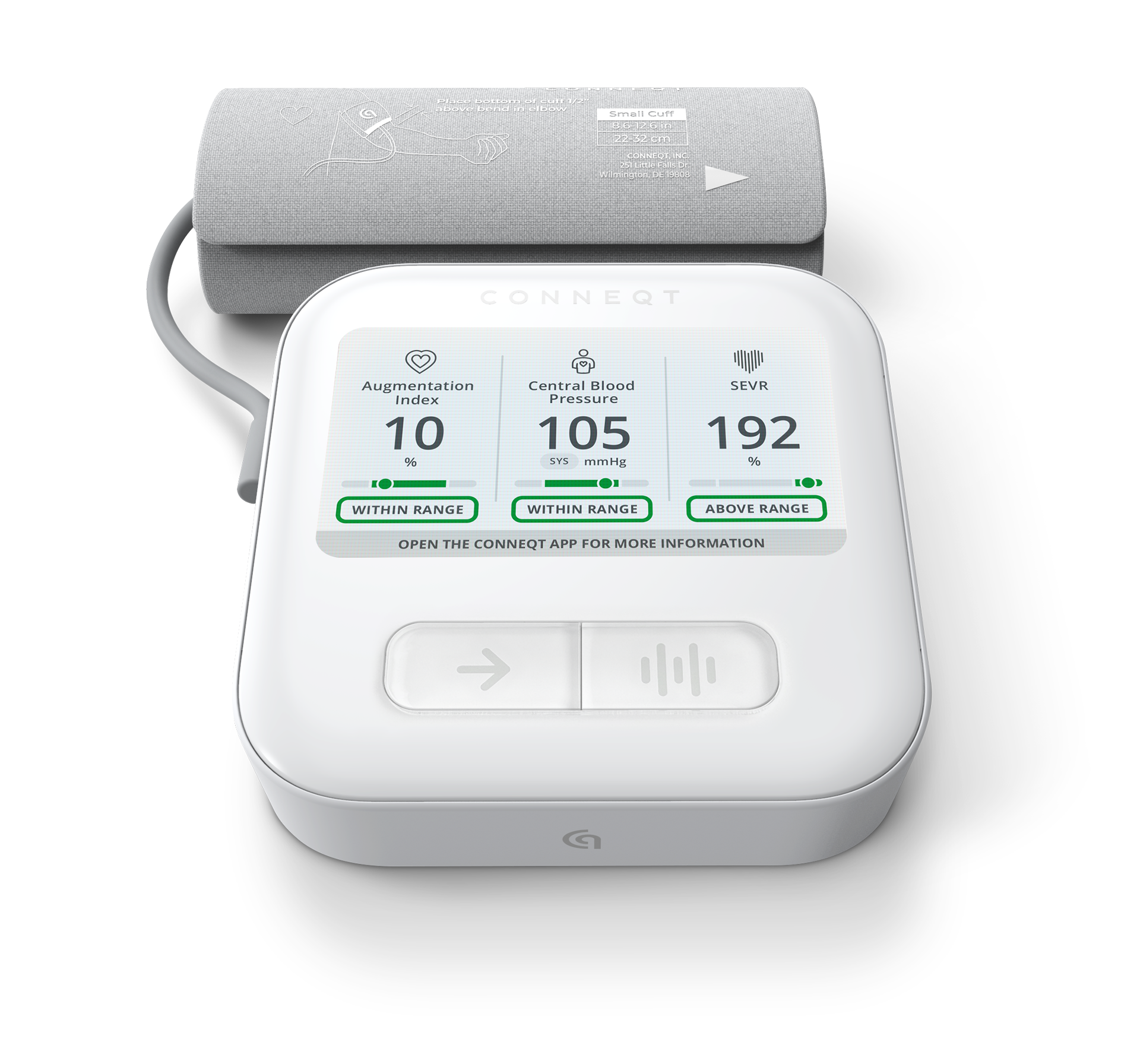
- Results display: After the second inflation, the device displays your readings, including brachial and central blood pressure, as well as other vascular biomarkers. If synced with the CONNEQT app, your results are automatically updated for trend tracking and long-term health insights.
Powered by SphygmoCor® technology, the Pulse ensures clinical-grade accuracy while taking only 30–45 seconds longer than traditional methods. Its FDA 510(k)-cleared design provides professional-level precision in a simple, non-invasive process. To achieve accurate results, stay still and avoid movement, especially during the second inflation.
How to take more accurate readings at home
Accurate readings are important for understanding your cardiovascular health. By following these steps, you can ensure your results are consistent and reliable.
Before you measure
- Sit properly: Choose a comfortable, supported chair. Keep your back straight and your feet flat on the floor, avoiding crossed legs.
- Relax: Spend 5–10 minutes in a calm environment before measuring. Deep breathing can help reduce stress and stabilize your blood pressure.
- Avoid external factors: Steer clear of caffeine, certain medications, or physical activity for at least 2–3 hours before your reading. Empty your bladder to avoid artificially elevated results.
- Check your equipment: Regularly inspect the cuff for signs of wear or fraying, and replace it as needed. Check for air leaks that could affect inflation, and ensure batteries are replaced promptly.
During the measurement
- Ensure proper cuff size: Choosing the right cuff size helps ensure accurate readings. A cuff that’s too small can result in higher readings than expected, while one that’s too large may produce lower readings. The Pulse offers two cuff sizes:
- Small: Fits arm circumferences of 8.6” to 12.6” (22cm to 32cm)
- Large: Fits arm circumferences of 12.6” to 16.5” (32cm to 42cm)
- Check the size markings to confirm the correct fit.
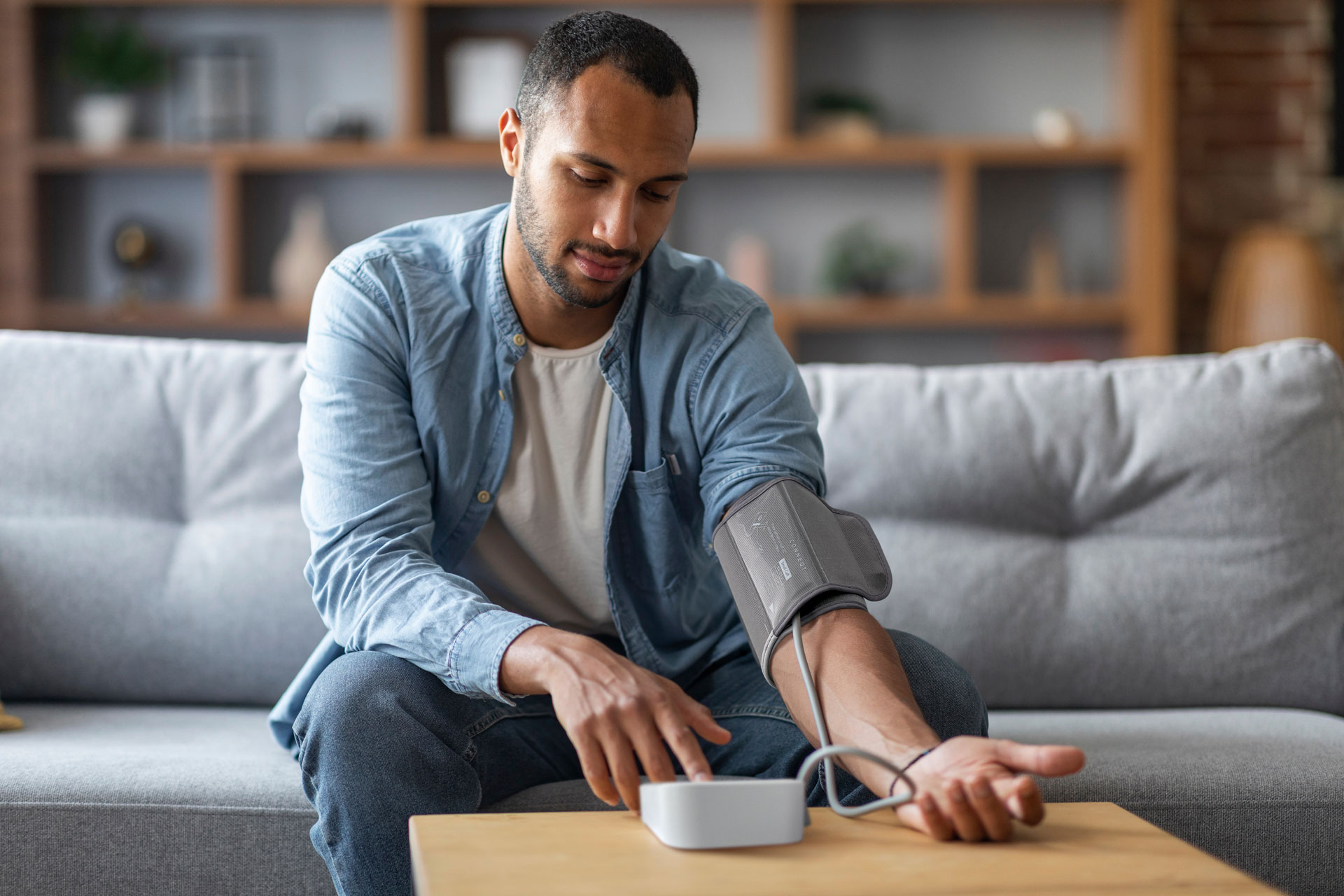
- Cuff placement: Place the cuff directly on bare skin, about 1–2 cm above your elbow, ensuring a snug but not tight fit. Avoid wearing the cuff over clothing, as fabric can interfere with the measurement and affect accuracy.
- Stay still: Rest your arm at heart level on a table or armrest. Avoid talking or moving during the measurement.
- Take multiple readings: Follow American Heart Association (AHA) guidelines by taking 2–3 readings, one minute apart, and averaging the results. This accounts for natural fluctuations, as the first reading is often higher.
How to choose the right arm for consistent readings
For accurate and consistent readings, it’s important to choose the correct arm:
- Measure Both Arms Initially: During your first assessment, measure blood pressure in both arms to identify any differences.
- Use the Higher Arm for Future Readings: If one arm consistently shows higher readings, use that arm for all future measurements. Consistency is key. Once you choose an arm, always use the same one to ensure reliable and comparable results over time. If both arms show similar readings, the left arm is preferable because it is closer to the heart.
What if I can’t complete the full reading?
The Pulse is designed to ensure you still get meaningful results. If the measurement is interrupted during the second inflation, the device will still display your brachial blood pressure readings. This feature ensures you can capture essential data, even if you’re unable to complete the full process.
Track your results in the CONNEQT app
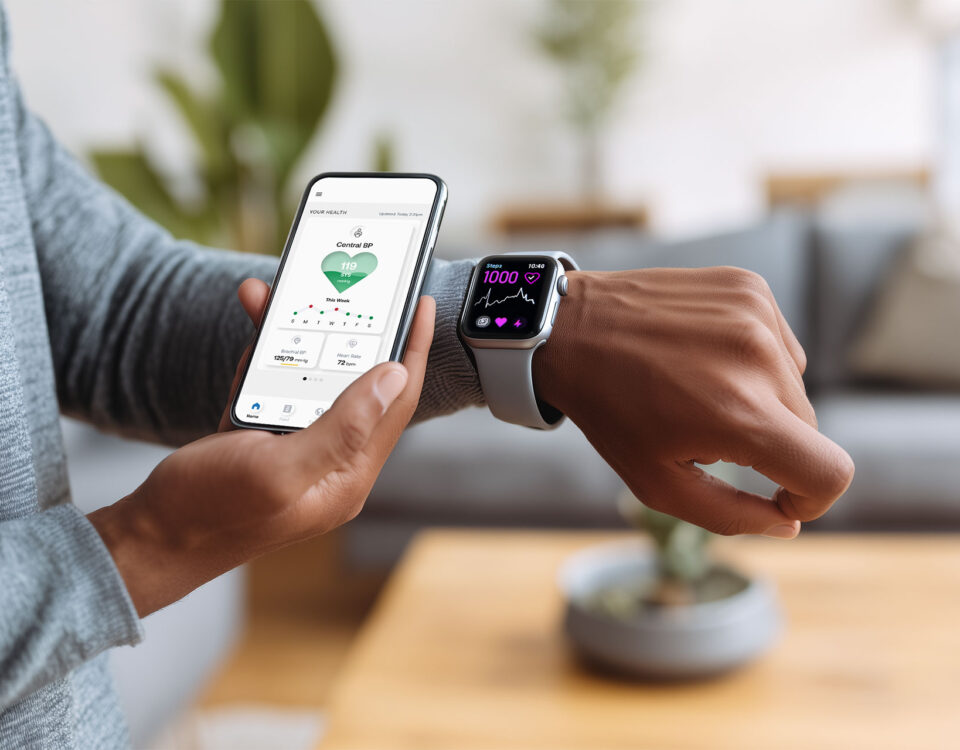
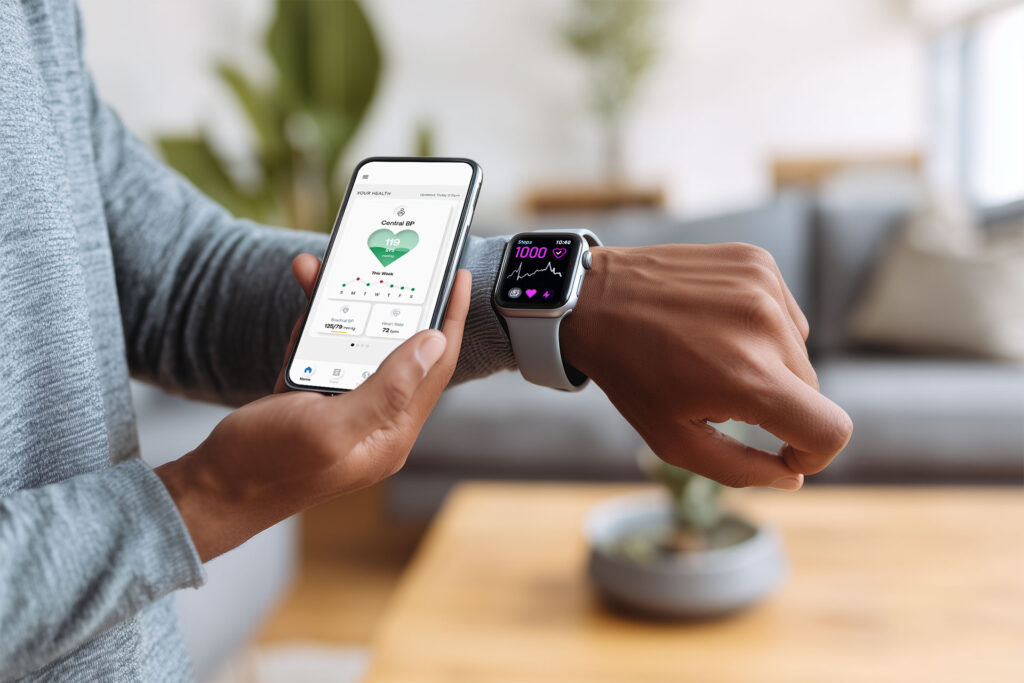
Once your reading is complete, your results sync to the CONNEQT app, where you can view your numbers over time and spot meaningful patterns more easily. The app works seamlessly with the Pulse and gives you access to a dashboard, trend views, and additional tools designed to help you better understand your cardiovascular health. As you build a history of readings, the app helps you put those results into context. You can download the app here.
How CONNEQT Pulse reports help you track trends
A single reading can tell you where you are at the moment, but reports can help you understand how your numbers are changing over time. On-Demand Assessments offer a quick report-style check-in, whether you want to see how your numbers look after a routine change, before a doctor’s visit, or at another key moment.
The Monthly Cardiology Report goes further by compiling 30 days of data to reveal trends and patterns, including seven key vascular biomarkers. Together, these reports can help you better understand changes in your cardiovascular health and support more informed conversations with your doctor.
Every new Pulse includes an initial 30-day Care+ period. After that, measurements in the device and app remain free to use, whether or not you continue with ongoing reporting. To learn more, read How to Read and Use Your Pulse Reports for Better Heart Health.
Consistency is what makes the data meaningful
The most useful thing the Pulse can do is show you how your cardiovascular health is changing over time. That starts with consistent, accurate readings. Follow the steps in this guide, sync your results to the app, and let the pattern tell the story.