



In many people, it develops years earlier. Here is what that means for how you monitor your cardiovascular health.
If your blood pressure is normal, that is usually where the conversation ends.
It probably should not be.

Medical Grade, Accurate, FDA-Cleared Heart Insights.
Save 10% on checkout with code VITALITY
Arterial stiffness, the gradual loss of elasticity in the arterial wall, does not wait for blood pressure to rise before it begins. In many people, measurable changes in arterial function are already underway while blood pressure numbers still look fine. The two signals are related. They are not the same. And they do not move in the same sequence most people assume.
Blood pressure is one of the most widely tracked cardiovascular signals in the world. It is measured at every clinical appointment, built into every home blood pressure monitor, and used as a primary marker of cardiovascular health. It tells you something real and important.
But it may not be the earliest signal available.
This article explains what arterial stiffness is, what the research shows about its relationship to blood pressure over time, and why tracking one without the other leaves a gap in the picture that most standard monitoring is not designed to close.
In this article
- The assumption most people make
- What the research shows about timing
- Why it matters before blood pressure is high
- What this means practically
- What consistent tracking looks like
- What to read next
What arterial stiffness actually is
Arteries are not rigid pipes.
A healthy artery expands and contracts with every heartbeat. That elasticity is not incidental. It is doing essential work: absorbing the pressure wave generated by each contraction of the heart, protecting the smaller vessels and organs downstream from forces they are not designed to withstand.
Arterial stiffness is the gradual loss of that capacity.
As the arterial wall stiffens, it becomes less able to flex and absorb. The pressure wave from each heartbeat travels faster and farther. The heart has to work harder to push blood through a system that is no longer cushioning the load. Downstream organs, including the brain and kidneys, are exposed to pressure patterns they would not experience if the arteries were functioning as they should.
The structural changes driving this happen at the cellular level. Elastin, the protein that gives arteries their flexibility, gradually breaks down and is replaced by collagen, which is stiffer. Changes in the smooth muscle cells of the arterial wall and dysfunction in the endothelium, the thin inner lining of the artery, contribute to the process as well.
These changes do not require high blood pressure to begin. They can develop independently.
The marker researchers use most consistently to measure arterial stiffness is pulse wave velocity, or PWV. It measures how fast a pressure wave travels through the arterial wall between two points. A more elastic artery absorbs and slows that wave. A stiffer artery transmits it faster. The relationship is direct and measurable, which is why PWV has become the reference standard for arterial stiffness assessment in both research and clinical settings.
It is also why PWV appears throughout the evidence in this article. When studies refer to arterial stiffness as a predictor of cardiovascular risk, PWV is almost always the measure they are using.
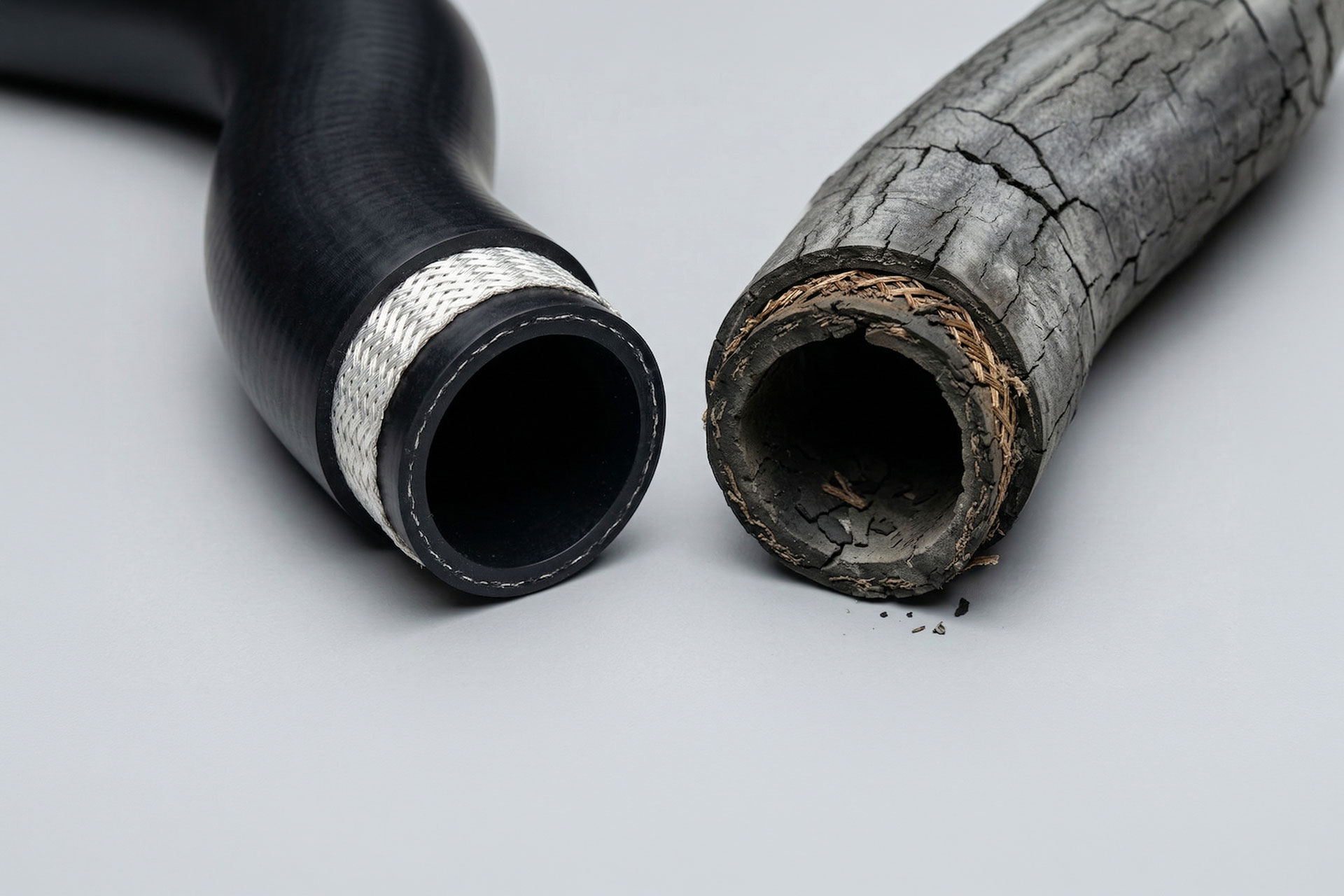
For a practical sense of the difference: a healthy artery functions like a new rubber hose, flexible and pressure-absorbing. A stiffened artery functions more like one that has been left in the sun for years: hard, cracked, and wrinkled. Same basic structure. Very different behavior under pressure.
The assumption most people make
The standard mental model of cardiovascular risk runs roughly like this.
Risk factors accumulate over time: age, weight, diet, stress, family history. Those risk factors drive blood pressure higher. Sustained high blood pressure then damages the arterial wall, causing it to stiffen and lose elasticity. Arterial stiffness, in this model, is a downstream consequence of hypertension. Something that develops after the problem is already established.
That sequence is clinically intuitive. It is also how most people think about the relationship between blood pressure and arterial health, because blood pressure is the signal that gets measured and the one that triggers clinical attention.
The problem with this model is not that it is wrong. Sustained hypertension does accelerate arterial stiffening. That relationship is well established.
The problem is that it is incomplete.
Arterial stiffness does not only develop as a result of high blood pressure. It can develop independently, through the cellular mechanisms described above, in people whose blood pressure numbers remain in a normal range. And when it does, it does not produce symptoms that would prompt most people to look further.
Blood pressure monitoring catches blood pressure changes. It is not designed to catch arterial stiffness that develops before those changes occur.
The earlier signal exists. It just requires a different measure.
What the research shows about timing
The evidence on this question has been building for over a decade, and it points consistently in one direction.
Arterial stiffness measured in people with normal blood pressure is associated with the later development of hypertension. Not correlated after the fact. Predictive in advance.
A meta-analysis of 12 longitudinal studies covering more than 66,000 normotensive adults found that elevated arterial stiffness was independently associated with incident hypertension, even after adjusting for baseline blood pressure and other cardiovascular risk factors. People with higher PWV at baseline were significantly more likely to develop hypertension over the follow-up period than those with lower PWV.
That finding has a specific implication. If arterial stiffness is already elevated in people whose blood pressure is still normal, the stiffening is not a consequence of the hypertension. It is coming before it.
The relationship between the two signals is bidirectional and reinforcing over time. Stiffer arteries contribute to rising blood pressure. Rising blood pressure accelerates arterial stiffening. But the evidence suggests the process often begins on the arterial stiffness side of that equation, not the blood pressure side.
Arterial stiffness also begins increasing measurably from the fourth decade of life onward, well before hypertension typically develops in most people. It is not a condition that announces itself. It progresses silently, without symptoms, which is precisely why it tends to go undetected until blood pressure eventually rises and prompts clinical attention.
By that point the earlier process has been underway for some time.
One clarification worth naming directly. The research supports “appears to precede” not “causes.” The relationship between arterial stiffness and hypertension is associative and temporally sequenced across large populations, not a simple causal chain that plays out identically in every individual. What the evidence establishes clearly is that the two signals are not the same thing, and that one tends to move before the other.
Why it matters when blood pressure is high
Knowing that arterial stiffness appears to develop before blood pressure rises would matter less if arterial stiffness were only a precursor to hypertension. But the evidence establishes something more significant than that.
Arterial stiffness is an independent predictor of cardiovascular risk.
A landmark meta-analysis published in JACC found that pulse wave velocity independently predicted cardiovascular events and all-cause mortality beyond traditional risk factors including age, sex, systolic blood pressure, cholesterol, smoking status, and antihypertensive medication use.
A companion meta-analysis published the same year in the European Heart Journal established that central blood pressure and augmentation index, two additional markers of arterial function, were independently predictive of cardiovascular outcomes as well.
In practical terms: across large population studies, each one meter per second increase in PWV is associated with a 14 to 15 percent higher cardiovascular event risk, independent of blood pressure and other traditional risk factors.
That independence is the key point. Arterial stiffness is not simply a proxy for blood pressure. It carries its own risk signal. A person with normal blood pressure and elevated arterial stiffness is not in the same cardiovascular risk category as a person with normal blood pressure and normal arterial stiffness, even though their blood pressure readings look identical.
A separate analysis found that arterial stiffness improved prediction of cardiovascular events incrementally, adding meaningful risk information beyond what age, blood pressure, and standard lipid markers provided on their own.
This is why arterial stiffness is increasingly recognized in cardiovascular research not as a downstream marker of existing disease but as an early, independent signal worth tracking in its own right.
Your blood pressure can be in a healthy range while your arterial stiffness is already elevated. The two signals are related. They are measuring different things.
What this means practically
Arterial stiffness does not produce symptoms most people would notice. It develops silently, which is why it tends to go undetected until blood pressure eventually rises and prompts clinical attention.
That silence has a practical consequence. If you are waiting for a symptom or an abnormal blood pressure reading to signal that something is worth paying attention to, you are waiting for a signal that arrives after the earlier process is already underway.
This is not an argument for alarm. It is an argument for a more complete picture.
Blood pressure monitoring remains valuable and worth doing consistently. The point is not that blood pressure is the wrong thing to track. It is that blood pressure alone is an incomplete view of what is happening in the arterial wall, particularly in the years before hypertension develops.
What can be done about arterial stiffness is a separate and well-evidenced question. Aerobic exercise, diet quality, sleep, and smoking cessation all have research behind them as modifiable factors. That evidence is covered in depth in How Long Does It Take to Improve Arterial Health, which addresses timelines, which interventions move the needle most, and what the research shows about the pace of change.
The practical framework this article points toward is simpler than it might appear.
Blood pressure monitoring tells you one thing. Arterial stiffness monitoring tells you something different and, in many people, earlier. Using both gives you a more complete picture of what is happening in your cardiovascular system and which direction things are heading.
A single arterial stiffness reading tells you where things are at a point in time. Consistent measurement over weeks and months tells you something more useful: whether the signals are stable, improving, or moving in the wrong direction.
That distinction matters more than most people expect.
What consistent tracking looks like
A blood pressure reading at an annual appointment is a snapshot. It tells you one number on one day. It cannot show whether your arterial health is trending in the right direction or drifting in the wrong one.
The same limitation applies to a single arterial stiffness measurement. The value of tracking either signal comes from consistency over time, not from any individual reading.
This is where the practical picture has changed meaningfully. Central blood pressure and arterial stiffness can now be tracked outside a clinical setting, which is a relatively recent development. Historically, the kind of arterial function assessment that measures PWV and central blood pressure required a hospital or clinical environment and specialized equipment.
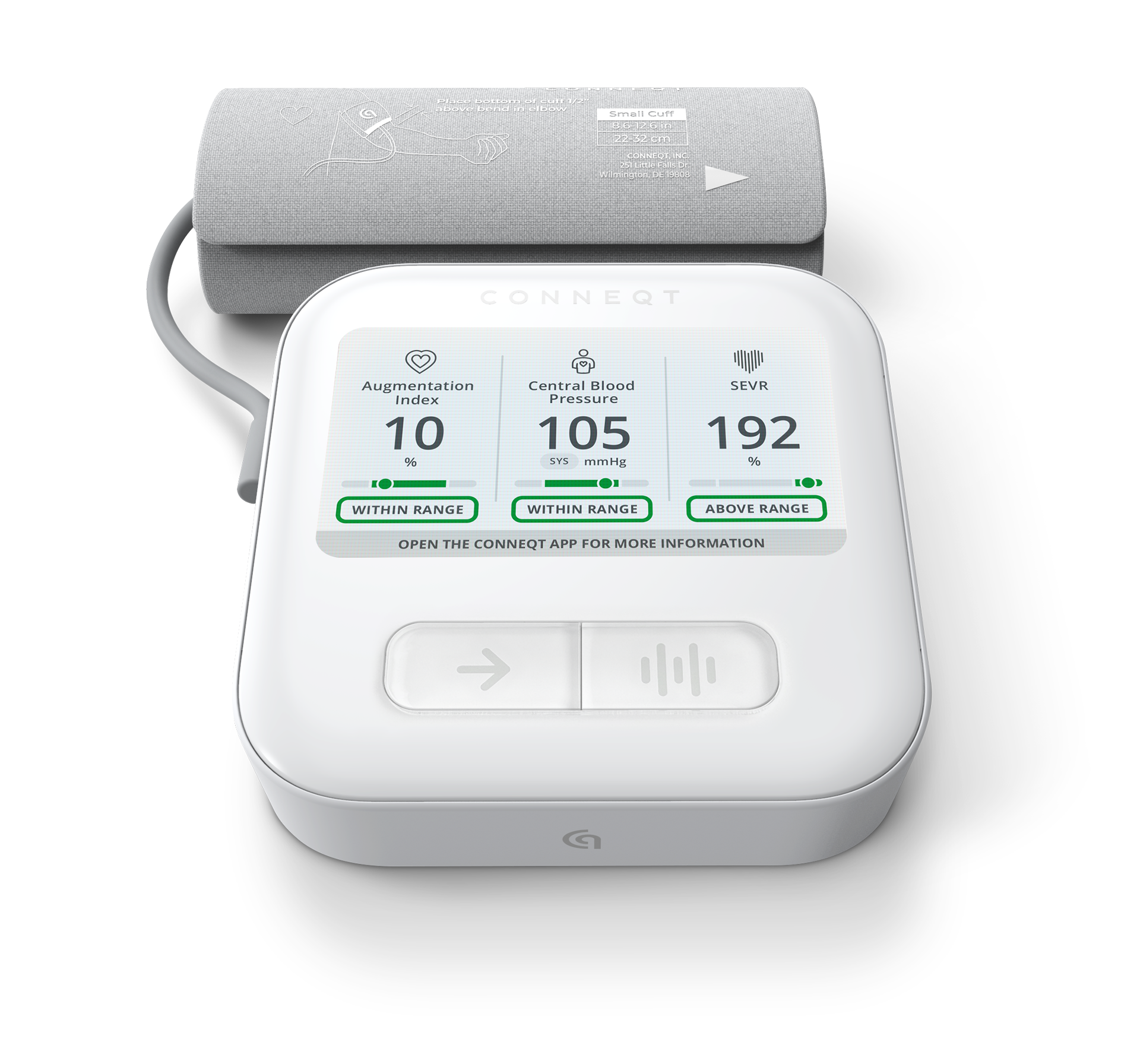
The CONNEQT Pulse tracks central blood pressure and arterial stiffness over time, at home, using the same pulse wave analysis technology used in clinical settings. Not as a diagnostic tool. As a way to build visibility into whether the signals are stable, improving, or moving in the wrong direction.
What matters here is direction, not threshold. Arterial stiffness develops before clinical thresholds are crossed. A tool that lets you track that signal consistently over time gives you something a blood pressure cuff cannot: a view of what is happening in the arterial wall before a number crosses a line that prompts clinical attention.
You cannot manage what you cannot measure. And a measurement taken once tells you far less than a pattern tracked over months.
What to read next
If this raised questions about what arterial stiffness looks like before it becomes visible on standard tests, or what you can do to move the signals in the right direction, these articles go deeper:
- Early Signs of Arterial Stiffness: What Changes Before Symptoms Appear – A complete guide to what changes in the arterial wall before symptoms appear and what consistent measurement can reveal.
- How Long Does It Take to Improve Arterial Health? – What the research shows about timelines, which habits move the needle most, and why tracking over time matters more than any single intervention period.
- When Is Blood Pressure Actually High? – A practical way to think about blood pressure readings, what patterns are worth following up on, and how consistent monitoring changes what a single reading can tell you.
Want to explore more? Browse the full library.