

High blood pressure is widely understood as a heart risk. Fewer people know it is also one of the most modifiable dementia risks.
In a Heartbeat
The assumption: Dementia is a brain disease. Blood pressure is a cardiovascular number. Not enough people connect the two.
The reality: Nearly half of dementia cases worldwide are linked to modifiable risk factors. High blood pressure is one of them. The connection is strongest during midlife, when sustained vascular stress begins affecting the brain’s small blood vessels.
What the research suggests: Managing blood pressure during midlife is associated with meaningfully lower dementia risk. Not a guarantee, but one of the most evidence-backed levers available.
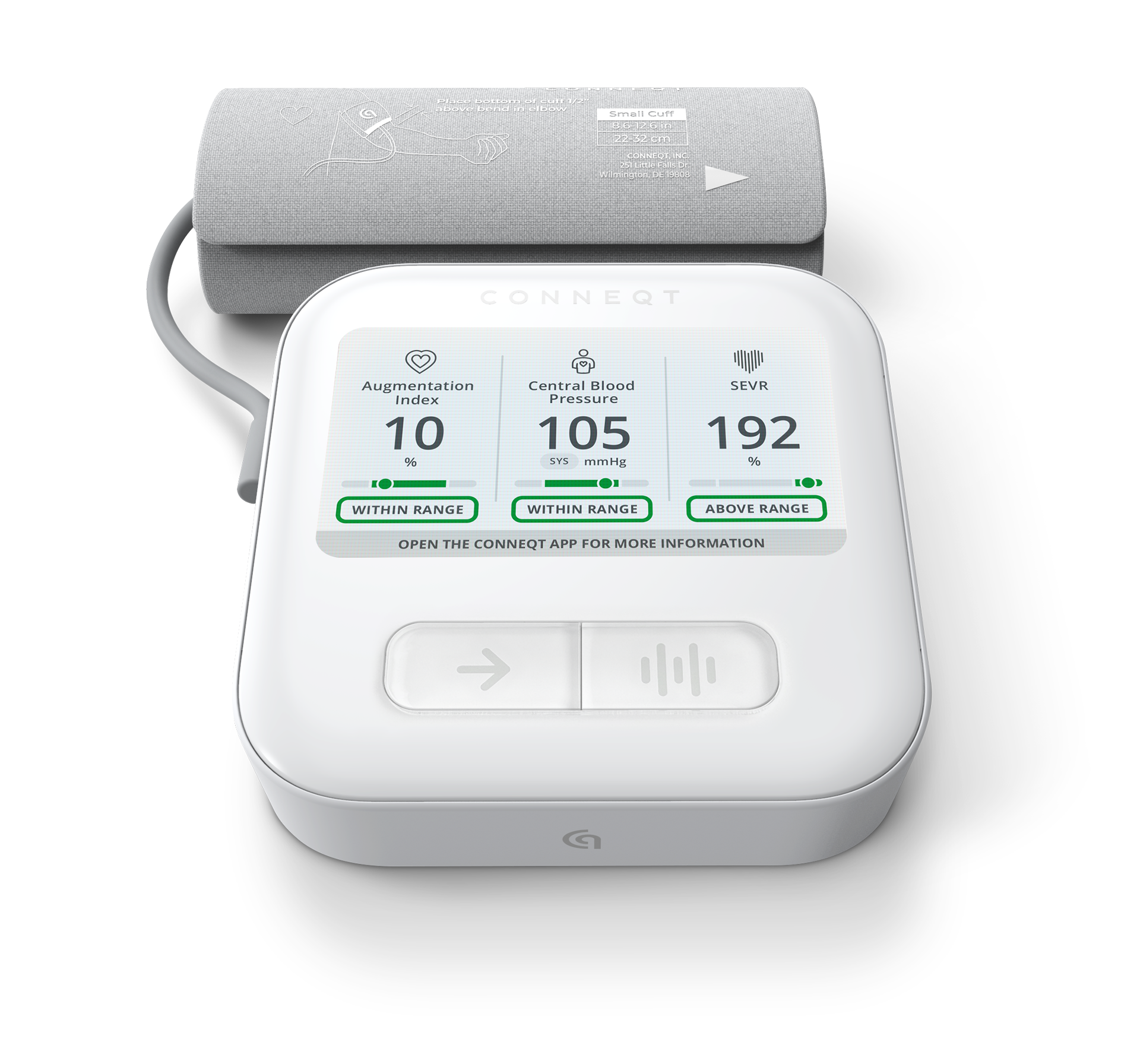

Medical Grade, Accurate, FDA-Cleared Heart Insights.
Save 10% on checkout with code VITALITY
Dementia is often seen as inevitable. Genetic, age-driven, beyond anyone’s control. The evidence suggests otherwise.
In 2024, the Lancet Commission on dementia prevention published its most comprehensive analysis to date. Across a global evidence base, it identified 14 modifiable risk factors that together account for approximately 45 percent of dementia cases worldwide. Nearly half. Not inevitable. Not purely genetic. Substantially preventable. And the decisions that matter most are often made decades before any symptoms appear.
High blood pressure is among the most significant of those 14 factors. It is also one of the most directly within your control.
For people who are already tracking their cardiovascular health, it connects two concerns that most people keep in separate mental compartments: what is happening in their arteries, and what that means for their brain.
What sustained high blood pressure does to the brain
The brain accounts for roughly 20 percent of the body’s oxygen consumption despite representing only about 2 percent of its weight. That demand requires a constant, reliable supply of blood. When that supply is compromised, the consequences accumulate quietly, often over decades, before anything is clinically detectable.
Sustained high blood pressure stresses the small blood vessels that supply the brain. Over time, that stress contributes to three distinct patterns of damage.
Small vessel disease. The tiny arteries deep in the brain thicken and narrow, reducing blood flow to surrounding tissue.
White matter lesions. Areas of reduced blood flow affect the brain’s communication pathways, impairing the connections between regions.
Microinfarcts. Small silent strokes that individually cause no obvious symptoms but collectively erode cognitive reserve over time.
These patterns are most directly associated with vascular dementia, the second most common form of the disease. Though in practice, Alzheimer’s and vascular disease frequently overlap as mixed pathology.
Sustained elevated pressure also compromises the blood-brain barrier, the protective layer that regulates what enters brain tissue. When the barrier is compromised, inflammatory signals can enter in ways that accelerate neurodegeneration.
Arterial stiffness adds a further layer to the same picture, through a distinct mechanism involving reduced cerebral blood flow and impaired waste clearance from the brain. That mechanism is covered in detail in The Link Between Arterial Stiffness and Alzheimer’s Disease.
How strong is the evidence?
A 2020 meta-analysis of 209 prospective studies found that elevated blood pressure was associated with a meaningful increase in the risk of cognitive impairment and dementia across populations. The association held across different study designs, different populations, and different definitions of cognitive outcome. It is one of the most consistently replicated findings in the cardiovascular and neuroscience literature.
Why midlife is the critical window
Not all decades carry equal weight when it comes to blood pressure and brain health.
The evidence points in one direction on this. The association between high blood pressure and dementia risk is strongest in midlife, typically defined as the forties through the early sixties. It becomes more complicated in later life.
That same analysis found that midlife hypertension was associated with a 1.19 to 1.55-fold excess risk of cognitive disorders. That association was consistently stronger in midlife than in late life across the studies reviewed.
A separate analysis of nearly 4,800 adults followed for approximately 24 years found that people who sustained hypertension from midlife through late life, and those whose blood pressure was high in midlife but declined in later years, both carried elevated dementia risk compared to people who maintained normal blood pressure throughout.
That second finding is worth pausing on.
Blood pressure that was high in midlife and later normalized was still associated with higher dementia risk. The damage, or at least the risk trajectory, appears to accumulate during the midlife years even if pressure subsequently improves.
This is why what happens in your forties and fifties matters so much.
That window does not start at sixty. If you are in your forties and already tracking your cardiovascular health, you are in the most protective period for this kind of intervention. The habits and monitoring practices you build now are doing more work than the same habits started a decade or two later.
What changes in later life
In people in their seventies, eighties, and beyond, the relationship between blood pressure and dementia becomes less straightforward. Very low blood pressure in late life has also been linked to elevated dementia risk in some studies. Researchers describe this as a U-shaped relationship, where risk rises at both ends of the spectrum, not just when blood pressure is too high.
The likely explanation is that the direction reverses: early neurodegeneration can cause blood pressure to fall, rather than low blood pressure causing the cognitive decline.
So the elevated risk seen in older adults with low blood pressure may reflect early disease already underway, not a new risk factor to manage.
It also means that aggressively lowering blood pressure in older adults is not always beneficial. The relationship between blood pressure and dementia risk is more nuanced in later life than in midlife. This does not change the midlife argument. It reinforces it.
The period when blood pressure is a genuine lever for reducing long-term risk is midlife, not late life.
What the research says about whether managing it helps
This is where the evidence becomes genuinely encouraging.
The observational evidence. A meta-analysis of 14 randomized trials involving more than 96,000 participants found that blood pressure lowering with antihypertensive treatment was associated with a reduced risk of incident dementia or cognitive impairment. The effect was modest but consistent across different trial designs, different populations, and different classes of medication.
The trial evidence. The SPRINT MIND trial was the largest randomized controlled trial designed specifically to test whether intensive blood pressure control affects cognitive outcomes. Participants were assigned to either an intensive treatment target, systolic blood pressure below 120 millimeters of mercury, or a standard target below 140 millimeters of mercury. These were clinical trial targets established for research purposes, not thresholds readers should apply to their own care without guidance from a clinician. The intensive group showed a significant reduction in the combined rate of mild cognitive impairment and probable dementia.
What the SPRINT MIND trial actually showed
It deserves an honest read.
The reduction in mild cognitive impairment and the combined endpoint were statistically significant. The reduction in probable dementia alone did not reach statistical significance. That is likely because the trial was stopped early when intensive treatment showed clear cardiovascular benefits, shortening the follow-up period available to detect dementia outcomes. More time may have produced a stronger signal on that endpoint.
What the evidence adds up to is not a guarantee.
Managing blood pressure in midlife does not prevent dementia with certainty. What it does suggest, across both observational research and randomized trial evidence, is that blood pressure control is associated with a genuinely lower risk. For a condition as feared and as common as dementia, that is a significant finding.
The pattern matters, not just the average
Most of the research above looks at your average blood pressure over years. There is a second pattern worth understanding: how much your readings swing from one to the next.
Blood pressure naturally rises and falls through the day, and some movement is normal. What researchers have looked at more closely is larger, erratic variability. That includes big swings from one reading or one clinic visit to the next, even when the average looks well controlled.
Higher blood pressure variability has been associated with cognitive decline and higher dementia risk. The association appears to hold independent of the average level.
In long-term tracking studies, that link held even in people whose blood pressure was well controlled on medication, which is part of why researchers treat it as a signal in its own right, not just a stand-in for high average pressure.
The proposed mechanism is different from steady high pressure. Repeated surges are thought to raise shear stress on the vessel lining and wear on the brain’s ability to keep blood flow steady, its autoregulation, while transient drops can briefly leave brain tissue under-supplied.
Over time, that pattern is believed to feed into the same small vessel damage and white matter changes described earlier.
As with the rest of this research, this is an association across large groups, not a prediction about any one person. But it is a reason a single in-range reading may not tell the whole story, and why the trend across many readings can be more telling than any one number.
What this means if you are monitoring your blood pressure now
Whether you look at the average or the swings around it, the research lines up the same way.
Managing blood pressure during midlife is one of the most evidence-backed things a person can do to reduce their long-term dementia risk. Not the only thing, and not a guarantee. But a meaningful lever, and one that is already within reach for anyone tracking their cardiovascular health.
The studies covered in this article focused on medication-based blood pressure control. The lifestyle factors that drive blood pressure, including physical activity, diet, sleep, and stress, are addressed separately in the Lancet Commission’s full list of modifiable dementia risk factors.
The same logic follows: lower sustained pressure during the midlife years, whether achieved through medication, lifestyle, or both, reduces the cumulative stress on the brain’s blood vessels. Nine Natural Ways to Lower High Blood Pressure covers the lifestyle levers most consistently supported by research.
A different way to think about your readings
For people already monitoring at home, the most useful shift is thinking about blood pressure not just as a heart number but as a brain number too. The readings you are tracking now are telling you something about your long-term cognitive trajectory, not just your cardiovascular risk today.
That shift in perspective changes what consistent monitoring is worth. A pattern of well-managed blood pressure across your forties and fifties is not just good for your heart. Evidence suggests it is protective for your brain in ways that matter decades later.
The vascular signals that matter for brain health go beyond a single blood pressure number. The CONNEQT Pulse measures arterial stiffness and central blood pressure alongside standard brachial readings, giving you a more complete view of what your cardiovascular system is doing. What Your Blood Pressure Reading Misses About Your Heart, Brain, and Kidneys covers what those additional signals reveal.
What is increasingly clear is that the decisions you make about your cardiovascular health in midlife are among the most consequential you can make for your brain.
That is worth knowing. And it is worth acting on.
What to read next
The vascular story behind dementia does not start and end with blood pressure. These articles are good next reads.
- The Link Between Arterial Stiffness and Alzheimer’s Disease — How arterial stiffness contributes to reduced cerebral blood flow and impaired waste clearance from the brain, and why the vascular mechanism behind Alzheimer’s is more significant than most people realize.
- When is Blood Pressure Actually High? — Where the line for high blood pressure actually falls, why a single elevated reading is not a diagnosis, and how to tell a passing spike from a pattern worth acting on.
- Why 120/80 Is a Clinical Reference, Not Just a Number — Why 120/80 is a population benchmark rather than a personal target, what one reading can and cannot tell you, and how to read your own numbers in context.
- Why Arterial Stiffness Doesn’t Wait for High Blood Pressure — Why stiffening arteries and rising blood pressure tend to develop together in midlife, which one usually comes first, and what that means for monitoring both.
Want to explore more? Browse the full library.