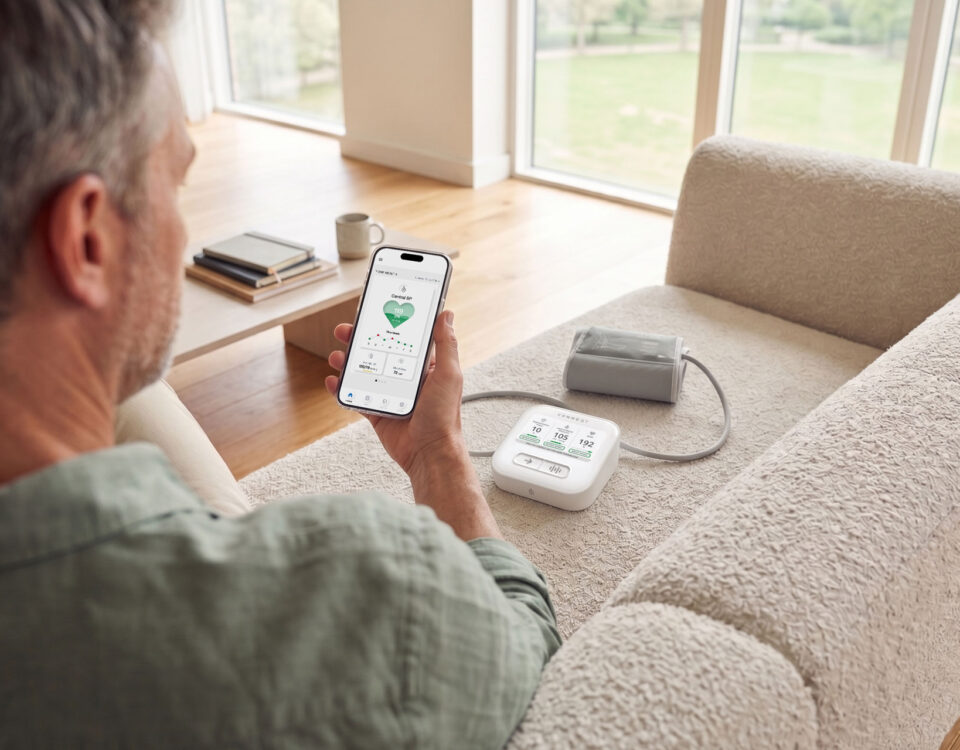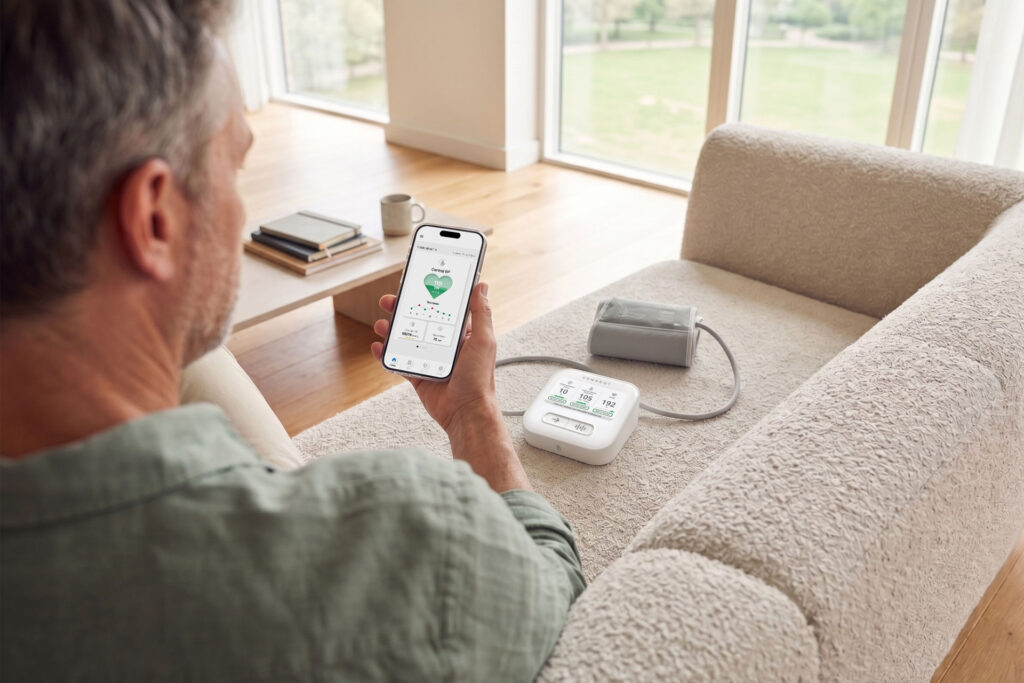

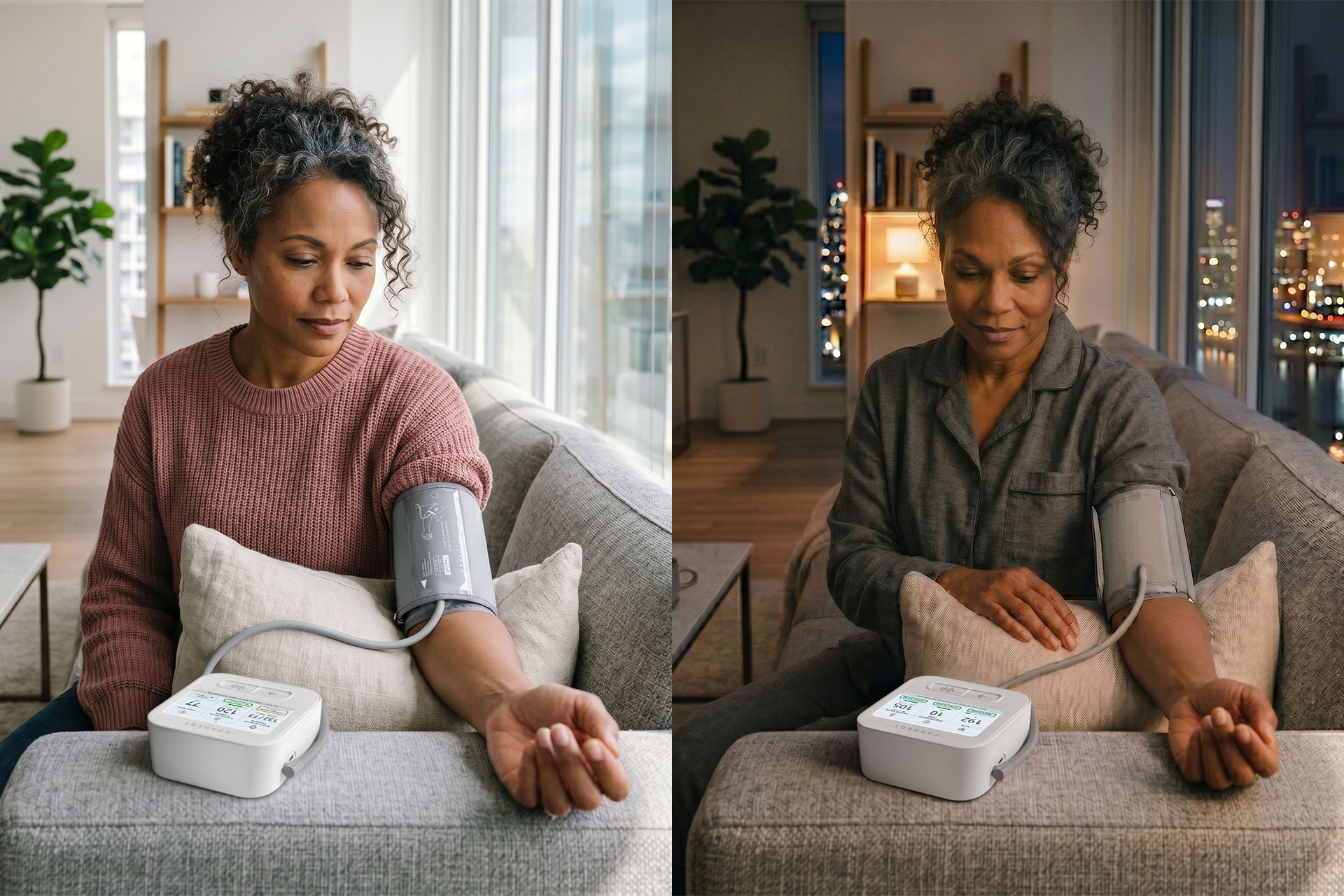
Most people know morning is the standard time to take a home blood pressure reading. Fewer know why evening matters just as much. Here is what the research shows.
In a Heartbeat
The assumption: Morning is the right time to take your blood pressure at home. Evening is optional, or just a second chance to check the number.
The reality: Morning and evening each capture something the other cannot. Morning reflects your cardiovascular state before the day begins. Evening reflects how your body has responded to everything since. Major guidelines and years of research recommend both.
What it means: Taking your morning and evening readings at the same times every day is what turns home monitoring into reliable data. Consistency in timing matters as much as the readings themselves.
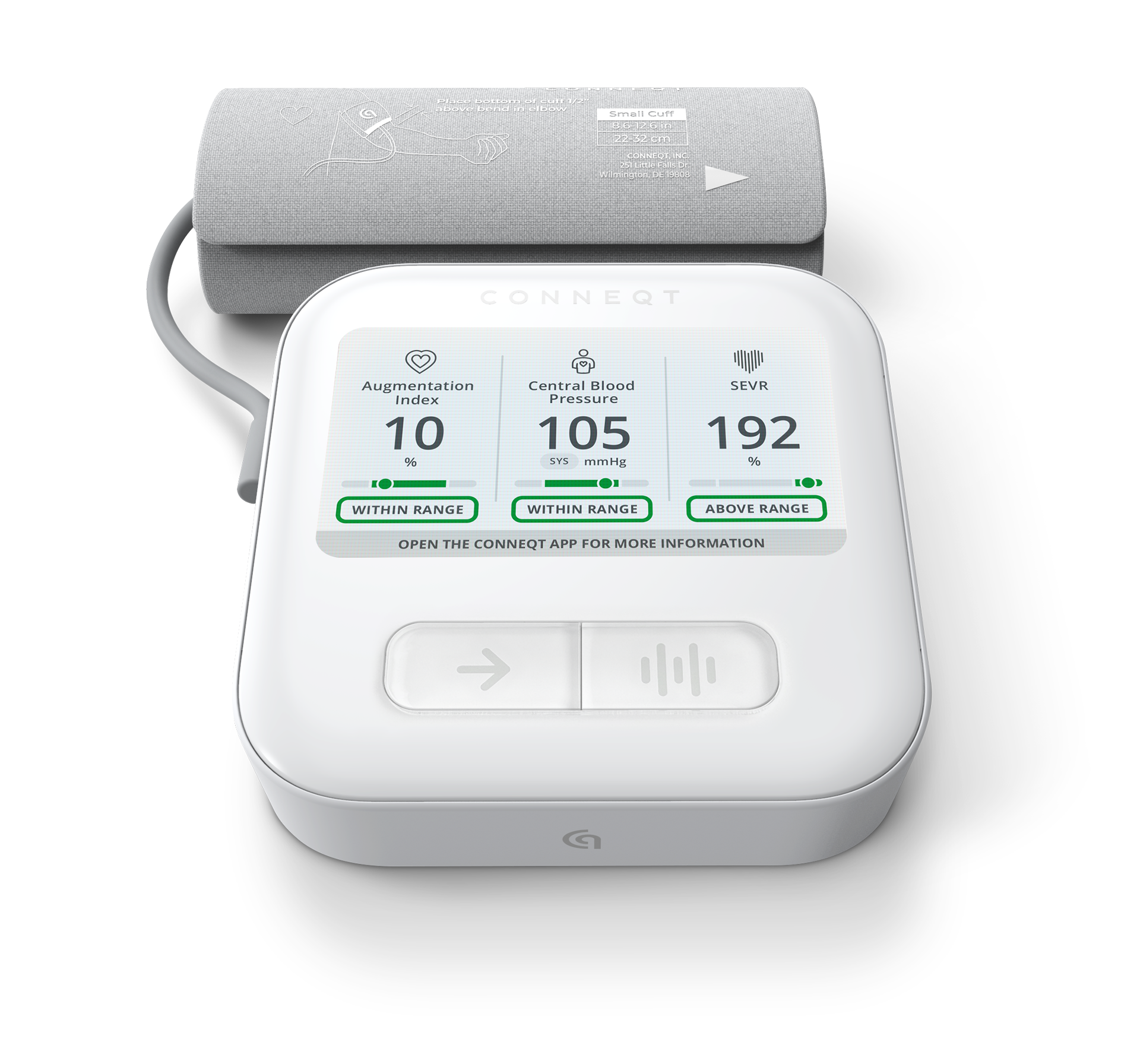

Medical Grade, Accurate, FDA-Cleared Heart Insights.
Save 10% on checkout with code VITALITY
If you are measuring your blood pressure at home, you are doing something important for your heart health that updated clinical guidelines now actively recommend.
In 2025, major cardiovascular organizations updated their guidance, identifying home monitoring as the most reliable way to check your blood pressure over time. As a result, more people are now being directed toward home monitoring as part of their care.
A natural question follows: when during the day should I actually be taking my readings?
The answer is morning and evening.
Both times are backed by years of clinical research and recommended by the same guidance, showing they each capture something the other cannot.
One distinction matters, though: morning and evening readings are not interchangeable.
They are complementary. Understanding why each one matters, and why both are needed, is what turns a monitoring routine into something clinically meaningful.
Why morning produces the most consistent readings
Morning is not just convenient. It is the most controlled window of the day for blood pressure measurement, and that is what makes morning readings so reliable.
When you wake up, your body is in a reproducible state. You have not yet eaten, had caffeine, or taken medication. Your activity level is low, and your stress response has not yet been activated by the demands of the day. Taking a reading in that window removes variables that would otherwise make your results harder to compare from one day to the next. The protocol also calls for a five-minute rest before measuring and avoiding exercise for at least 30 minutes beforehand. This step-by-step guide covers the full preparation in detail.
There is one exception worth naming.
If you take blood pressure medication, your clinician may have specific guidance on whether to measure before or after your dose. Follow that guidance rather than assuming morning always means before medication.
The morning window also coincides with a natural rise in blood pressure that occurs as the body activates after sleep. That rise, known as the morning surge, is a signal in its own right. Why Your Blood Pressure Changes Throughout the Day explains the full daily rhythm in detail, including why the morning surge matters and what it can indicate.
The 722 protocol, the standard home monitoring schedule of two readings per session, twice daily, for seven days, is anchored to morning as one of its two measurement times.
That is not a coincidence. Decades of research have established that morning readings, taken consistently under controlled conditions, are among the most predictive of cardiovascular outcomes.
What evening readings reveal that morning cannot
By evening, your body has absorbed a full day.
Meals, activity, stress, caffeine, and for many people, a dose of blood pressure medication. The cardiovascular state you are in at 7 PM is genuinely different from the one you were in when you woke up. That difference is not noise. It is information.
One study published in 2022 followed 1,582 people being treated for hypertension over nearly six years and found that evening home blood pressure independently predicted major cardiovascular events, even after accounting for morning readings. Evening readings were not just a second data point. They were carrying clinical information that morning readings alone could not capture.
A separate analysis of older adults with hypertension, published in 2025, found that evening pulse pressure, the gap between the upper and lower numbers in your reading, independently predicted cardiovascular events and all-cause mortality. Again, the finding held even when morning readings were taken into account.
A third analysis examined measurement timing across morning and evening sessions in treated hypertensives and found that combining both periods produced the strongest association with cardiovascular outcomes.
These studies were conducted in people already managing high blood pressure. The underlying principle, that evening readings capture something morning readings cannot, applies to anyone monitoring at home.
The takeaway from all three studies is the same. Morning tells you how your cardiovascular system starts the day. Evening tells you how it has responded to everything since. Both are part of the picture. Neither is redundant.
What counts as evening
When it comes to the evening, there is no single universal answer.
Guidelines differ on exact timing. The most recent US guidance recommends measuring at bedtime. European guidance recommends it before the evening meal. Both are clinically grounded.
What matters most is choosing a consistent time and sticking to it. Whether that is before dinner or before bed, taking your reading at roughly the same time each day under similar conditions is what makes the data comparable.
Why consistent timing is what makes it work
The research on the best time to take blood pressure points to one thing above all: taking your readings at the same times, every day.
The standard protocol calls for seven days of morning and evening readings to establish a meaningful baseline. That seven-day window is not arbitrary. Research shows that most of the predictive gain from home monitoring comes in the first three days, but the full week gives clinicians a more complete picture of your typical blood pressure pattern and reduces the influence of any single outlier day.
That baseline week is the starting point, not the finish line.
The morning and evening timing recommendation does not end after your first seven days of monitoring.
The long-term evidence for evening readings, and for the morning-and-evening combination, comes from studies that track people over years of consistent measurement, not just a single baseline period.
If you are monitoring on an ongoing basis, maintaining the same morning and evening structure is what makes your data meaningful over time. And if you have noticed that your first reading in each session tends to run higher than your second, that pattern has a specific physiological explanation.
Not everyone can measure twice a day. Morning before food, caffeine, and medication is the institutional standard for a single daily reading.
But both times together are what the research supports, and both times together give your clinician the most complete picture of your cardiovascular health.
The CONNEQT Pulse is designed for exactly this kind of structured home monitoring, with automatic recording and trend tracking built in.
The time of day you choose matters. Choosing the same times every day matters more.
What to read next
Timing is one piece of the home monitoring picture. These are the natural next reads for anyone tracking their blood pressure at home.
- How to Take Your Blood Pressure at Home and Get a Reading You Can Trust — The full preparation and technique guide, including cuff placement, arm position, the two-readings protocol, and what to record.
- Why Your Blood Pressure Changes Throughout the Day — The four phases of the daily blood pressure rhythm, why morning readings run higher, and what the nocturnal dip reveals about cardiovascular health.
- Why Your First Blood Pressure Reading Is Typically Higher — The physiological reason the first reading in any session tends to run higher than the second, and why the two-readings protocol is designed to account for it.
Want to explore more? Browse the full library