
You may have noticed this pattern at home: reading one is higher, reading two is lower. Your monitor is not broken, and your technique is not wrong. Here is what is actually happening.
In a Heartbeat
The assumption: Your first home blood pressure reading is higher than your second. Something must be off: the monitor, the technique, or the reading itself.
The reality: The difference is caused by a well-documented physiological response called the alerting reflex. Your body briefly reacts to the cuff inflation, slightly raising your heart rate and blood pressure. It settles within a minute. It happens in almost every session, regardless of how carefully you prepare.
What it means: The two-readings protocol exists precisely because of this effect. The first reading captures your cardiovascular state, including the reflex. The second captures your resting baseline. Both are useful. Together, they give you a more complete picture than either reading alone.
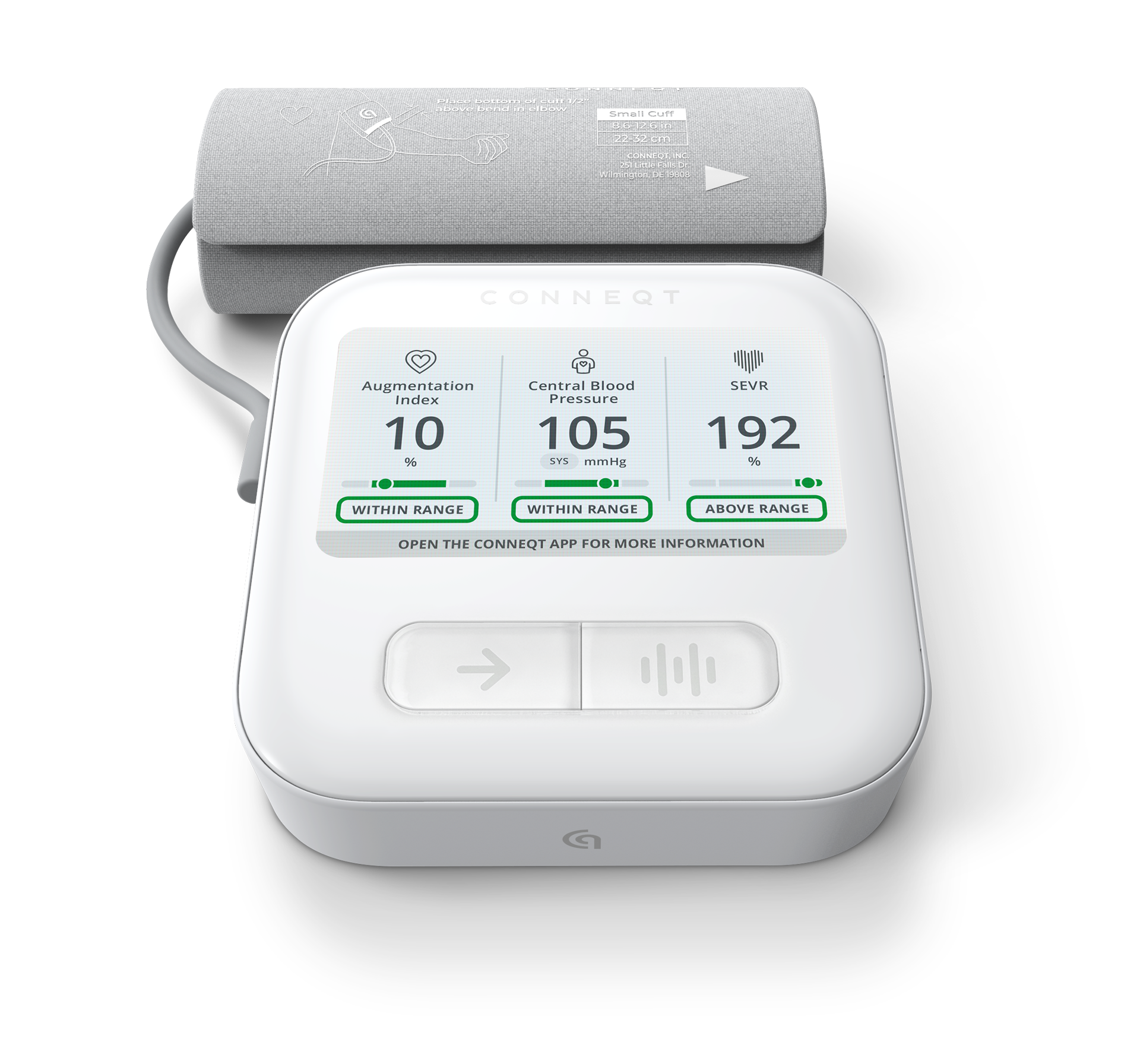

Medical Grade, Accurate, FDA-Cleared Heart Insights.
Save 10% on checkout with code VITALITY
You sit down, take your first reading, and the number is higher than you expected. You wait a minute, take the second, and it drops. You have probably seen this enough times that it no longer surprises you, but you may still wonder what is actually happening.
The answer is not a faulty monitor. It is not an inconsistent technique. It is a well-documented physiological response called the alerting reflex, and it occurs in almost every home monitoring session, regardless of how experienced you are or how carefully you prepare.
Understanding it will not change what you do.
You are already following the right protocol. What it will change is how you interpret what you see, and why the two-readings approach works the way it does.
What is actually happening during that first reading
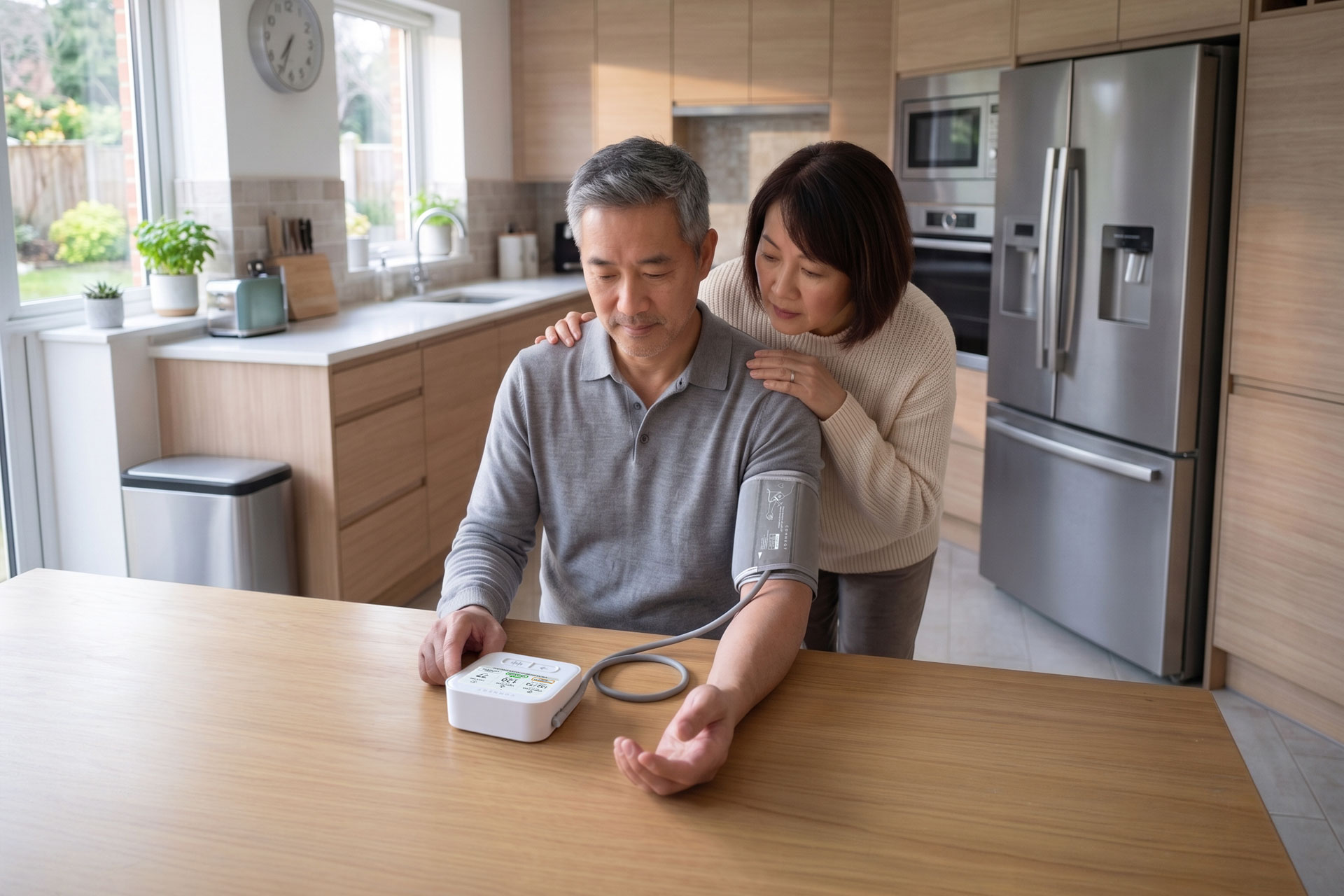
When you inflate a blood pressure cuff, your body notices.
Even if you have been monitoring for months and know exactly what to expect, the cardiovascular system responds automatically. A brief surge of adrenaline causes your heart rate and blood pressure to rise slightly. The effect passes quickly, usually within a minute, as your body settles and adjusts.
This is why researchers call it the alerting reflex. It is the same underlying mechanism behind white coat hypertension, the elevated readings some people get in a clinical setting, but at a much smaller scale and without the anxiety component.
The reflex usually occurs regardless of preparation.
Resting for five minutes beforehand, taking your reading at the same time each day, sitting in the same chair: none of these eliminate it. They reduce other sources of variability and create consistent conditions, which is exactly why the approach calls for them.
But the reflex itself is physiological, not behavioral. It is not something you can prepare your way out of. It is something the two-readings protocol is specifically designed to account for.
How consistent and significant is the effect?
The alerting reflex is not a quirk of home blood pressure monitoring. It shows up consistently across settings and populations.
A 2014 study published in the Journal of Human Hypertension measured the effect across three different settings: a general adult population, a general practice clinic, and a specialized hypertension center.
Across all three, the first systolic reading averaged 5.1 to 6.1 mmHg higher than the readings that followed. The difference held across all three.
That difference is not trivial. A 5 to 6 mmHg gap is enough to shift a reading from one category to another if it is taken in isolation. It is one of the reasons a single reading, taken once, tells an incomplete story.
More recent research confirms the same pattern, specifically in home monitoring.
A 2022 study found that the first day of a new monitoring period tends to run slightly higher than subsequent days. The mechanism is the same: the body is adjusting to something unfamiliar, and that adjustment happens over time, not just within a single session.
The practical takeaway from both findings is the same. Consistency and repetition are what turn home readings into reliable data, not any single number on any single day.
What this means for your monitoring practice
That drop between your first and second reading has a name and a mechanism. It also shapes how you think about every session, because the protocol you are already following is built specifically around it.
The first reading is not the problem
It is a real reading that reflects your cardiovascular state at that moment, including the mild alerting response.
That reading is not a device error, and it is not wrong. The number is simply a touch higher than your true resting baseline because the alerting reflex has not yet settled.
The second reading is closer to your resting baseline
This is the core reason the two-readings protocol specifies a one-minute wait between measurements. That minute gives the alerting reflex time to settle.
The second reading, taken after that pause, reflects a more stable resting state. Recording both and averaging them gives you a more complete picture than either reading alone.
For the full protocol, including preparation, timing, and what to record, this step-by-step guide covers each step in detail.
When a third reading makes sense
The standard protocol calls for two readings per session. But clinical guidance from the HOPE Asia Network notes that when the first two readings are markedly different, it may be most appropriate to use only the last two measurements when calculating your average. That means taking a third reading and setting the first aside.
This is not about repeating measurements until you get a number you prefer. It is about accuracy when within-session variability is unusually high.
Two readings that are close to each other give you confidence. Two readings that are far apart tell you something was unsettled in that session, and a third reading helps resolve it.
What the alerting reflex makes clear is that the gap between reading one and reading two is not a problem to be solved. It is a signal that the protocol is working exactly as it should.
A note for CONNEQT Pulse users
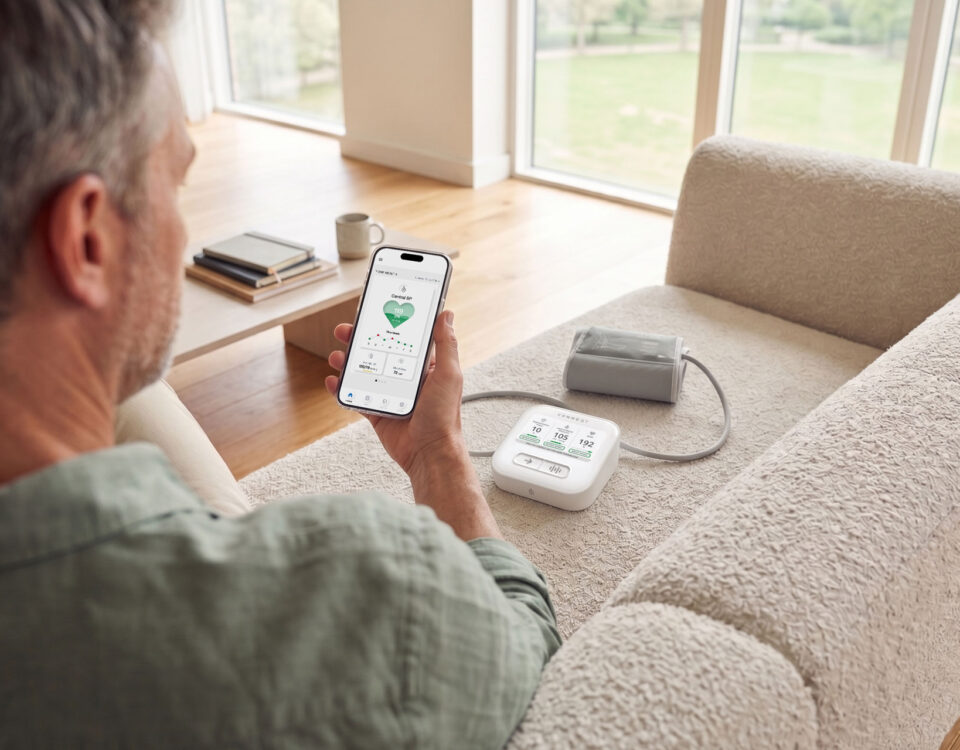
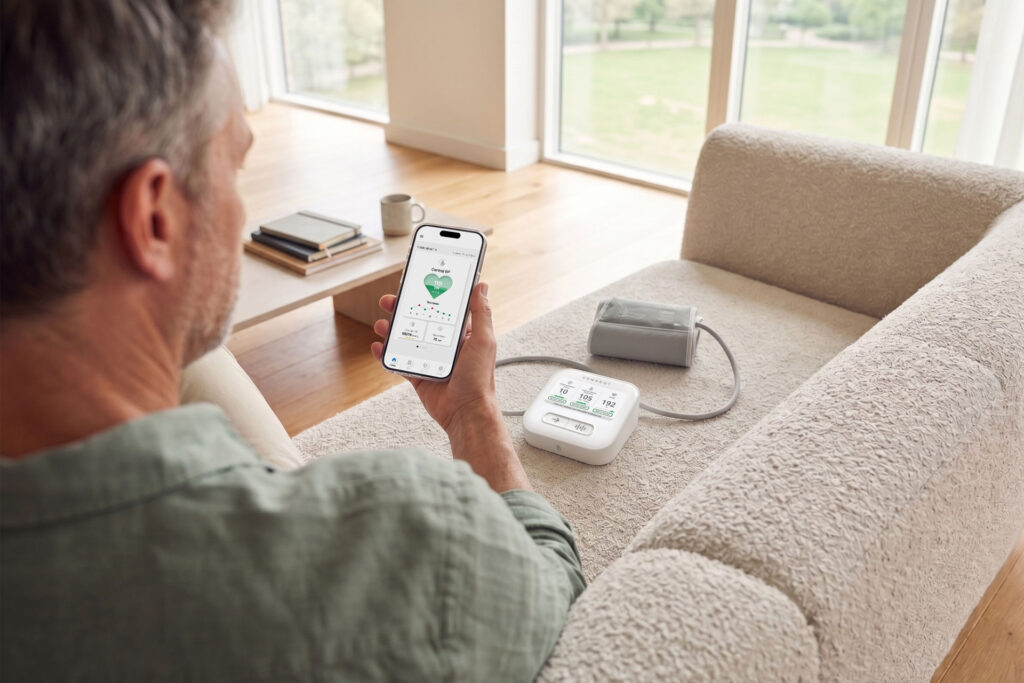
The Pulse works differently from a standard home monitor. It uses two inflations, compared to the single inflation on a standard blood pressure monitor.
The first inflation captures brachial blood pressure. The second captures central blood pressure waveforms and other vascular biomarkers.
These are not two readings of the same metric. Your brachial and central readings are both automatically recorded by the device and app. As readings accumulate over time, the first-reading-higher effect becomes less significant in your overall trend data.
The same preparation principles apply regardless of the device: a five-minute rest, consistent timing, and consistent conditions before each session. How to Use the CONNEQT Pulse for Accurate Readings covers the full process.
What to read next
Understanding the alerting reflex is one piece of the home monitoring picture. These articles cover what connects to it.
- How to Take Your Blood Pressure at Home and Get a Reading You Can Trust — The full preparation and technique guide, including cuff placement, arm position, timing, and the two-readings protocol in detail.
- Why Does Blood Pressure Fluctuate? Causes, Patterns, and What to Do — Why readings vary from session to session and day to day, which patterns are worth paying attention to, and when variation becomes something worth discussing with your clinician.
- Why Your Blood Pressure Changes Throughout the Day — The four phases of the daily blood pressure rhythm, why morning readings run higher, and what that pattern tells you about your cardiovascular system.
Want to explore more? Browse the full library.