

For most of my life, I assumed more training was better. My own numbers, and a deeper look at the research behind them, told a more nuanced story. Understanding it changed how I train, what I monitor, and why.
Most athletes who experience a serious cardiac event during exercise do not drop dead out of nowhere.
There is almost always a pre-existing condition. Something that was there before the run, before the race, before the training session.
Exercise did not cause it. Exercise revealed it.
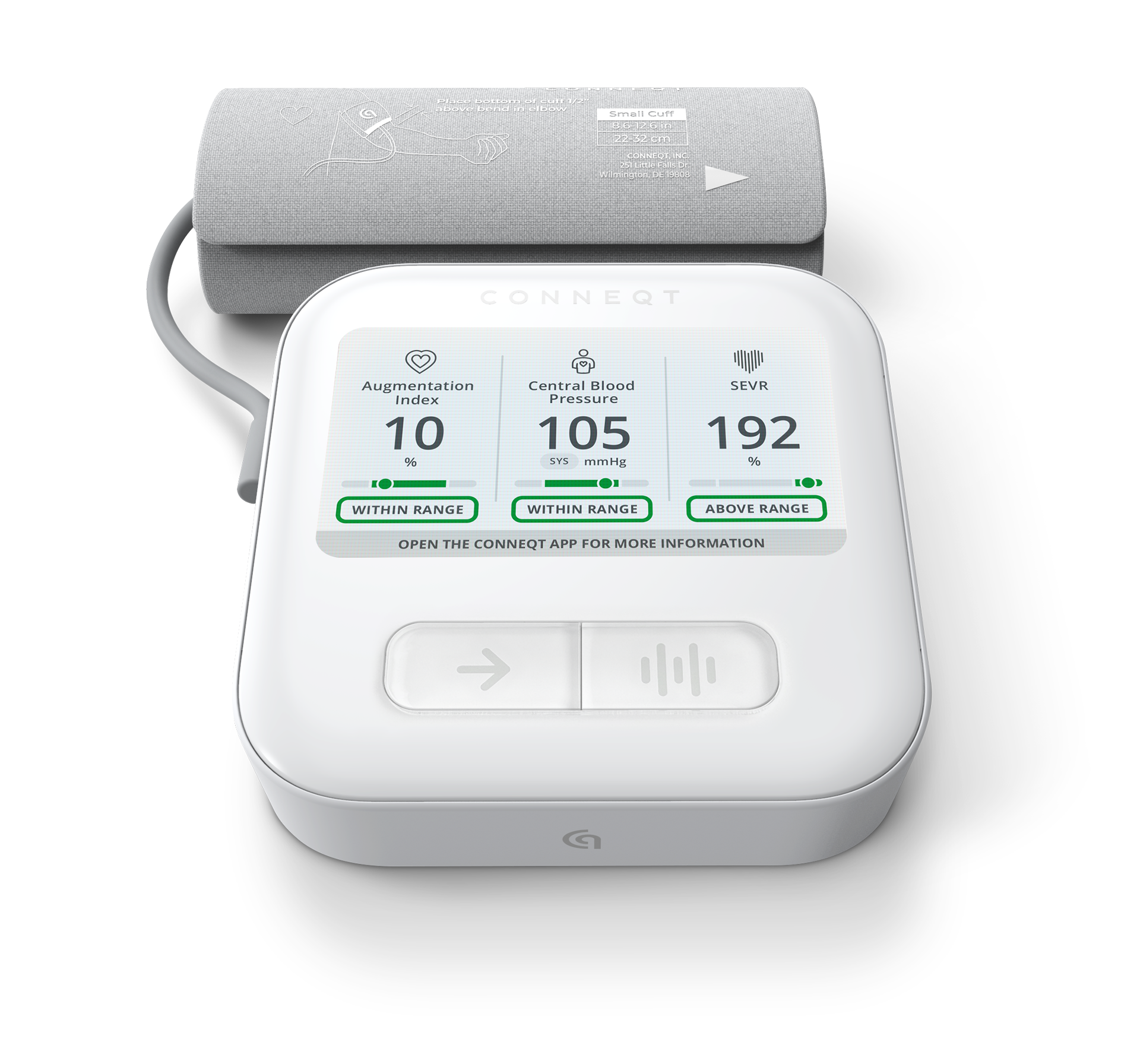

Medical Grade, Accurate, FDA-Cleared Heart Insights.
Save 10% on checkout with code VITALITY
That distinction matters to me personally.
At 63, I have a pericardial effusion in my history. Long COVID cardiovascular symptoms that took years to resolve. Orthostatic hypotension. And an ApoB and LDL profile that do not match the picture most people would expect from my fitness profile.
None of that is a reason to stop training.
It is a reason to dig into the research. To know what to monitor. And to be clear on what it shows.
In this article
- The three zones
- What moves the needle on arterial stiffness
- Exercise as a trigger, not a cause
- What the research shows at very high volumes
- What else reduces arterial stiffness
- What I actually track
- What I take from all of this
- What to read next
Exercise is one of the most powerful cardiovascular signals you have
Every training session sends a signal to your arteries.
Faster blood flow. Increased shear stress on the arterial wall. A surge in nitric oxide that relaxes vessels and improves their elasticity.
Over time, with consistent training, the system remodels. The arteries become more flexible, more responsive, less resistant.
Do it once, and nothing changes. Do it consistently, and the system adapts.
This is why the research clusters around eight to twelve weeks as the window for measurable arterial change. It takes time for the signal to produce a structural response. But when it does, the effect is real and measurable.
The evidence for exercise as a cardiovascular protective factor is not in question. What is less well understood is that the relationship between training volume and cardiovascular benefit is not a straight line.
It follows a curve, known as the dose-response curve.
And where you sit on that curve matters.
The three zones
Three zones define that curve.
The first is sedentary. No consistent physical activity. Cardiovascular risk is highest here. Even modest increases in activity from this baseline produce meaningful gains.
The second is what researchers call the Goldilocks zone.
Not too little, not too much. The cardiovascular returns are strongest when both intensity and duration land in the right range: broadly 150 to 300 minutes of moderate activity per week, or 75 to 150 minutes of vigorous activity.
The endothelium, the inner lining of your arteries, becomes more responsive. Arterial stiffness decreases. Inflammation drops. The research consistently links this range of activity to lower risk of cardiovascular disease and early death.
The third is very high volume. Well above 300 minutes of vigorous activity per week, sustained over years and decades.
Think elite and lifelong endurance athletes. Ironman competitors. Masters runners logging hundred-mile weeks for decades.
People for whom high-intensity, high-frequency training is not a phase. It is a way of life.
At these volumes, the additional cardiovascular gains get smaller. The curve flattens rather than reverses. But specific patterns start to show up in some athletes that are worth knowing about.
Given my training history and cardiovascular profile, that third zone is not abstract.
I’ve lived there. And understanding what the research shows about it changed how I train now.
What moves the needle on arterial stiffness
The research is consistent on this. Here is the framework it supports.
Aerobic exercise is the primary driver. Thirty to forty-five minutes, four to six times per week. Strongest evidence for reducing arterial stiffness across the research.
Resistance training adds to the benefit at the right intensity. Two to three times per week at moderate loads. High intensity can temporarily increase stiffness. Moderate intensity improves vascular function. Controlled loads. Avoid chronic maximal strain.
Timeline: Eight to twelve weeks for most people. Twelve to twenty weeks if you are hypertensive. Older individuals often improve more, not less.
The midlife window. The 40s through the 60s are when arterial stiffness is rising and endothelial function is declining. This is when consistent training in this range moves the needle most. The research suggests that structural benefits become harder to reverse after 65. So for people in this age window the time to act is now.
Exercise is the trigger, not usually the cause
During vigorous training, heart rate spikes, blood pressure rises, and electrical demand increases.
In a healthy cardiovascular system, these responses are normal and expected. The heart handles them without incident, recovers, and adapts.
But not every cardiovascular system is without history.
An undetected arrhythmia, a genetic abnormality, decades of cumulative hemodynamic load. Those things do not announce themselves. Training is often what brings them to the surface.
What this looks like in practice
Some of the most instructive examples come from the athletes you would least expect.
Dave Scott is a six-time Ironman World Champion. One of the greatest endurance athletes ever.
In June 2024, he underwent open heart surgery to repair two aortic aneurysms and two valves. His cardiac history includes atrial flutter, atrial fibrillation, two ablations, and a pacemaker. Scott credits decades of overtraining with much of the damage.
He is not alone. Tour de France sprint champion Sam Bennett developed atrial fibrillation in late 2025 and underwent a successful ablation. He chose to speak publicly about it specifically to raise awareness. His point was direct: this is more common than most athletes realize, and catching it matters.
What the data shows
The data on college athletes tells a similar story.
Sudden cardiac death is the leading medical cause of death in young competitive athletes. Fifty percent of those deaths occur during physical activity. Almost always in the presence of an undetected condition. A genetic abnormality. An arrhythmia. Something that was there before the whistle blew.
The NFL data makes the same point differently.
A 2024 study of former NFL players who were aged 50 and older found that 89.8 percent had hypertension and 61.8 percent had structural cardiac abnormalities on echocardiography.
These are men who trained at extraordinary volumes and intensities for years. The cardiovascular burden accumulated. The exercise did not cause it. The combination of training load and underlying physiology over time did.
These are not isolated cases.
The conditions that exercise most commonly surfaces in athletes with undetected history also include hypertrophic cardiomyopathy, aortic abnormalities, myocarditis, and ventricular arrhythmias.
Some are genetic. Some develop over decades of cumulative load.
Others are simply never screened for in athletes who appear healthy by every external measure.
The common thread is not the training. It is the underlying condition that was already there.
The takeaway is not to train less.
It is to know what is happening in your cardiovascular system while you train. Because the first symptom of a heart attack is often death.
Awareness and monitoring are not optional for people who train at this level. They are the whole point.
Here is what those patterns actually look like.
What the research shows at very high volumes
These patterns are not a reason to stop training.
They show up consistently in the research on elite and lifelong endurance athletes. People who have trained at very high volumes for decades.
If that is you, this section is worth reading carefully. If it is not, the context still matters.
Atrial fibrillation
AF is the most studied cardiovascular pattern in high-volume endurance athletes.
Some cohorts show elevated rates compared to matched controls.
A 2023 study of elite female endurance athletes found higher AF rates than the general population.
The 2024 HRS Expert Consensus Statement and the 2023 ACC/AHA AFib guideline both acknowledge the association between high-volume endurance exercise and AF in some athletes.
But the evidence is not uniform.
A 2025 study across two Swedish cohorts found no increased AF risk at the highest activity levels after adjusting for cardiovascular risk factors. Its conclusion was direct: the benefits of physical activity should guide recommendations, not a possible risk of AF.
What this tells me: dose and context matter.
This is not a warning for everyone who trains hard.
It is a pattern worth knowing about if you are training at the upper end of the volume distribution for years or decades.
Coronary plaque patterns
The research on this has been fairly consistent.
Lifelong endurance athletes tend to carry more coronary plaque overall than moderately active peers.
The Merghani 2017 cohort and the MARC-2 study both point in the same direction.
The dominant plaque type in athletes is predominantly calcified, less mixed, less non-calcified than what shows up in sedentary individuals.
Calcified plaque is more stable. It hardens over time and is less prone to rupture than the soft, lipid-rich plaque associated with most cardiac events.
The prevailing argument is that this calcification represents a stabilization response.
More plaque does not automatically mean more risk. Why it develops at all is not fully resolved. Decades of cumulative hemodynamic stress from sustained high training load is one proposed mechanism.
Fit doesn’t mean no plaque.
It just may mean more stable plaque.
For most lifelong athletes, that is where the current evidence lands.
Elevated ApoB in the context of a lean, highly active profile, like mine, adds complexity to that picture. This article goes deeper.
One study worth watching
The 2023 Master@Heart study challenged the prevailing picture. It found that lifelong endurance athletes showed a higher prevalence of non-calcified plaques in proximal segments compared to healthy, moderately active peers. Not a more favorable composition.
One of the study’s own investigators described the finding as unexpected and noted it does not override the broader body of research. Longitudinal data is still needed.
It is an area of research to watch.
The training does not change. The awareness does.
H3: Myocardial fibrosis
This is the least settled area of the three.
Imaging studies have observed myocardial fibrosis patterns in some athletes with long-term high training exposure.
A 2024 systematic review of 21 studies covering 1,642 athletes found fibrosis patterns in roughly 24 percent of athletes with cardiac remodeling compared to 3 percent of controls.
A 2025 systematic review also found prevalence ranging from 13 to 48 percent across studies, with no consistent findings on its impact on ventricular function.
The clinical meaning varies. Not all findings are pathologic.
What the research cannot yet tell us is what this means for individual athletes over the long term. What it does tell us is that awareness and consistent monitoring matter more, not less, for people who have trained at these volumes for decades.
My endurance training article covers all three of these patterns in more depth, including what they have meant for my own training decisions. Read it here.
Beyond exercise: what else reduces arterial stiffness
Training hard is one part of the picture.
The research on what else reduces arterial stiffness is worth knowing, particularly if you are in the midlife window where these interventions have the greatest impact.
The age window
The research points to a specific window for arterial adaptation: the 40s through the 60s.
This is when arterial stiffness is rising and endothelial function is beginning to decline. Consistent intervention during this window produces the strongest structural response.
Research published in Circulation found that when exercise is started after 65 in previously sedentary individuals, it has little effect on cardiac stiffness.
Middle age is when the heart and arteries retain the plasticity to change.
That finding matters for a specific reason.
It applies to people who have been sedentary and are starting late. For people who have trained consistently for decades, the picture is different.
The same research found that seniors who had exercised habitually for more than 25 years had cardiac compliance similar to young controls.
This is not a reason for alarm. It is a reason for urgency.
This is the window that matters most for anyone in their 40s or 50s who has not yet built consistent training into their life.
The benefits do not disappear after 65. But the window where training produces the strongest structural response is now, not later.
Exercise
This article has covered a lot of ground on exercise. A few points are worth adding here.
Aerobic exercise is the primary driver. Resistance training adds to the benefit at the right intensity.
The timeline for measurable arterial change is eight to twelve weeks for most people. Longer if you are hypertensive. That foundation does not change regardless of what else you add.
Diet
A 2025 systematic review of 16 studies covering more than 13,000 adults found that adherence to the Mediterranean diet was associated with lower arterial stiffness across both pulse wave velocity and augmentation index measures.
The relationship held across multiple populations and study designs.
The Mediterranean diet is built around olive oil, fish, vegetables, legumes, and whole grains, with limited processed food and saturated fat. It is not a single food. It is a pattern of eating that the research has linked consistently to lower cardiovascular risk.
Sleep
This one surprises most people.
A 2023 meta-analysis of more than 100,000 adults found that both short and long sleep duration were associated with higher arterial stiffness compared to the recommended seven to eight hours.
The relationship was not symmetric. Long sleep showed a stronger association with elevated pulse wave velocity (PWV), a measure of arterial stiffness, than short sleep.
Sleep has a Goldilocks zone too. Less than seven hours, arterial stiffness rises. At nine hours or more, the risk association also increases.
Too little is a problem. Too much carries its own signal.
Stress and smoking
Chronic stress contributes to arterial stiffening through sustained activation of the sympathetic nervous system and elevated cortisol. That sustained activation keeps the arteries under pressure they were not designed to handle chronically.
Managing it matters.
Smoking is one of the fastest modifiable drivers of arterial stiffness.
Stopping it produces measurable improvements in arterial function relatively quickly compared to most other interventions.
What I actually track
I train at high volume. That has not changed.
But what I track has changed as I have gone deeper into this research.
Not whether to keep training. What to watch while I train.
One question drives all of it: which direction are things heading?
I think about this in three layers. Structure, flow, and function. I have written about this framework in detail before.
Here is what each layer tells me.
Structure
My CAC score is zero, confirmed six years ago and reaffirmed by my recent Cleerly scan. Zero plaque across the board.
That is reassuring. It is also one data point. It tells me where things stood on the day I scanned.
Flow
ApoB, LDL-C, and hsCRP. Particle load and inflammation. The signals that tell me what is moving through my arteries and the environment they are operating in.
My ApoB is 110 mg/dL.
That number, in the context of my metabolic profile, is consistent with the Lean Mass Hyper-Responder pattern, a metabolic framework that may change how elevated ApoB reads in lean, highly active individuals.
I am actively working on reducing it mainly through diet and supplementation.
Flow tells me about the burden my arteries are carrying. It does not tell me how well they are handling it.
Function
This is the layer most relevant to everything this article has covered.
Arterial stiffness and central blood pressure over time. The signals that change before structure does. The patterns that show up at very high volumes often appear here first.
The CONNEQT Pulse tracks these at home. Not a diagnostic tool. A way to see whether arterial stiffness and central pressure are stable, improving, or moving in the wrong direction.
The question I keep coming back to is this: can my arteries keep up with the demands I am placing on them, now and for the decades ahead?
A calcium score tells me where things stood on the day I scanned.
Not what has changed since.
A lipid panel tells me about particle load at one moment in time.
Not how my arteries are handling that burden.
Tracking function over time does.
It tells me whether my arteries are staying resilient under the demands I am placing on them, or whether that is changing.
Clinical workup
Structure, flow, and function give me a framework for understanding what is happening in my cardiovascular system.
But I do not populate that framework alone. I work closely with my cardiologist and clinical team to get the imaging, bloodwork, and functional markers that make it meaningful.
Stress tests. Echocardiography. Advanced lipid panels. Regular cardiovascular assessments.
For someone with my training history and cardiovascular profile, these are not optional. They are the foundation the rest of the framework sits on.
At-home monitoring tells me what is happening between appointments. The clinical workup tells me what it means.
What I take from all of this
Going deeper into this research didn’t change how much I train.
It changed how I think about what I am doing to my cardiovascular system while I train.
Here is what I have learned.
- The exercise details are straightforward. Aerobic work four to six times per week. Resistance training at moderate loads. Eight to twelve weeks to see measurable change. That is the foundation.
- Intensity matters more than volume. I focus on staying at the high end of the Goldilocks zone. Chronic very high intensity is where the risk patterns start to accumulate.
- The three layers are the framework I keep coming back to. Structure (imaging), flow (lipids and inflammation), and function (arterial stiffness and central pressure over time). Most athletes track the first two. Function is where early change shows up. I don’t skip it.
- Function needs to be tracked consistently, not just at a single point. A calcium score tells me where things stood. Tracking arterial function at home over time tells me which direction things are heading. And the clinical workup, stress tests, echocardiography, advanced lipid panels, tell me what it all means.
- If you train at high volume for decades, this article covers two types of cardiovascular risk worth knowing about. The patterns that develop over time in endurance athletes, and the underlying conditions that exercise can surface. Neither is a reason to stop. Both are reasons to stay informed.
- For specific concerns, I work with a clinician familiar with the athlete phenotype. This article is a starting point. That conversation is where it gets specific to my situation.
What to read next
These articles go deeper into the questions raised here.
- How Consistent Exercise Builds a More Adaptable Heart – What consistent, structured training does to cardiac function over the long term and why the midlife window matters most.
- Why Fit Athletes Need to Think About Cardiovascular Risk Differently – Why standard cardiovascular screening was not built for the athlete phenotype, and what I track instead.
- Is Endurance Training Hurting Your Heart? – A deeper look at the three cardiovascular patterns covered in this article and what I have learned from my own experience.
- How Long Does It Take to Improve Arterial Health? – The research on timelines for arterial improvement and what drives the adaptation process.
- Breaking the Plateau – What I changed when my training stopped moving my blood pressure readings and how I think about the body’s adaptation to repeated stimulus.
Want to go deeper? Browse the full library.