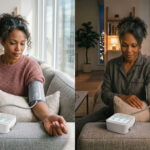


Most home blood pressure monitors measure one thing. Some measure considerably more. Here is what separates them, what independent testing confirms, and how to choose the right one.
In a Heartbeat
The assumption: Home blood pressure monitors are all roughly the same. Choose one that fits your budget, and you are done.
The reality: The market splits into two meaningful categories. Standard validated monitors that measure brachial blood pressure accurately and serve many buyers well. A specialized category goes further. These validated monitors capture central blood pressure and arterial health signals that standard devices do not, using technology previously found only in clinical settings.
What it means: The right monitor depends on what you actually need to track. Start with what every good monitor should do, understand the broader landscape, and use independent test results to confirm a device delivers on its claims.

Medical Grade, Accurate, FDA-Cleared Heart Insights.
Save 10% on checkout with code VITALITY
You have been meaning to get one for a while. Maybe your doctor mentioned it. Maybe you saw a number at your last checkup that made you pay more attention.
Whatever brought you here, you have probably had at least one of these thoughts: my doctor already checks my blood pressure, so do I really need to do it at home? And if I do, isn’t one monitor basically the same as another?
Both are reasonable questions. The answers might surprise you.
Home monitoring is now the recommended standard for tracking blood pressure over time, not just for people managing hypertension but for anyone who wants a more accurate picture than a single office visit can provide.
The monitors themselves range from devices that tell you your blood pressure number to devices that tell you what that number reflects about your cardiovascular system, using technology previously found only in cardiology offices.
Knowing what to look for before you buy is where that difference becomes useful.
Start with the standard: what every good monitor needs
Before you consider what a monitor measures, confirm that it measures accurately. That is the foundation everything else builds on.
Clinical validation
Not all home blood pressure monitors on the market have been independently tested for accuracy. A clinically validated device has been put through standardized protocols and confirmed against a clinical reference standard. It is the category floor recommended by the AMA and major clinical guidelines.
Checking validation is straightforward. The AMA maintains a publicly available validated device list at validatebp.org. If a device is not listed there it has not completed formal validation testing. That is worth knowing before you buy. For a deeper explanation of what clinical validation involves and why it matters, this article covers it in detail.
Cuff fit
Validation confirms a device is accurate. Cuff fit determines whether it is accurate for you. A cuff that is too small overestimates systolic pressure. A cuff that is too large underestimates it. A 2023 randomized trial published in JAMA Internal Medicine found the error from an undersized cuff can reach nearly 20 millimeters of mercury in some cases. That is not a rounding error. It is enough to change how a reading is interpreted entirely.
To find the right fit, measure the circumference of your upper arm at its midpoint and check it against the sizing guide included with most monitors. If you are between sizes, go larger rather than smaller. An undersized cuff produces a significantly larger error than an oversized one.
Ease of use
A monitor you will not use consistently is not useful, regardless of its accuracy. Look for a clear display, simple one-button operation, and automatic storage of readings. If you want to share data with your clinician, app connectivity and data export matter too. These criteria are personal but worth thinking through before you buy, rather than after.
Understanding the monitor landscape
Not all home blood pressure monitors are created equal, and the differences go beyond brand or price. Here is an honest map of what you will find in the market.
Validated upper arm cuff monitors are the standard. Major guidelines and the AMA recommend validated upper arm cuff devices as the baseline for home monitoring. They provide the most reliable readings and form the basis for all major clinical protocols. For most buyers this is the right starting point and the right place to focus your decision.
Wrist monitors are less accurate than upper-arm devices because wrist position relative to heart level is harder to control consistently. The AHA does not recommend them for most users. One exception: for people who cannot achieve a good fit with an upper arm cuff, or for whom cuff inflation is painful, a wrist monitor is a reasonable alternative. If you use one, ask your clinician about correct positioning to minimize the accuracy gap.
Cuffless devices, including smartwatches and fitness trackers with blood pressure features, are not currently recommended by the 2025 AHA and ACC guideline for diagnosing or managing hypertension. They may be useful for general trend awareness but should not replace a validated cuffed device.
The category is developing: the FDA cleared a first over-the-counter cuffless wristband in 2025, though the device has not yet reached the US market as of this writing.
Ambulatory blood pressure monitors are prescription devices worn throughout the day and night to capture readings on a set schedule: clinician-prescribed and typically insurance-covered rather than consumer purchases, and outside the scope of this guide.
Pulse oximeters measure blood oxygen saturation, not blood pressure. They are a different category of device entirely. If you are specifically looking for a blood pressure monitor, a pulse oximeter is not it.
What most monitors do not measure, and why it matters
A standard validated upper arm monitor does one thing well: it tells you the pressure in your arm at the moment you take a reading. For many people that is enough. For others, it is only part of the picture.
A more comprehensive class of monitor goes further, capturing data that standard devices cannot see. Understanding what that additional data reflects is what this section covers.
Standard brachial readings. Every monitor measures systolic and diastolic blood pressure and heart rate. These are the numbers most people are familiar with. They are useful, clinically meaningful, and the foundation of home monitoring for most users.
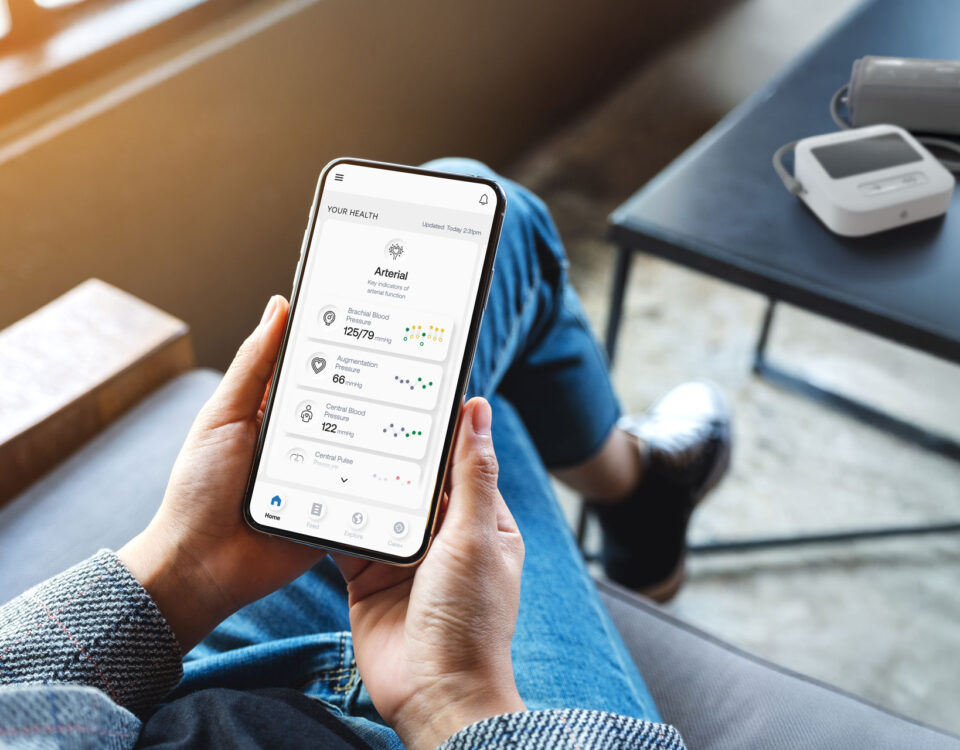
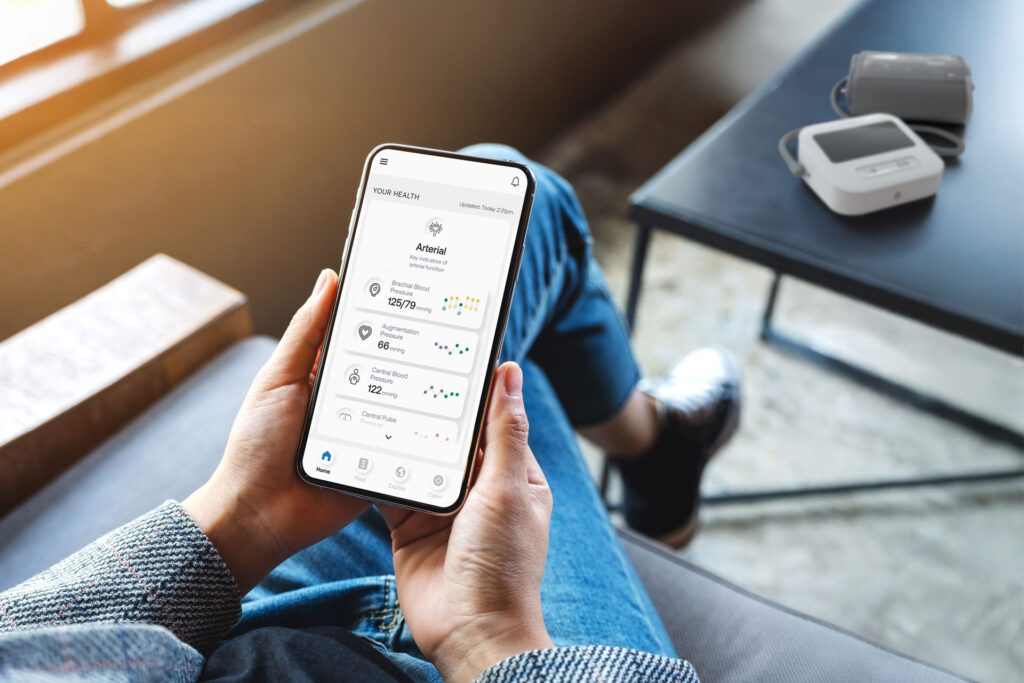
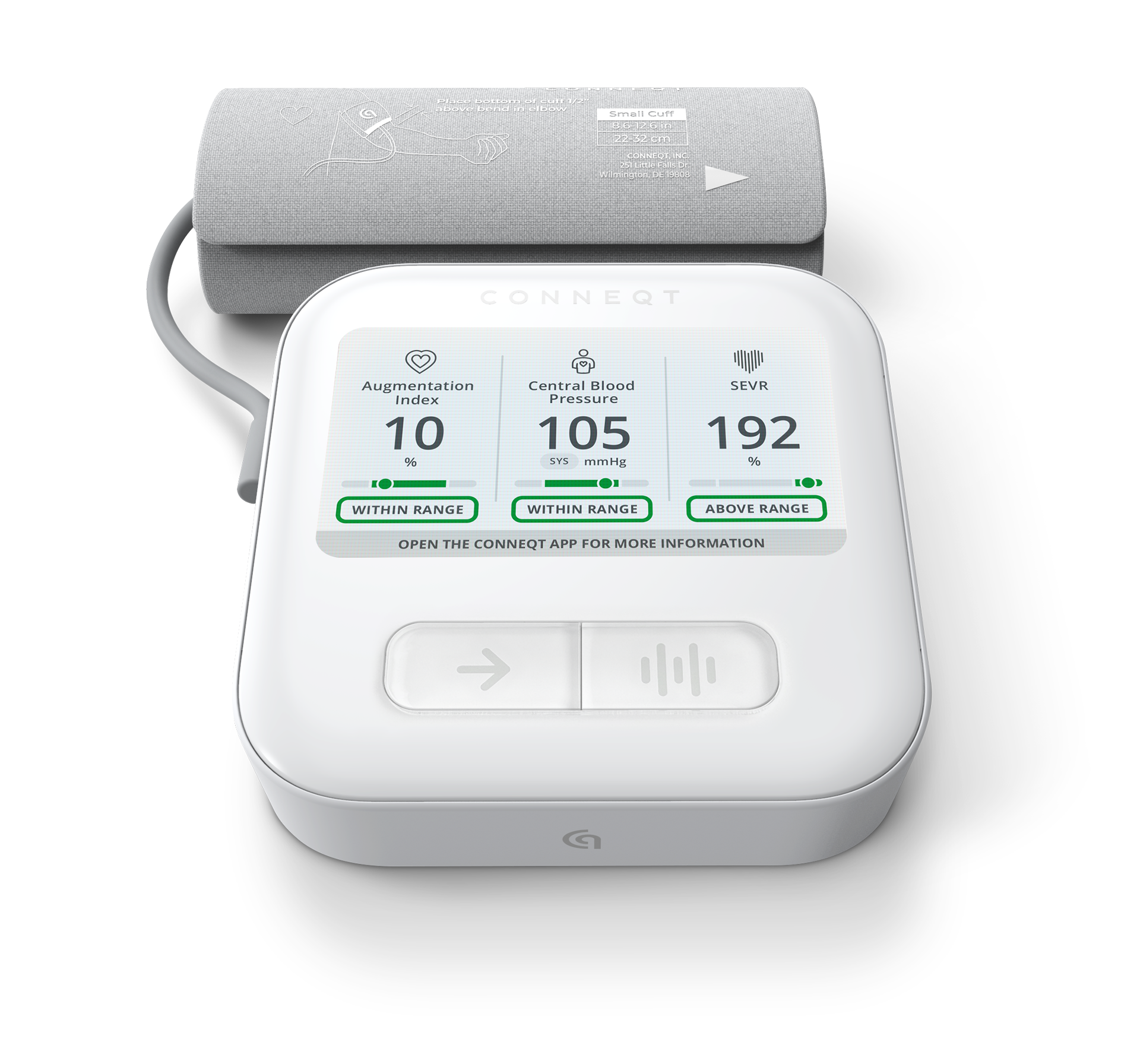
Central blood pressure. Standard monitors measure pressure at the arm. A comprehensive monitor also measures the pressure your heart, brain, and kidneys actually experience, giving a more direct picture of cardiovascular load. Research suggests central blood pressure is a stronger predictor of cardiovascular outcomes than brachial pressure alone.
A related signal, central pulse pressure, reflects the load placed on the heart with each beat. Together, these give a more complete picture of what your cardiovascular system is actually experiencing.
Arterial health signals
A third layer of measurement goes beyond pressure to reflect how your arteries are functioning. Arterial stiffness is an early indicator of cardiovascular risk that standard blood pressure readings do not capture.
Research following nearly 16,000 people found that higher arterial stiffness was associated with significantly elevated risk of cardiovascular events and all-cause mortality.
Two related signals, augmentation pressure and augmentation index, reflect how much wave reflection from the arteries adds to the heart’s workload. SEVR measures how efficiently the heart muscle itself is receiving blood relative to the work it is doing.
None of these signals diagnose a condition. Your clinician may not measure them routinely, but that is partly because routine visits capture a single moment rather than a pattern over time. Tracking them consistently at home is where their value lies, and it is what distinguishes a comprehensive monitoring approach from a standard one.
What independent testing actually looks like
Understanding what a monitor measures is one part of the buying decision. Knowing whether it actually delivers on that promise is another. That is where independent testing comes in.
Most monitors on the market are tested for basic accuracy. Fewer are put through a rigorous evaluation of data quality, user experience, and clinical-grade technology by an independent organization with no commercial stake in the outcome. Understanding what that kind of testing actually involves puts the results in proper context. When testing happens at this level, the findings carry real weight.
What reviewers found
AARP’s Best Blood Pressure Monitors of 2026 evaluated eight devices through a combination of lab testing and real-world assessments by home testers ages 50 and older who use blood pressure monitors regularly.
Of the eight monitors tested, only four were recommended. The process included accuracy testing, ease-of-use evaluation, and direct feedback from testers on setup, comfort, and readability.
The CONNEQT Pulse received the designation Most Comprehensive Data, the only monitor in the roundup recognized specifically for its central blood pressure and arterial health signals beyond standard brachial readings.
A standalone review gave the Pulse a score of 9.8 out of 10. In home testing, the device earned a very good score for accuracy and an excellent score for its display. Testers found the screen clear and easy to read and highlighted the comprehensiveness of its features.
A separate review by the National Council on Aging reached a similar conclusion, rating the Pulse 9.7 out of 10 and designating it Best for Advanced Monitoring among the monitors it evaluated.
Both reviews were clear about the tradeoffs. At $279, the Pulse is the most expensive option across the monitors evaluated. For buyers who only need basic brachial blood pressure tracking, a more affordable validated monitor may be the right choice. Before committing to any monitor, the question worth asking first is whether its numbers can actually be trusted.
Which monitor is right for you
The right monitor is the one that matches what you actually need, or want, to track. That answer is different for different buyers.
When a standard validated monitor is the right choice
You want accurate brachial blood pressure readings at an accessible price point. You are not looking to track arterial health signals beyond standard BP. Your clinician has recommended a specific device or protocol.
Most people who are new to home monitoring fall into this category, and a well-chosen validated upper arm monitor will serve them well.
When advanced monitoring is worth considering
You want to track central blood pressure, arterial stiffness, and cardiac efficiency signals alongside standard BP readings. You are taking a proactive approach to cardiovascular health rather than responding to a specific diagnosis. Your clinician has expressed interest in arterial health data beyond standard readings.
For these buyers, the question is not whether to monitor at home but how comprehensively.
The CONNEQT Pulse fits this category. Using FDA-cleared technology, it gives you central blood pressure and five other arterial health signals alongside standard brachial readings. For buyers ready to go beyond standard monitoring, it is worth a closer look.
A few considerations for any monitor purchase
Once you have chosen a device, bring it to your next clinical visit. Have your care team confirm you are using it correctly and compare its readings against their equipment. This one step significantly improves the reliability of your home data.
Other factors worth discussing with your clinician before buying: whether your heart rhythm affects which monitor is right for you, whether your specific circumstances, such as pregnancy, require a device validated for that situation, and how to set up a new device correctly before relying on its readings. How to take your blood pressure at home correctly covers each of these in detail.
The best monitor is the one you use consistently, in the right conditions, over time.
What to read next
Making a confident monitor purchase is the first step. These articles cover what comes next.
- How to Take Your Blood Pressure at Home and Get a Reading You Can Trust — The full preparation and technique guide, including cuff placement, arm position, the two-readings protocol, and what to record.
- Early Signs of Arterial Stiffness: What Changes Before Symptoms Appear — What arterial stiffness looks like in the early stages, why it often develops before symptoms appear, and what tracking it over time reveals about cardiovascular health.
- Can You Trust Heart Health Numbers from Your Device? — What device accuracy actually means, how to evaluate whether the numbers a monitor gives you are clinically reliable, and what validation really confirms.
Want to explore more? Browse the full library.