
Smartwatches, bands, and rings now promise a read on your blood pressure. Here’s what each one actually does, what cardiologists say, and what it still takes to trust the number.
In a Heartbeat
The short answer: Blood pressure wearables can spot trends and prompt a check, but none is yet validated to measure blood pressure accurately enough for medical decisions or a diagnosis.
What cardiologists say: The 2025 AHA/ACC guideline recommends against cuffless devices for diagnosing or managing high blood pressure until they prove greater accuracy.
Cleared isn’t validated: FDA clearance means a device met the bar to be sold, not that its blood pressure numbers have been proven accurate enough to act on.
What to rely on: For a number you can act on, use a validated monitor that measures directly. And be sure to use it correctly.

Medical Grade, Accurate, FDA-Cleared Heart Insights.
Save 10% on checkout with code VITALITY
Checking your blood pressure has long meant sitting still while a cuff squeezed your arm.
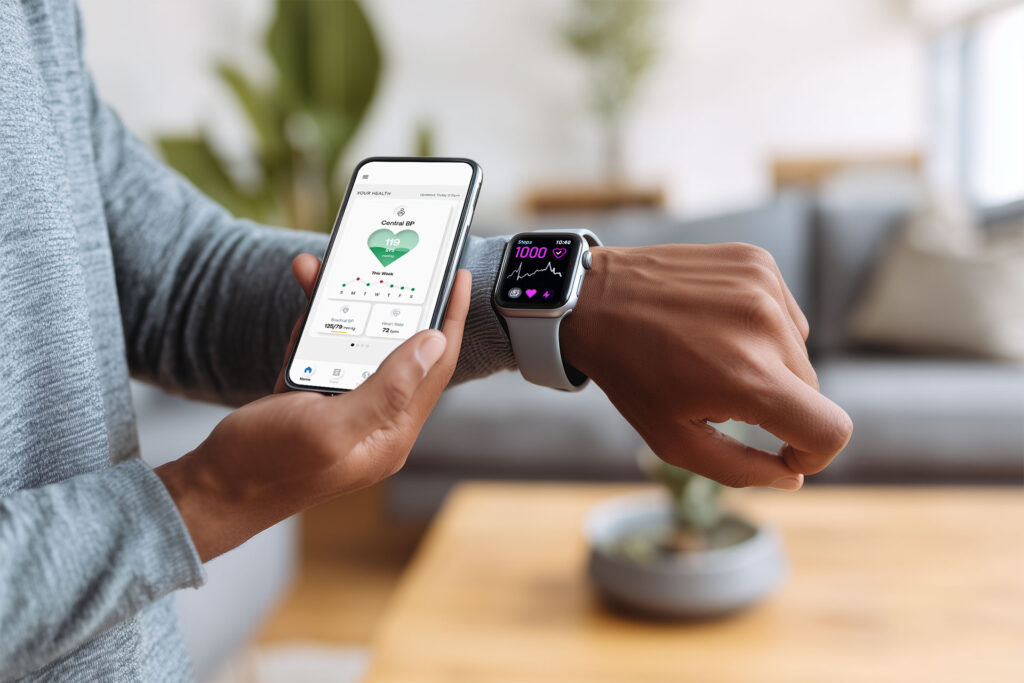
Now a watch says it can spot the problem. A ring tracks it from your finger. A band hands you a number alongside your morning recovery score.
The appeal is obvious. No cuff, no sitting still, and a reading whenever you glance down.
But look closely, and the wearables are not all doing the same thing. One estimates a blood pressure number day and night, one flags signs of possible hypertension without ever showing a number, one gives just one estimate a day, and the rings show trends rather than a reading.
“Blood pressure feature” turns out to mean four different things.
So the real question isn’t whether these devices are convenient. It’s whether any of them can actually tell you where your blood pressure stands, closely enough to act on.
That’s the question cardiologists have started to answer, and their answer is more specific than a simple yes or no.
What these wearables actually claim to do
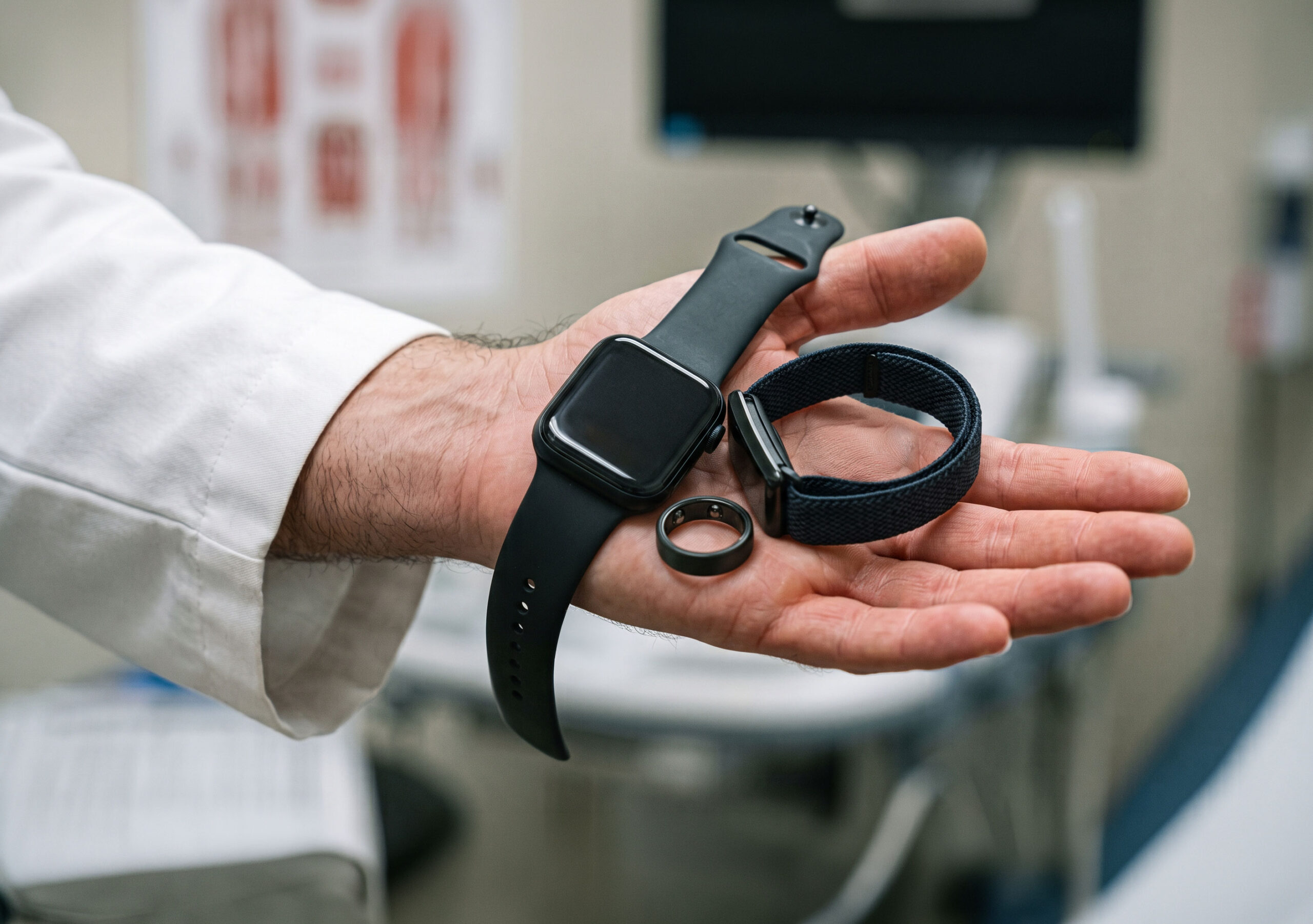
These aren’t the only wearables making blood pressure claims, but together they cover the range of what’s out there. Lined up, they fall along a spectrum, from a device that regularly gives you a number to one that only speaks up when something looks off.
Hilo, a wristband, aims for the full version. It uses optical sensors to estimate your blood pressure around the clock, about 25 times a day, and shows the readings in an app.
It’s worth noting, though, that it still relies on a cuff to calibrate at setup and about every 30 days after that. The cuff-free wristband still depends on a cuff.
The Apple Watch takes the opposite approach. It doesn’t give you a blood pressure number at all. It watches for patterns over about 30 days and, if it sees signs consistent with hypertension, it sends a notification suggesting you check with a cuff.
It is built to catch a possible problem worth checking, not to give you a reading.
Whoop, a fitness band, sits in between. Its Blood Pressure Insights feature gives you a single estimated range once a day, framed as a wellness signal rather than a medical one. It, too, asks you to log a cuff reading first to set your baseline.
One thing I noticed from my own experience with Whoop: the baseline range it set after I logged my cuff readings didn’t change over the months I wore it, across different conditions. As a once-a-day wellness signal, that’s fine, but it isn’t a number I’d track closely.
RingConn, a smart ring, is a newer entrant. Its blood pressure feature offers trend insights rather than a reading, and the company is clear that it isn’t a medical-grade measurement.
Oura, also a smart ring, is the most familiar name of the group. Its blood pressure feature, Blood Pressure Signals, surfaces only when the app spots patterns that may point to cardiovascular strain. What it shows you then isn’t a reading, but a prompt: it advises measuring at home with a validated cuff and, if your numbers run high, speaking with a clinician. The ring has no cuff of its own, and Oura is clear the feature is for wellness, not diagnosis, even as it runs a separate study toward FDA clearance of a hypertension-detection feature.
Notice the pattern.
The devices keep getting smaller, from wristband to watch to ring. And every device that tries to give you a number still leans on a cuff to get there. The ones that skip the cuff are the ones that never give you a number.
What cardiologists actually say
Here’s where the claims and the evidence part ways.
The two largest heart-health organizations in the field have looked hard at cuffless blood pressure devices and landed in the same place.
In December 2025, the American Heart Association published a scientific statement finding that these devices haven’t yet been adequately tested for accuracy. Its companion guideline, written with the American College of Cardiology, recommends against using them to diagnose or manage high blood pressure until they show greater precision and reliability.
The European Society of Hypertension reached the same conclusion back in 2022: cuffless devices shouldn’t be used to evaluate or manage blood pressure in practice until the accuracy questions are resolved.
Read that carefully, though. Neither group says the idea is a dead end. The issue is where the science stands today, not whether it can get there.
What they say is “not yet.”
The science of estimating blood pressure without a cuff isn’t settled enough yet to trust for the decisions that matter, like whether you have hypertension or risk of cardiovascular disease, or whether your treatment is working.
That distinction is the heart of it. A wearable can be useful and still not be something you or your clinician should lean on to judge your health.
For now, the specialists who study this for a living are saying the same thing: wait.
Why the accuracy falls short
To see why the specialists are cautious, it helps to know what these devices are doing when they show you a number.
A cuff measures pressure directly. It briefly tightens around your arm and reads the pressure of the blood pushing back.
A wearable that estimates does something different. Rather than measuring the pressure itself, it reads an indirect signal, the small changes in light as blood moves through the vessels under your skin, and estimates what your blood pressure probably is.
That word, estimates, is the crux. Because the estimate is anchored to the cuff reading you gave it at calibration, the device is really tracking how far you’ve drifted from that baseline, not measuring your pressure fresh each time. As the baseline ages, the estimate can drift with it.
It’s why these devices need to be recalibrated with a cuff.
Everyday things make the estimate harder still. The signal is weakest at the wrist, where most of these devices sit, and stronger at the fingertip; it also shifts with how you hold your arm and with movement. And because the sensor works by shining light through skin, skin tone can change the result, a limitation the AHA specifically flagged.
None of this makes the devices useless. But it’s the reason an estimate, drawn from an indirect signal and anchored to a calibration that ages, isn’t yet a number you’d build a medical decision on.
Cleared is not the same as validated
An FDA clearance is a real, meaningful step. On its own, though, it doesn’t prove a device measures your blood pressure accurately.
And with blood pressure, that gap matters. A reading that’s off by ten points can be the difference between “you’re fine” and “you have hypertension,” or between the right treatment and the wrong one. You act on the number. If the number is quietly wrong, the decision is too.
So it’s worth knowing what a clearance does and doesn’t promise. Clearance means a device has met the FDA’s bar to be sold. Validation is a separate test: checking the device’s readings against a trusted reference, in enough people, under real conditions, to prove the numbers hold up.
Cleared means a device is allowed on the market. Validated means its numbers have actually been checked against reality. They don’t always come together.
And “FDA-cleared” doesn’t mean the same thing on every device.
The Apple Watch is cleared for its notification, the alert itself, not for measuring your blood pressure. Hilo sells its wristband as a wellness layer, paired with an FDA-cleared upper-arm cuff. The band relies on that cuff, recalibrating against it about every 30 days. Whoop’s feature isn’t a cleared medical device. It’s offered as a ‘wellness feature,’ which keeps it outside the FDA’s medical-device review and its accuracy requirements. RingConn and Oura sit in the wellness lane, outside clearance entirely.
Same label, very different meanings.
Now the part that matters most. Even the cleared devices haven’t met the accuracy standard that counts. The AHA notes that some cleared cuffless devices were tested with methods built for cuffs, not for the way these devices actually work. A validation standard built specifically for cuffless estimation is still being developed.
So a clearance is worth having. It just isn’t the whole story.
The devices you can trust most clear both bars. They’re allowed to be sold and validated against reality. So far, no cuffless blood pressure device has done both.
How the devices compare
The differences are easier to see side by side. The first five rows are the wearables. The last is the established standard they’re measured against: a validated upper-arm cuff.
| Device | What it tells you | Needs a cuff to calibrate? | FDA-cleared? | Validated for accuracy? |
|---|---|---|---|---|
| Hilo (wristband) | An estimated number | Yes | Cuff only1 | No1 |
| Apple Watch (watch) | An alert, no number | No | Yes | As an alert² |
| Whoop (band) | An estimated range | Yes | No3 | No |
| RingConn (ring) | A trend, not a reading | No | No | No |
| Oura (ring) | A trend and an alert, not a reading | No | No | No4 |
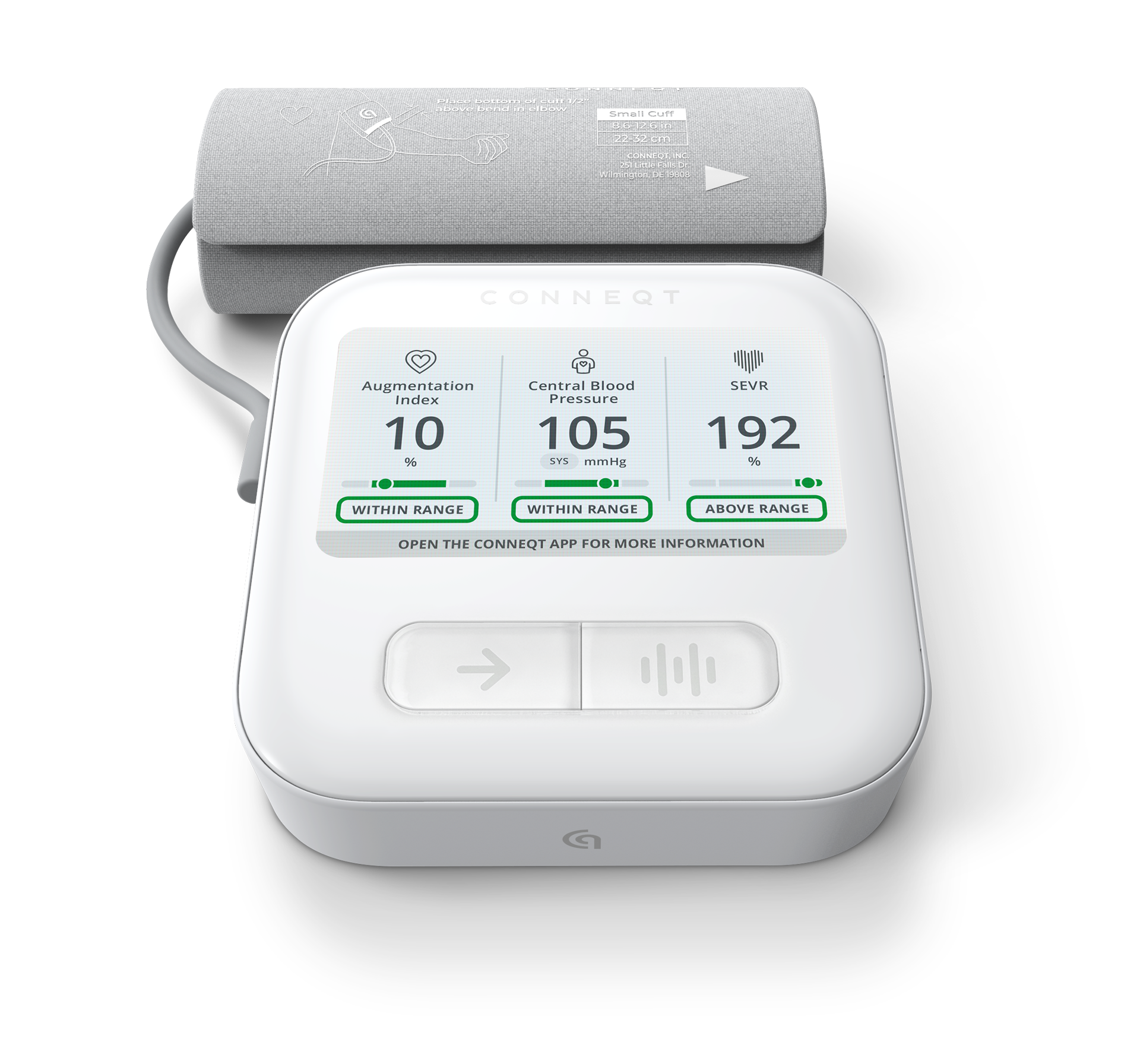
| CONNEQT Pulse (validated cuff, for medical reference) | A validated measured reading | No | Yes | Yes5 |
2. Apple’s feature is validated to flag possible hypertension, not to measure blood pressure.
3. Whoop’s feature isn’t a cleared medical device; it’s offered as a “wellness feature.”
4. Oura’s blood pressure feature shows overnight trends and, when it flags a concern, advises measuring with a validated cuff and checking with a clinician. It does not display a blood pressure number, is offered as a wellness feature rather than an FDA-cleared device, and Oura is separately running a study toward FDA clearance of a hypertension-detection feature (as of 2026).
5. Listed on the US Validated Device Listing (validatebp.org).
Read across and the split is clear. Every wearable that gives you a number still leans on a validated cuff to get it, and the ones that skip the cuff do so by giving no number at all. That leaves the real question: if these devices can’t yet hand you a reading you can trust, what does it take to get one?
What makes a blood pressure reading trustworthy
Three things separate a reading you can trust from one you can’t.
Use a device that measures rather than estimates. A cuff reads your pressure directly, which is why it’s still the gold standard everything else is compared against.
Make sure it’s validated, not just cleared. You don’t have to take a company’s word for it. Independent groups publish lists of devices that have passed formal accuracy testing, and you can look yours up by name before you trust it.
Use it correctly. Even a validated cuff reads more accurately when you sit still, rest your arm at heart level, and measure at the same times each day.
That’s it: a device that measures, proven accurate, used correctly.
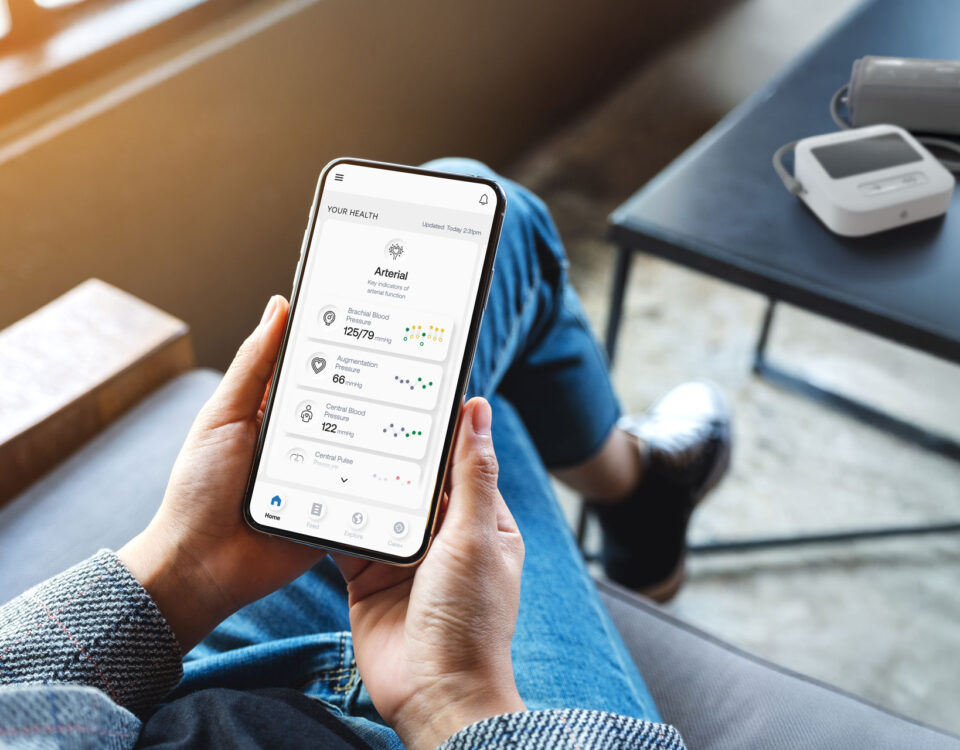
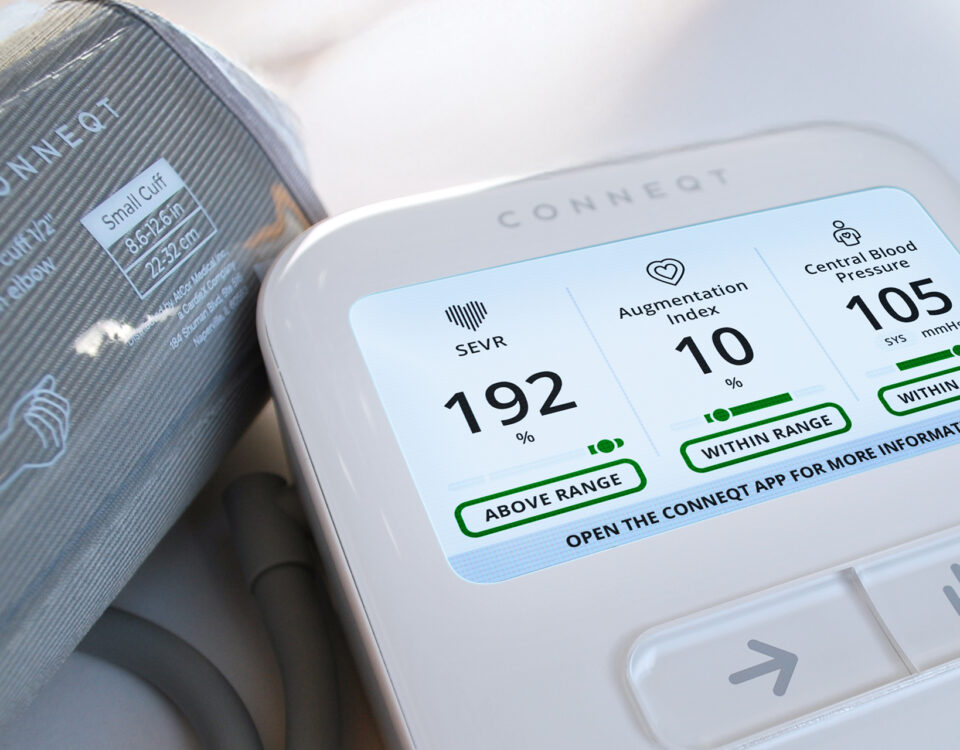
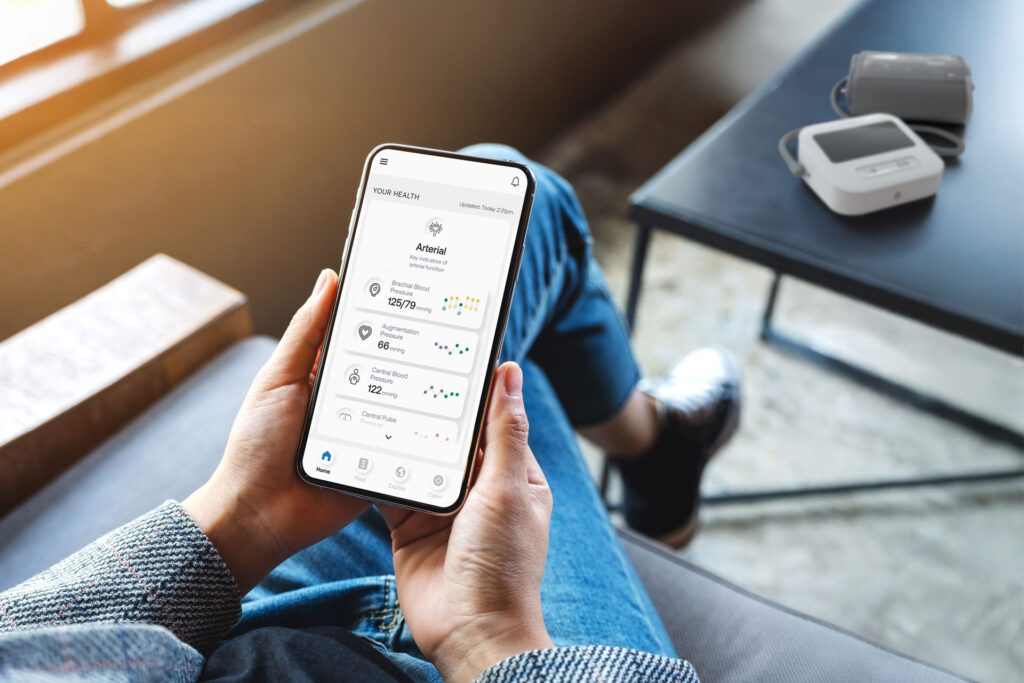
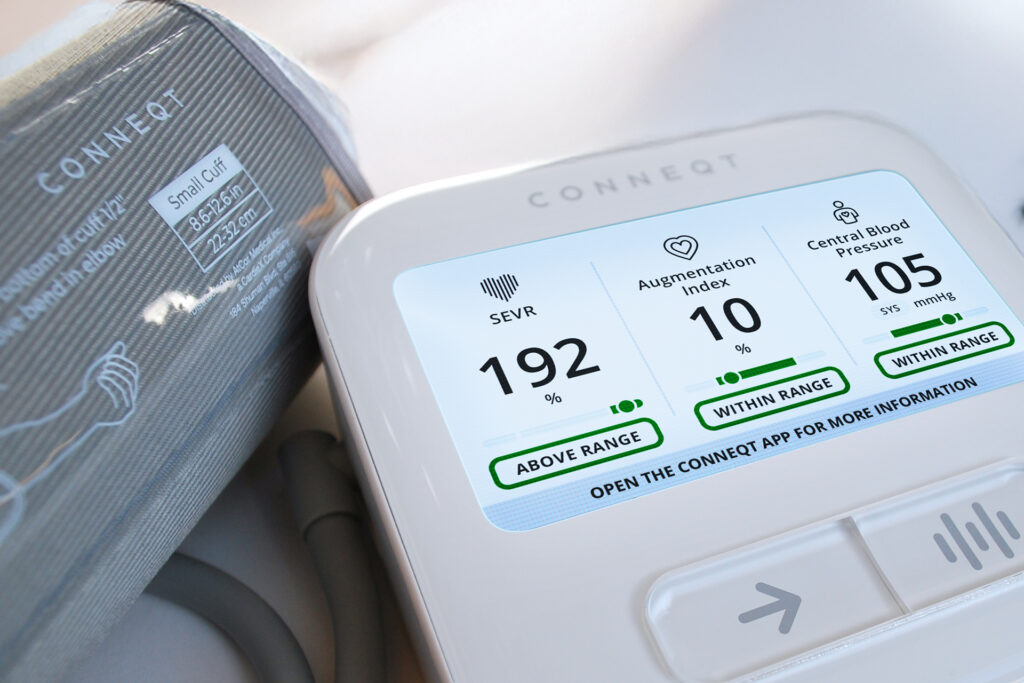
The CONNEQT Pulse meets that standard. It’s an upper-arm cuff that measures your blood pressure directly, it’s FDA-cleared and listed on the US Validated Device Listing, and it never needs recalibrating. It also captures central blood pressure and other key arterial signals a standard cuff doesn’t, so alongside today’s number you can see how your cardiovascular health is trending over time.
So, do blood pressure wearables work?
It depends on what you’re asking them to do.
As a nudge, or a habit tracker, they can be useful.
But as the source of a blood pressure number you or your clinician can act on, deciding whether you have hypertension, or are at risk of cardiovascular disease, or whether your treatment is working, they aren’t there yet.
The cardiology guidelines say as much, the accuracy science explains why, and even the FDA-cleared devices haven’t shown their numbers hold up.
When it’s time for a number you can trust, reach for a monitor that measures your blood pressure directly and has been validated, and use it the right way.
Your blood pressure is worth getting right. Make sure the number you rely on has been proven, not just estimated.
What to read next
If this left you wondering how to choose a monitor you can trust, or what your watch’s alert really means, these go further.
- How to Tell If a Home Blood Pressure Monitor Is Actually Accurate – What separates a proven monitor from one that only looks the part, and how to check yours.
- What to Look for in a Home Blood Pressure Monitor – A practical guide to picking a monitor you can rely on, from cuff fit to validation.
- Apple Watch Hypertension Notifications: What They Mean and What to Do Next – If your watch flagged possible hypertension, here’s what it’s telling you and the step that turns it into an answer.
- Why Wellness Tracking Isn’t the Same as Understanding Heart Health – Why a wellness estimate and a medical measurement play different roles, and when each one helps.
Want to go deeper? Browse the full library.