
Most people who lift weights track blood pressure. The arterial story is more specific. And it depends on something most people never think about.
In a Heartbeat
What blood pressure doesn’t capture: Resistance training reduces blood pressure. But standard blood pressure reads only one thing about what lifting does to your cardiovascular system. The full story depends on how you lift and what you measure.
The intensity finding: Not all resistance training produces the same arterial benefit. Low-to-moderate intensity reduces arterial stiffness. Heavy training does not produce the same effect on the arterial wall.
What most lifters overlook: More intensity does not mean more arterial benefit. When arterial health is a goal, moderate-load training is the specific stimulus that delivers it. Most people who lift have never considered that distinction.
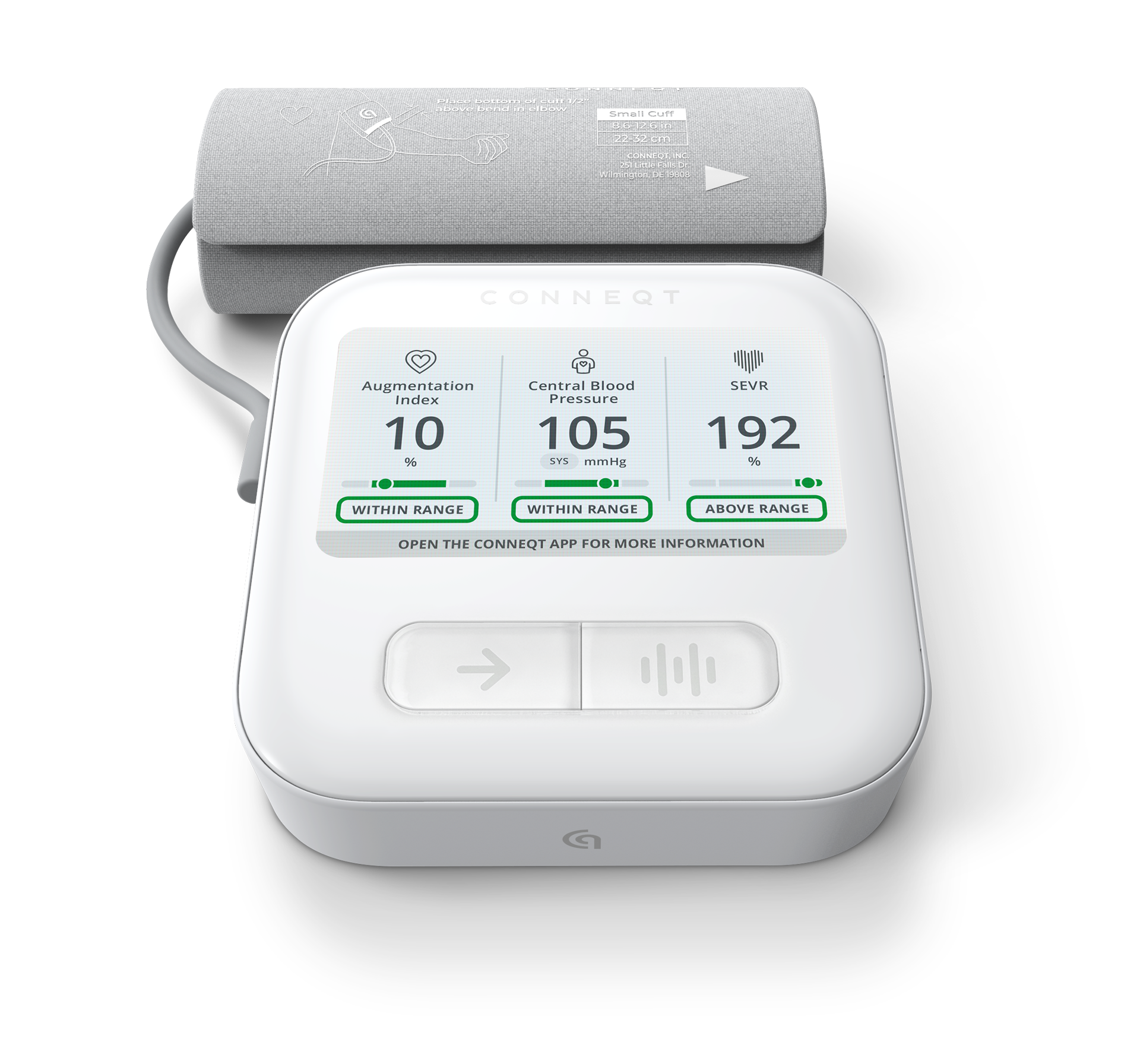

Medical Grade, Accurate, FDA-Cleared Heart Insights.
Save 10% on checkout with code VITALITY
I’ve been lifting weights since I was 14.
Blood pressure has been one part of what I track over the last 20 years. It’s an obvious signal. You lift consistently, you eat well, you stay lean, and you watch the number stay steady or come down.
For a long time, that felt like enough.
A few years ago, my readings stopped responding to my training. I was doing everything right and nothing was shifting. Adapting my approach moved the number again. But it also sent me deeper into a question I hadn’t been asking carefully enough.
Does lifting weights lower blood pressure?
Yes. The research is clear on this. Resistance training reduces resting blood pressure. But the size of the effect varies: larger reductions are seen in older adults and those with elevated blood pressure, smaller but real reductions are seen in healthy adults.
But blood pressure is only one signal. It measures the force of blood against the vessel wall. It doesn’t tell you what is happening to the wall itself.
That’s the part I wanted to understand.
Two different questions
Blood pressure tells you how hard your heart is pushing. Arterial stiffness tells you how elastic your arterial walls are.
One is about force. The other is about how well the wall handles it.
They’re related. But they don’t always move together. Normal blood pressure doesn’t mean your arterial walls are staying elastic. And elevated blood pressure doesn’t automatically mean stiff arteries either.
Tracking one doesn’t tell you what the other is doing.
I think about arterial health in three layers: structure, flow, and function. Blood pressure sits in the flow layer. Arterial stiffness sits in the function layer. They’re asking different questions about your cardiovascular system.
Researchers measure arterial stiffness using pulse wave velocity, or PWV: how fast the pressure wave travels through the arterial system. Faster means stiffer. It’s a measure of the wall’s elasticity, not the pressure inside it.
That’s what makes the resistance training research worth paying attention to. Because it turns out the two layers respond differently depending on how you lift.
For a full breakdown of what arterial stiffness is and why it matters, this article covers it in depth.
What the research actually shows
Most people who lift assume it’s good for their heart and leave it there.
The research is more specific.
Moderate intensity is where the arterial benefit lives
A 2021 meta-analysis looked at resistance training and arterial stiffness across multiple studies and populations. The finding was consistent: low-to-moderate intensity resistance training significantly reduced pulse wave velocity across younger adults, middle-aged adults, and both sexes.
PWV is the primary measure of arterial wall stiffness. Faster means stiffer. Lower is better.
It improved. At moderate intensity. Not at high intensity.
A 2025 randomized controlled trial confirmed it more directly. Healthy young men followed an eight-week protocol at 65 percent of their one-rep max, roughly the weight you could lift for 10 to 15 controlled reps before reaching failure.
Eight weeks. Arterial stiffness improved.
That is where the arterial adaptation happens.
Heavy training tells a different story
A comprehensive 2025 review looked at how different resistance training intensities affect the arterial system. The conclusion on heavy, maximal-effort lifting, the kind where you are working at or near the most weight you can move for one to three reps, was consistent: it does not produce the same arterial benefit.
What happens to your body immediately during heavy lifting is well documented. Blood pressure spikes hard. The arterial system stiffens under that load.
That is a normal physiological response.
But over time, with repeated maximal loading, the chronic adaptation to arterial stiffness does not follow the same favorable pattern seen at moderate intensity.
This is not an argument against lifting heavy.
The American Heart Association’s 2024 scientific statement is unambiguous: resistance training at all intensities reduces overall cardiovascular disease risk. Heavy lifting is not harmful to your heart.
The intensity question is narrower. It is about what is happening specifically at the arterial wall. And at that level, how hard you lift matters.
What moderate intensity actually means in practice
The research points to a specific zone: roughly 40 to 70 percent of your one-rep max, higher rep ranges, controlled load. The 2025 trial used 65 percent, roughly the weight you can move for 10 to 15 reps with good form before reaching failure.
Not a light band workout. Not maximal singles. Something in between.
A similar principle runs through the exercise dose-response research in How Much Exercise Is Too Much For Your Heart?: the cardiovascular benefit does not scale linearly with intensity. There is a zone where the adaptation is strongest. For resistance training and arterial health, that zone is at the moderate end of the load spectrum.
Most people who lift have never thought about whether their intensity falls in the range where arterial adaptation occurs.
I hadn’t either.
What this means if you lift heavy
Heavy lifting is not the problem.
The AHA is clear on this, and nothing in the arterial stiffness research changes it: resistance training at all intensities reduces overall cardiovascular disease risk.
Heavy lifting is good for your heart.
But it just doesn’t appear to produce the same arterial wall benefit that moderate-intensity training does. Full stop.
If you lift heavy exclusively, your program may be missing the specific stimulus the research points to for arterial benefit. Adding moderate-intensity, higher-rep work to your program is what the evidence suggests. Not instead of it. Alongside it.
Most serious lifters already do this without thinking about it.
Warm-up sets. Accessory work. Higher-rep finishing sets. That work may already be delivering the arterial benefit.
It made me want to know whether mine was.
How I think about this in my own training
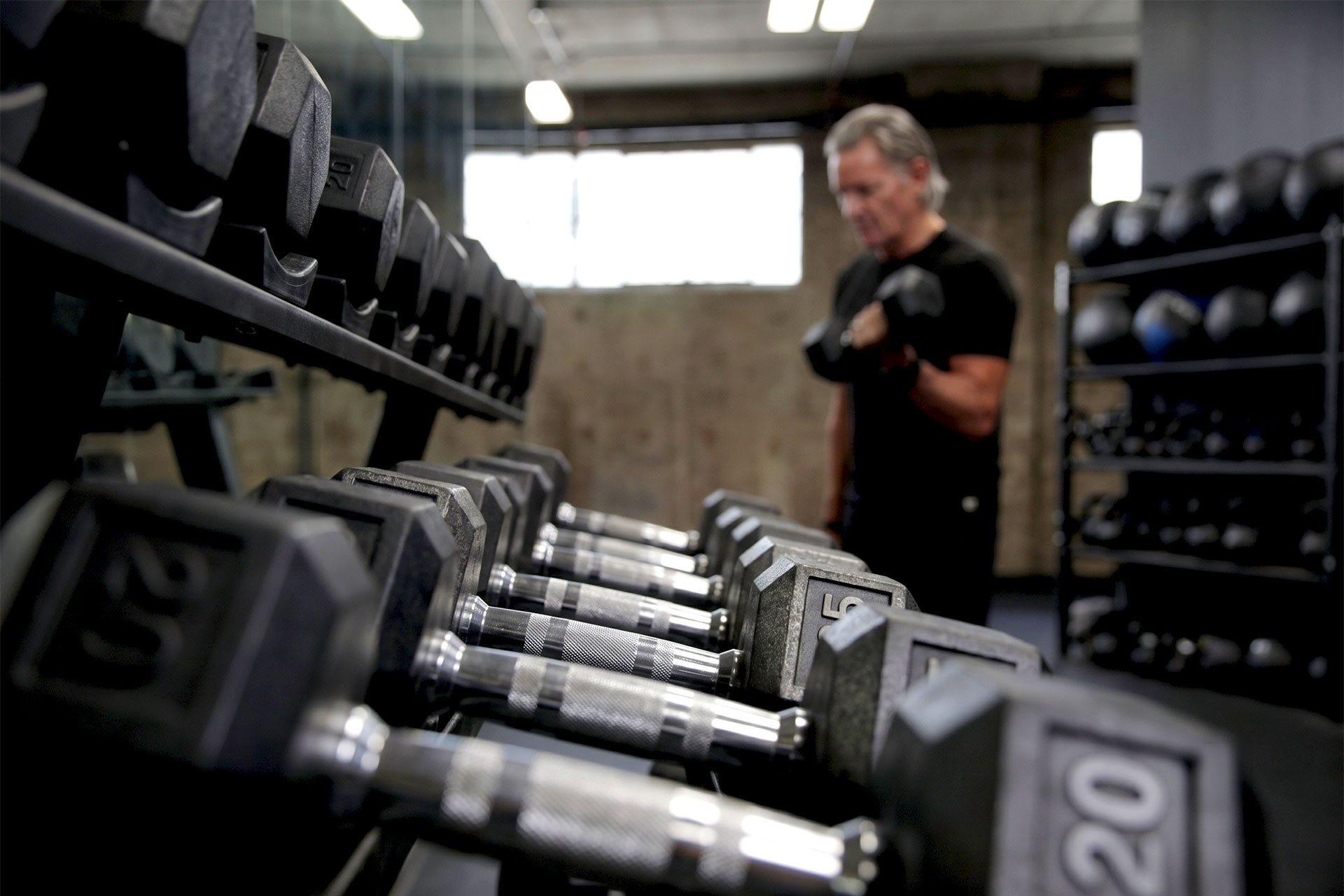
I’ve been doing kettlebell work and high-rep bodyweight circuits for years, paired with heavier lifting.
That combination spans both zones. Moderate-load work where the arterial adaptation occurs. Heavier lifting that builds strength but produces a different response at the arterial wall.
I was already doing both. The question was whether the moderate work was actually delivering the arterial benefit.
Blood pressure had been my primary signal. But a standard cuff measures brachial pressure, the force of blood in your arm. It doesn’t capture what is happening at the arterial wall.
For that, I needed different markers, like those provided by the CONNEQT Pulse. Central blood pressure and arterial stiffness markers, at home, between appointments. Not a diagnostic tool. A way to see whether the training I’m doing is moving the signals that matter.
That’s the question I keep coming back to.
Not just whether my blood pressure number is moving. Whether my arteries are actually responding.
What to do with this information
This is not a case for overhauling your program. It is a case for understanding what different parts of your program are doing at the arterial wall level, and whether you are tracking the right signals to know.
- You track only blood pressure. You have one layer of the picture. It is meaningful. It is not complete.
- You lift heavy exclusively. The research suggests you may not be getting the specific stimulus that drives arterial benefit. Adding moderate-intensity, higher-rep work does not mean abandoning what you are doing. It means building in the range where that adaptation is most likely to occur.
- You already mix intensities. You may already be getting the arterial benefit. The question is whether you know it.
Blood pressure is a useful signal.
But it does not tell you what is happening at the arterial wall. For that, you need to be tracking the right markers.
That is the shift the research pointed me toward.
Not a different program. A more complete picture of what my program is actually doing.
What to read next
These articles go deeper into the questions raised here.
- Early Signs of Arterial Stiffness: What Changes Before Symptoms Appear — What the research shows about how arterial stiffness develops, often before any symptoms appear.
- Why Arterial Stiffness Doesn’t Wait for High Blood Pressure — Why arterial stiffness can develop before blood pressure rises, and what that means for how you monitor cardiovascular health.
- How Long Does It Take to Improve Arterial Health? — The research on timelines for arterial adaptation and what drives the process.
- Strength Beyond the Scale: How Strength Training Boosts Cardiovascular Health in Women — How resistance training affects cardiovascular health specifically in women.
Want to go deeper? Browse the full library.